
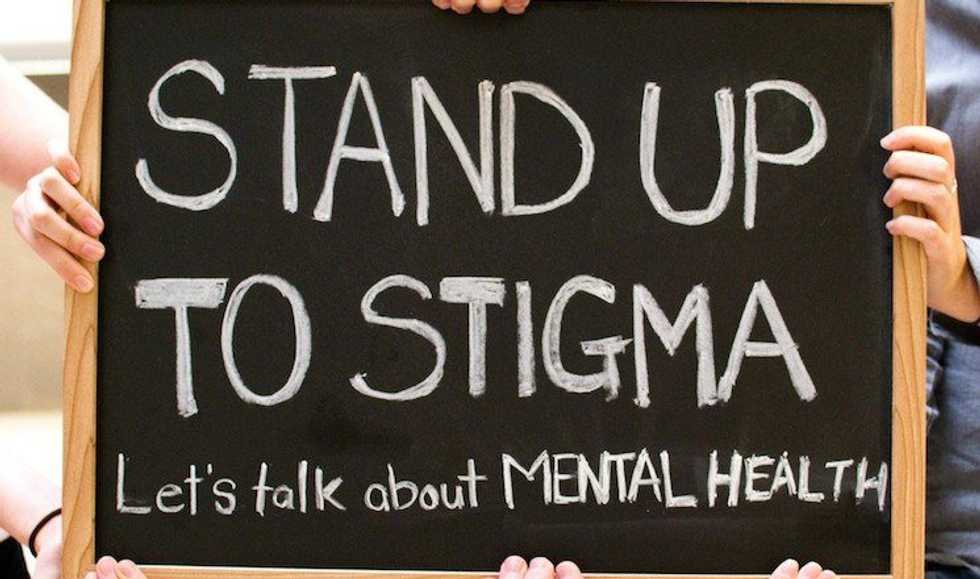
Mental illnesses are a prominent part of today's society, yet so many myths exist that prevent people from really understanding it. Statistics show that about 26.2 percent of Americans over the age of 18 suffer from a diagnosable mental illness in a given year. That's slightly more than one in four, making the likelihood that you know someone with a mental illness higher than ever. Here are a few common myths and their truths that we need to keep in mind in our everyday lives.
1. It's all in their head.

2. Depression is being sad.

Although depression does look highly similar to someone being sad, it is much, much more than that. Depression is a constant state of feeling down or low, and often not knowing the reason for having such "upset" emotions. It is much more than just being "sad" and is often associated with feeling lost and some sense of hopelessness. Depression is one of the most common mental illnesses in Americans.
3. PTSD is only for those in the military.

PTSD is actually common in anyone who has gone through anything traumatic. Whether it be military service, rape, abuse, or anything that was deemed traumatic: the PTSD is equally real and valid.
4. "You don't look anxious."

Anxiety is much more than what someone "looks like". Anxiety is something in someone and could be shown by someone being more quiet or doing a nervous habit (like tapping a pen or biting their nails). Just because you can't see it, does not mean that they can't feel it.
5. Anorexia and bulimia are just diets.

Anorexia and bulimia are eating disorders. They are not diets. They are a fear of food and a fear of appearance and are in no way a diet. They require treatment and can potentially cause death.
6. ADHD is being "hyper" all the time.
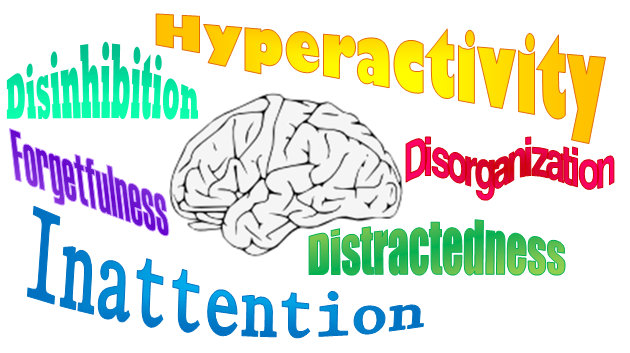
There are actually three types of ADHD: impulsivity/hyperactivity type, inattentive type, and combined type.
7. Self-harm is for attention.
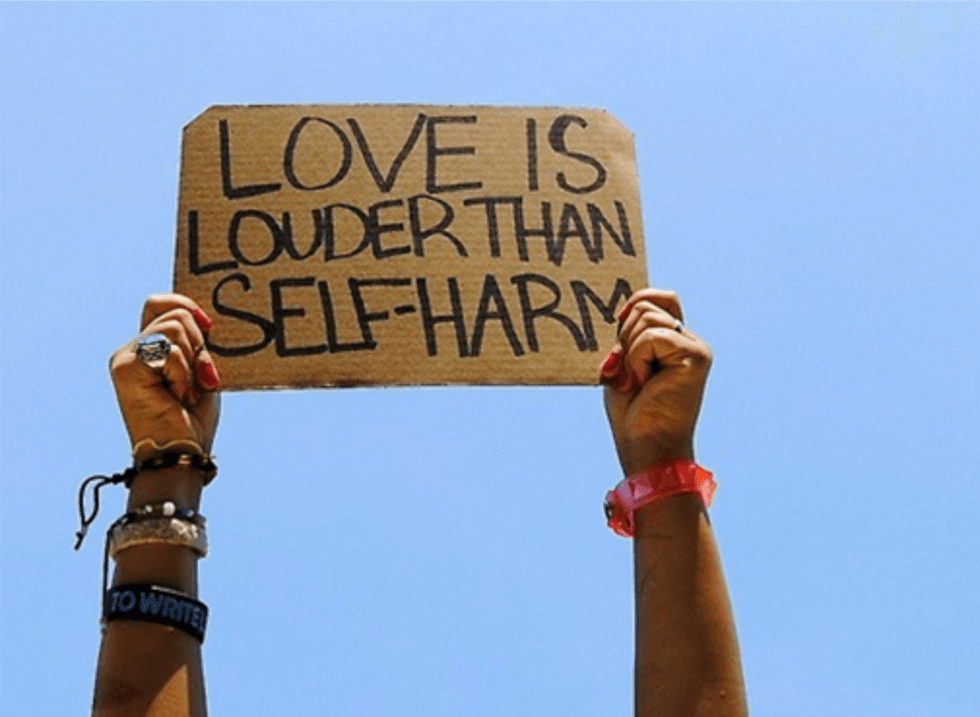
Self-harm is often misconstrued as as a way for people to get attention, when in reality it is an unhealthy way for people who are suffering to cope.
8. "Calm down, you're overreacting."

As "helpful" as you think you are being, you are just being rude. Someone who is suffering from a mental illness often has no control and cannot calm down on a whim. If they could calm down, they often would.
9. You do not know everything.

Just because you know someone with a mental illness, does not mean that you know everything about that mental illness or about all other mental illnesses in general. You are not an expert unless you have a degree in it, and even then you learn something new every day. Mental illness is not the same for everyone, so stop assuming it is.