


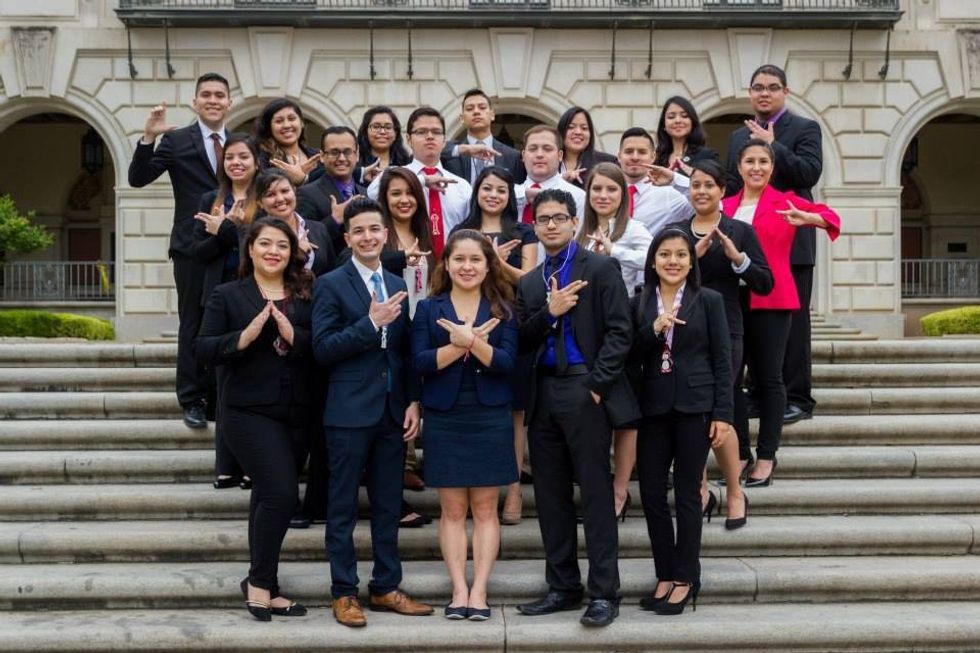
The Latino Pan-Hellenic Council (LPHC) was founded in 2009. According to the LPHC website, “the council combines leadership, community service, cultural understanding and academics to maximize their success of members.” But, like any other Greek or non-Greek organization, there are stereotypes Latino/a sororities and fraternities are tired of hearing:
1. You HAVE to be Latino/a to be in an LPHC sorority/fraternity.
Just because a sorority or fraternity is in the Latino Pan-Hellenic Council doesn’t mean it only takes Latino/as. LPHC strives to embrace different cultures.
2. They’re irresponsible.
To apply, you have to have a certain GPA and maintain a minimum GPA. The organizations encourage members to grow academically and personally. Bottom line: They're not irresponsible.
3. All LPHC members speak Spanish.
This goes back to number 1. You don’t have to be a Hispanic member and not all Hispanics (or Latino/as) speak Spanish.
4. All they do is drink.
These Latino/a Greek organizations don’t support underage drinking and you can see them doing other things like community service and events on campus.
5. They are service fraternities and their letters aren’t real.
Although they do rush and new member programs differently than the UPC and the IFC, they have their own rituals and rules. That doesn’t mean their letters are not real.
6. They buy their friends.
Like with other Greek organizations, these sororities and fraternities are non-profit. In order to keep in existence (and to pay dues for different things like events brought to campus), they get their funds from the dues.
7. They are exclusive.
LPHC encourages diversity and invites anyone that meets requirements to recruitment. These requirements don’t mean that they are exclusive.
8. They're always partying.
Going back to number 4, these organizations can be seen participating in community service, hosting fundraisers, studying, etc.
9. What’s the point?
Although there is a social aspect of being in a Greek organization, it’s a great opportunity to network, make lifelong friends, and learn more about yourself and your culture.
What LPHC stereotypes do you know about that need to come to an end?

















