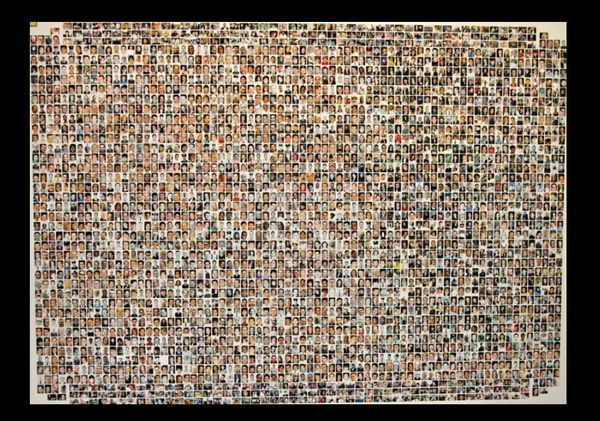

Every year we remember the Sept. 11 attacks. The horrific and shocking images of commercial planes crashing into the World Trade Center and the Pentagon haunt us to this day. Sept. 11, 2001 was a day of grief, fear and despair. Consequently, Al Qaeda’s grisly act has shattered the sense of freedom and democracy that the United States once held with pride. Yet we seem to have forgotten the other historic event that transpired on 9/11, the watershed moment of the Cold War.
For many years, Chile was seen as a forerunner in preserving peace, stability, and democracy, in contrast to the chaotic scenes in other South American nations. However, when president Allende's socialist stance caused him to align his regime with the Cuban Revolution, dismay overtook the U.S. government. As Chilean-Cuban relations improved, private American companies were publicized by the Cuban government, causing the U.S. to lose control over their overseas businesses. As a result, the U.S. began to seek alternative methods for preserving American hegemony over South America, continuing their pursuit of ‘Manifest Destiny,' and destabilizing Allende's government.
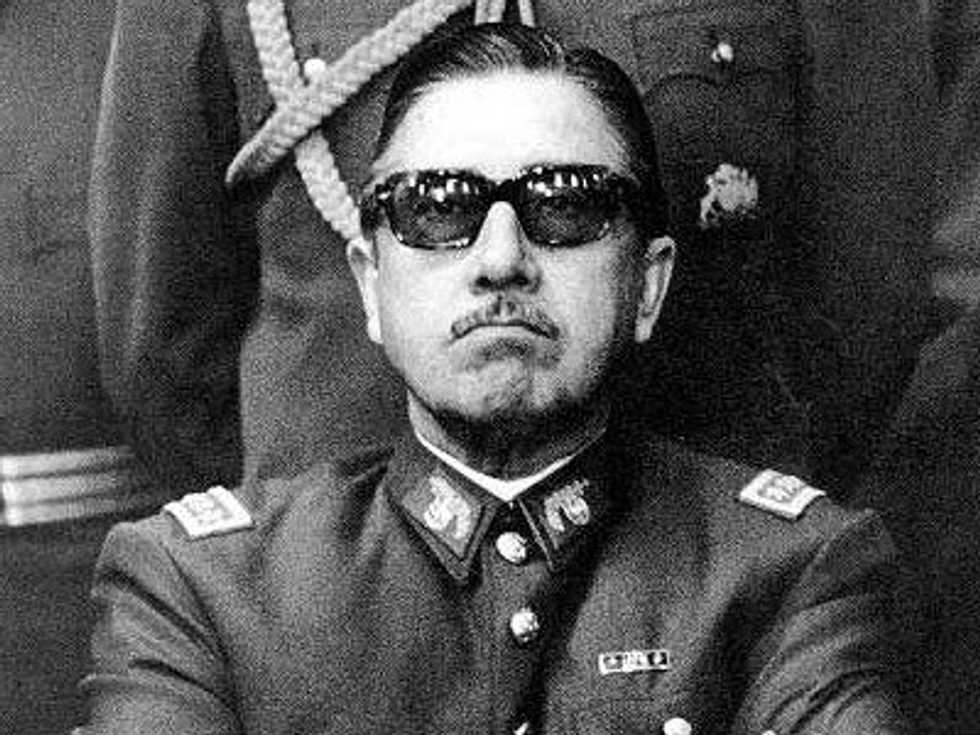
On Sept. 11, 1973, Augusto Pinochet overthrew socialist President Salvador Allende using the armed force and national police. Conversations between Nixon and Kissinger along with the Pinochet Files demonstrate U.S. involvement in the coup. After ascending to power, Pinochet's junta regime engaged in political and social oppression of left-wing parties, especially Marxists. From then on, Pinochet's despotism loomed over Latin America. According to the Valech Report, 31,947 people were tortured while another 1,312 were exiled during Pinochet's reign. This became part of Operation Condor—a campaign targeted towards leftists and other political opponents, enacted by the Latin American leaders with the technical and military support of the CIA. This campaign allowed local juntas to be used as the medium of political repression.
Operation Condor resulted in the death of over 60,000 people. Suspected members of the opposition in Chile, Peru, Argentina, Bolivia, Paraguay, and Uruguay were captured and murdered to keep social discontent and the spread of other ideologies minimal. This project between the U.S. and other right-wing states was responsible for the slaughter of thousands of innocent civilians.
Perhaps the U.S. didn't back the coup just because Allende was a pro-Soviet leader. Allende was, after all, elected by a narrow margin, which foreshadowed a weak left-wing government that could easily be overthrown by a stronger, U.S.-led right-wing government such as Pinochet's.
Regardless of intent, one thing to consider is this: tragedies take place throughout history, but the media has the power to choose what to cover and we have the choice to read about. It is almost ironic to think that, in the 20th Century, the biggest advocate for freedom once helped overthrow a democratically-elected government, committing atrocities along the way.
Events such as the 9/11 attack take the limelight with harrowing photographs and the symbolism of something easy to empathize with: endangered global security. If the world's most powerful nation is threatened, nobody is safe. The events of Sept. 11, 2001 have dramatically changed the world’s perceptions; but Sept. 11, 1973 was equally important.
However, history is incredibly vast; we can only remember and acknowledge certain parts of it. What to take away from this is that, when one chapter of history is shown and popularized, we should never let that perception of a nation in a single day influence our understanding of that country's actions in the last few decades.
After all, history will be kind to those that write it.