In recent years, autism and its awareness has been on the rise. While treatments and our understanding of it have grown, plenty of mystery and social stigmas still hold us back. Asperger’s is a type of high-functioning autism that makes social skills and communication very difficult. (Recently, Asperger's has been meshed with autism in general and is now being referred to as "Autism Spectrum Disorder" (ASD)). Upon hearing the word “autism”, what comes to mind first? For many, the image of someone severely mentally handicapped might come up. There’s so much more than meets the eye, and as someone who personally struggles with Asperger’s, here are some things to know, and how you can help.
1. Understanding nonverbal communication is extremely difficult.

93% of all communication is nonverbal, according to Dr. Mehradian of UCLA. For those of us with Asperger’s, trying to read people and their nonverbal messages is often like trying to talk to someone who doesn’t speak the same language, or trying to find a new place without a map. We lack the skills necessary for interaction and communication. An entire room could be uncomfortable and we may not even know it. This can oftentimes lead to people with Asperger’s being thought of as a social disgrace, or just an annoyance. How can you help? Be direct. In normal circumstances, if someone messes up socially, a friend might give them a nudge, a glance, or try to communicate with their eyes. If they don’t want to be harsh about something, they may make small verbal hints until the person stops doing whatever the undesired thing may be. Personally, I will not understand something unless it’s told to me straight up. I literally cannot comprehend how other people are feeling. By the time you get to the point of directness, it may seem like you’ve said the same thing a million times. But for many of us, we don’t get the message for the first time until it’s direct and blunt, so please be patient.
2. Asperger’s isn’t where the issues end, it’s where they begin.
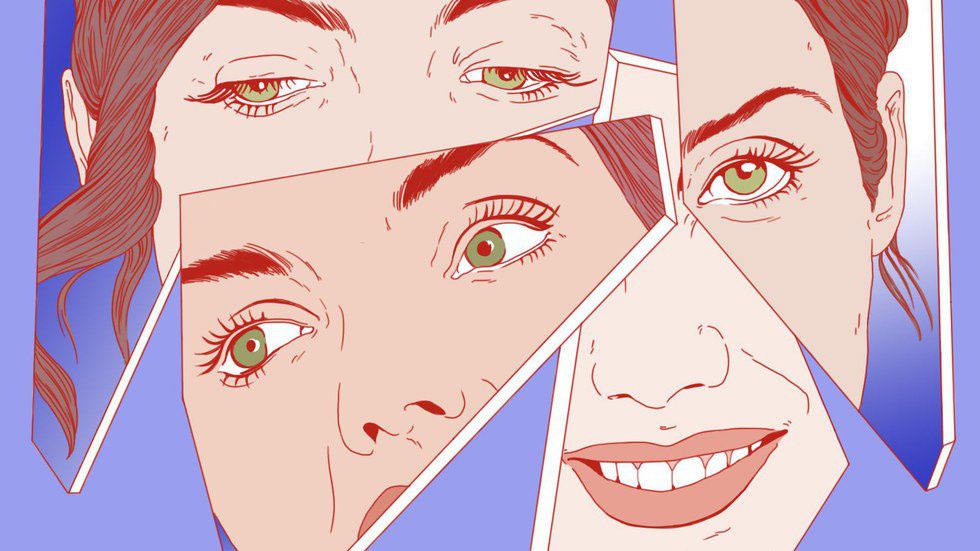
Many issues can stem from Asperger’s; depression, anxiety, insomnia, OCD, and ADHD aren’t uncommon. I struggle with all of these, so every day can feel like a constant battle. The best thing you can do to help is listen and try to be understanding. I have good days and I have bad days. When the going gets tough, we understand we may be hard to help. Again, please be patient.
3. We struggle with tone of voice, listening, eye contact, and boundaries.

Humor can be difficult for us, as interpreting someone’s tone of voice is hard, and it’s hard for us to control our own tone of voice. We might try to make a joke, only to be seen as completely serious due to our tone. Our tone is often serious and monotone. Listening is hard for a couple of reasons; we get excited, and it can be hard to tell when a conversation starts or finishes. Eye contact makes us uncomfortable, so we avoid it. As for boundaries, I tend to get over-excited when I meet someone new, and my excitement leads me to trying to get too close, too fast. This applies to both conversation and physical boundaries. If something we say seems out of place, it’s either because we’re already steps ahead of you in our mind, or we’re trying to be humorous. It may take us a minute to say what we really mean, and we may struggle to find the right words. Try not to rush us.
4. We're easily over-stimulated.

People with Asperger’s are sensitive in ways that most others aren’t, with sound and light being the biggest concerns. What may seem like a pin drop to you may be like a bomb to us, and vice versa. We may be very particular about noise and sleep- it goes back to our insomnia issue, too. One little noise can wake us up and make it so we can’t fall asleep for hours. The same principles apply to light. If someone with Asperger’s asks you to turn down the volume or light and it may seem unnecessary, please honor their wishes. Over-stimulation leads to anxiety, which can lead to a meltdown. Due to over-stimulation, we often need time by ourselves to calm down. If we say no to an invitation, there’s a good chance it’s simply because we need quiet time.
5. We have obsessions.
Very random subjects can excite us, and they come and go in spurts. The person may focus all their time and energy on these obsessions, and they’re often academic in nature. For example, I was extremely intrigued by the Holocaust for a few months. I watched documentaries, read stories, and loved sharing information I’d found out every chance I could get. We might be obsessed with trains, a certain animal, or a certain branch of an academic subject. The best thing you can do is listen and take interest; showing interest lets us know you care.
6. Textures can be extremely bothersome.

Like light and sound, we can get over-stimulated and upset from certain textures, or the combination of certain textures. These may also seem random. Personally, I’m bothered by velvet, cloth car interiors, newspapers, and any paper not laminated touching fabric (newspapers touching clothes is a big one!), just to name a few. When I say we’re bothered by textures, I mean really bothered. Bothered as in my skin crawls, I feel physically uncomfortable, and if pushed far enough, I will cry. If you know the person is bothered by a certain texture, try not to make a big deal out of it, and avoid it if possible. Talking about bothersome textures can be just as bad as touching/seeing them, so please refrain from bringing them up.
7. During the difficult times, we’re just as frustrated as you.

A good way to describe our trouble communicating is the “Terrible Twos”; We know what we want to say, but lack the skills to properly communicate it. I’m highly intelligent in a way that’s different than most. I could write you a ten-page academic paper, but basic social skills? Forget about it. My mind makes very quick connections that people would never think of, and my verbalizing these connections often leaves people staring at me in confusion. For example, the other day I was watching a sermon, and the Pastor made a reference to seeing “Hamilton” on Broadway. Not a big deal, right? My mind instantly thought of the Chicago Lincoln Park Zoo’s newest baby camel, and how they named him Alexander Camelton. Definitely not the first thing someone would think of. Try not to be surprised if we say something that seems completely out of the blue, as it’s probably related in our minds.
8. We’re more than our disability.
At the end of the day, we don’t want to be known as “that person with autism”. We know that we can be a handful, especially if we have other accompanying mental illnesses. Due to social stigmas, many feel like less of a person when they get the diagnosis. It’s important to remember that Asperger’s also makes us unique; we’re highly intelligent, have perspectives the rest of the world doesn’t, we’re often very artistic, ambitious, organized, good with details, caring, and hard-working. Just like those without Asperger’s, we deserve respect, kindness, and equal chances. While we may not be able to always communicate well, we are highly capable of many wonderful things. Despite our hardships, we continually rise above our challenges and persevere, and that’s always worth celebrating.