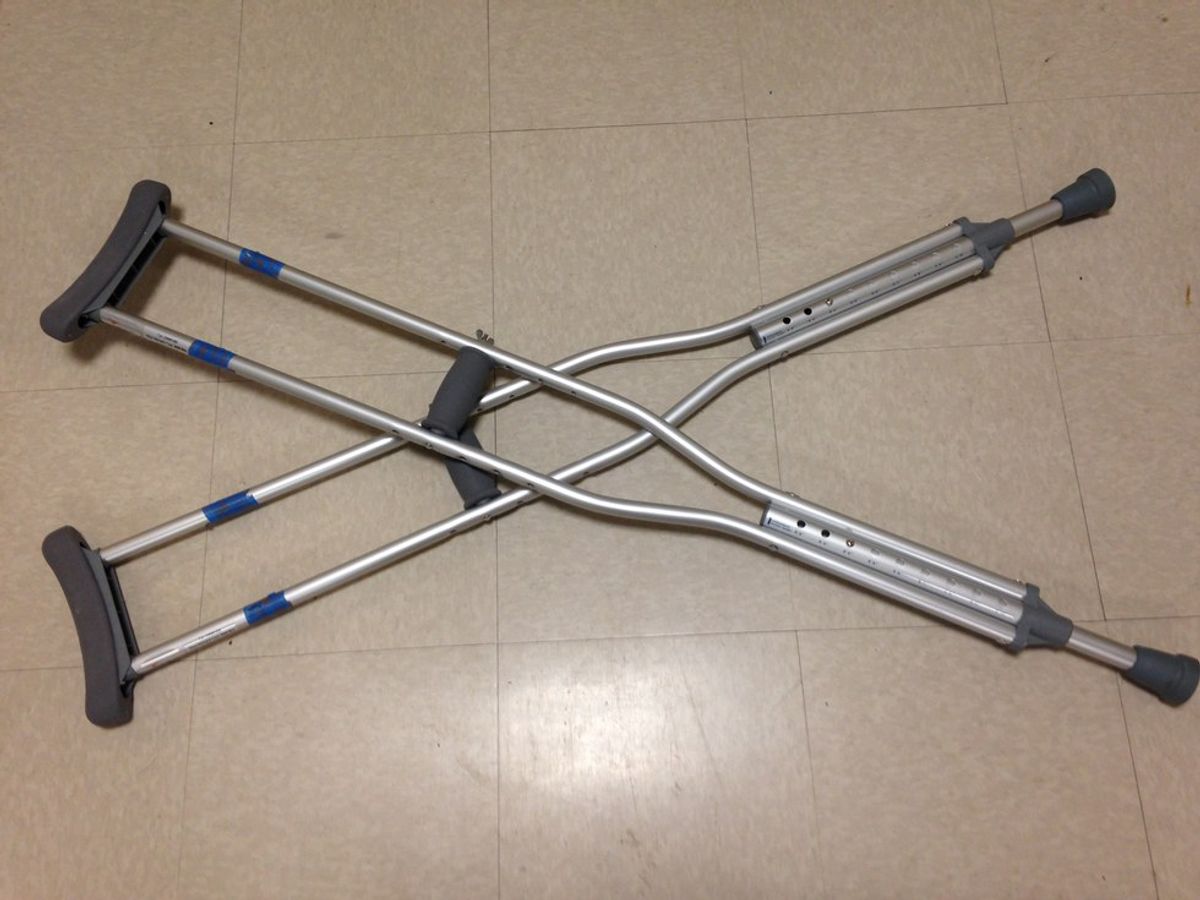
A few weeks ago, I ended up in the hospital after taking a nasty fall and spraining my ankle. I had been taking advantage of the dorm open house with my roommate I was moving in with next year to figure out where we wanted to live when I missed a step on the small set of stairs outside one of the dorm buildings, and my roommate quickly got me the help I needed. The x-rays reassured those who looked after me at the hospital that it was sprained. Despite having used crutches before, it had been for relatively short time periods, so this was my first major experience on crutches. From my experience, here are eight things that I was thankful for while on my crutches:
1. Good weather.
Growing up in Southern California, you don’t give the weather much of a second thought as it is essentially mild all the time, but after getting this injury in New Jersey, I’ll never take it for granted again. Fortunately, it has been mostly sunny and dry while I’ve been on the crutches, but some of the mild drizzles have caused me to rework my schedule to not get caught in the rain and getting extra help going from place to place in order to slip on the wet ground. I can’t imagine how problematic things would have been the winter and trying to get around with snow on the ground. Crutches on dry, solid ground is a much better mix than crutches on snow or ice.
2. Planning skills.
From what you need in your immediate surroundings to the rest of your day or week, planning is essential. The less trips and movement that needs to happen, the better things will be for your injury and overall well being. Crutching across campus is a necessary evil, but the amount of times it has to happen can be limited and only carrying what is absolutely needed can reduce can some of the strain. Also, making sure that you are eating at the same time as your friends can be critical so that they can assist you with plates. The best thing that you can do for yourself is creating a space where everything you could need is within arms length, so that, when you take off your wraps and braces for the night, you won’t have to put pressure on the injury.
3. Flat ground, ramps and elevators.
I quickly discovered how unfriendly my campus is for people with limited mobility. Hills are awful, as you never quite feel stable in how you put the crutches on the slope, reducing you to inching forward. You can find a rhythm on flat ground that lets you more quickly and with less effort. Stairs are even worse than hills, and on many college campuses they are unavoidable as many some buildings are old enough to have been built without them. Although there are techniques to going up stairs that have you sit and scoot up each step one by one, it simply isn’t practical on narrow, highly congested staircases, especially ones that are tall. Stairs outside buildings aren’t great either, particularly ones that are uneven, but fortunately, there are often ramps that can be used instead.
4. Sitting in the shower.
Standing for long periods of time was out of the question at the start of my injury, much less on slippery ground. The last thing that someone with a similar injury needs is to fall and mess everything up even more, but hygiene is still a necessity. Although I live on the third floor of my building, there was a handicapped bathroom, and that ended up being one of the things I’m personally most thankful for. When you are so dependent on other people, being able to take a shower on your own gives you some of your dignity back and keep your morale up.
5. Questions not about the injury.
While I know I am also prone to this is as well, you get tired of answering the question of what happen to cause your injury pretty quickly. After that, people will ask you for an update on how you feel every day. There are only so many times you can tell the same story and ways to word that you are doing better than the day before but are not completely well yet. Sometimes well-meaning folks will text you for updates, but I look forward to questions that are more personal. I treasure some of the conversations that I’ve had with my friends while injured talking about they’ve been up to in another city, commiserating over final papers, and planning outings together over the summer. Being injured does not mean that your life has to revolve around that, and you can guide the conversation in a different direction if you don’t want to explain for the100th time.
6. Acts of kindness from acquaintances and strangers.
When you are more helpless than you would care to admit, acts of kindness from acquaintances and strangers can make all the difference to you. Every single “thank you” that I said to someone holding the door for me was genuine as doors are major obstacles to get through with crutches. When classmates would offer to carry my backpack to class or pull up a stool for me to sit down on when there were no chairs around made things so much easier for me. In a world that is increasingly values being able to do everything for yourself, many people were surprised when I took them up on their offer to help, but I got much better about asking for help when I needed it.
7. Considerate friends.
Especially at the beginning of your time on crutches, your friends will be your lifelines as they help you to get yourself put together. Once you’ve gotten into a pattern with your crutches and you no longer need their physical assistance as much, they continue to help you in mental ways, keeping your outlook on things positive. Whether it is slowly walking with you to class or bringing the movie night to your dorm, they don’t just abandon you because you can’t keep up. They make sure that you can be included in the special activities and daily events so that you feel closer to your normal self. Exclusion because of your limited mobility is possibly the most devastating thing about the injury, but if you’ve got wonderful, considerate friends then you have nothing to fear.
8. Any mobility you gain.
Crutches can feel very limiting and get annoying incredibly quickly when even a short distance feels like an expedition. As you are able to put more and more pressure on the injury, the more liberated you feel. Everyone wants to be able to take care of himself or herself which is why regaining the ability to hobble around your dorm without crutches or getting food on one crutch is so important. You see that you are healing and can regain some of the little pleasures that we are all too quick to take for granted. Even though you might passionately hate running, you dream about being able to do so the entire time you are on crutches because of all the freedom it implies that you crave. Although the kindness of others is much appreciated, nothing can beat walking on your own two feet.