
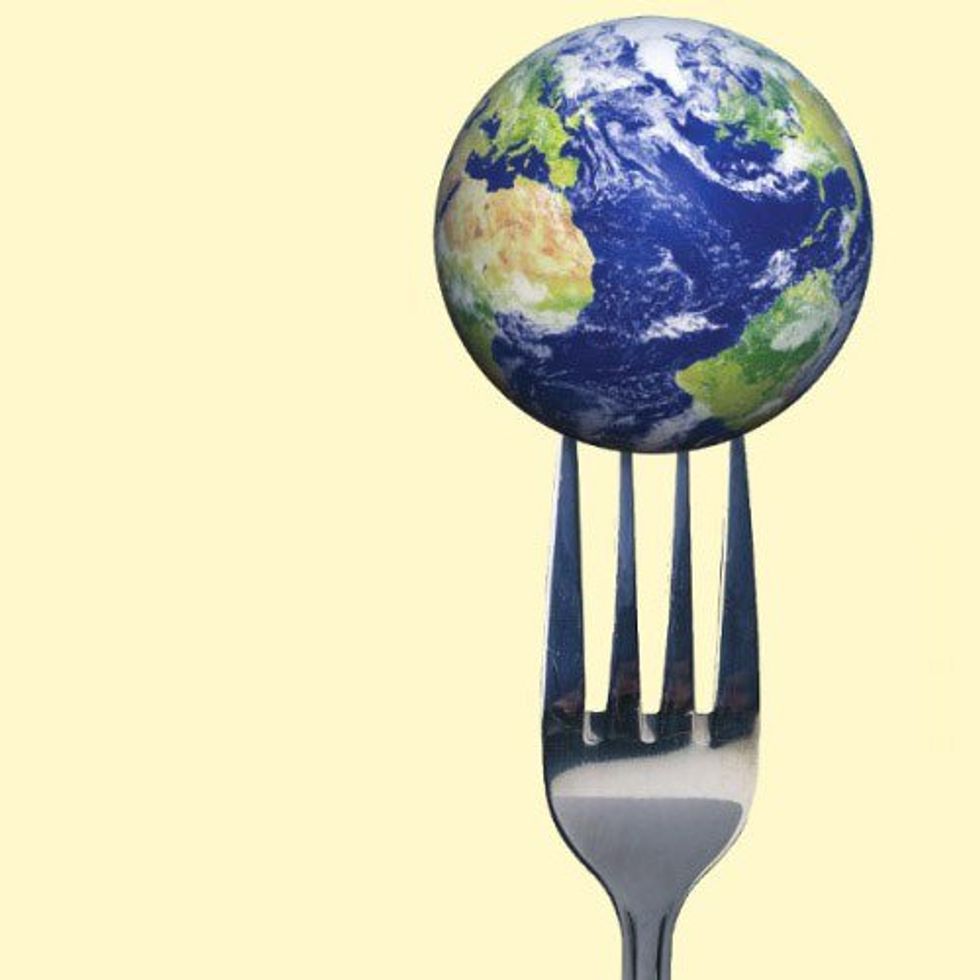
We all want to do our part in saving the environment. Did you know that what you eat actually has a huge impact on the Earth? Thousands of gallons of water are used daily, natural landscapes are turned into agricultural fields and tons of CO2 is released into our atmosphere every day to meet our agriculture and livestock needs. If you want to make an impact, your plate is definitely a good place to start. Remember, little changes can have a huge impact!
1. Eat seasonally.
When fruits and vegetables have to be grown out of their growing season, it takes a lot more resources than when they are grown in season. Eating seasonal fruits and vegetables helps lower your ecological footprint. The in-season fruits and vegetables in Pennsylvania during April are apples, asparagus, lettuce, mushrooms, potatoes, spinach and tomatoes — try to eat some of those over the next month. For more information about when different fruits and vegetables are in season check out this website — http://www.papreferred.com/seasonal_calendar.aspx.
2. Eat organic.
Certified organic food cannot use synthetic pesticides, fertilizers or antibiotics when they are being grown or produced. This limits the amount of pesticides that can runoff into the surrounding ecosystems and helps protect that ecosystem's biodiversity. Next time you go into a supermarket look for the organic seal of approval!
3. Eat less meat and dairy.
A majority of the meat raised for consumption in the US today is done in CAFOs (Concentrated Animal Feeding Operations). These CAFOs are extremely resource heavy. They use large amounts of water, corn and energy in order to produce meat in large quantities. Plus, the feeding operations are extremely unsanitary, so a lot of antibiotics and fecal matter get swept into the surrounding ecosystem. And if you aren’t convinced yet, meat production accounts for 18 percent of greenhouse gas emissions (http://www.hellawella.com/top-10-easy-ways-to-eat-...). Choosing a salad over a hamburger one night can have huge environmental benefits.
4. Eat as simply as possible.
Eating highly processed foods are not only bad for your health but can also be tough on the environment. The production and transportation of processed food leads to a lot of carbon emissions in the atmosphere. Likewise, processed foods may be wrapped in all sorts of plastics that get thrown away and end up in a landfill somewhere. Eating as simply as possible is definitely a way to go green and to eat more sustainably.
5. Drink tap water.
Why are we paying in money, in greenhouse gas emissions and plastic waste to transport water in small bottles when tap water is perfectly fine to drink (and often bottled water is just tap water from somewhere else)? By using a reusable water bottle and drinking tap water, your ecological impact will be decreased!
For more information check out this cool website.