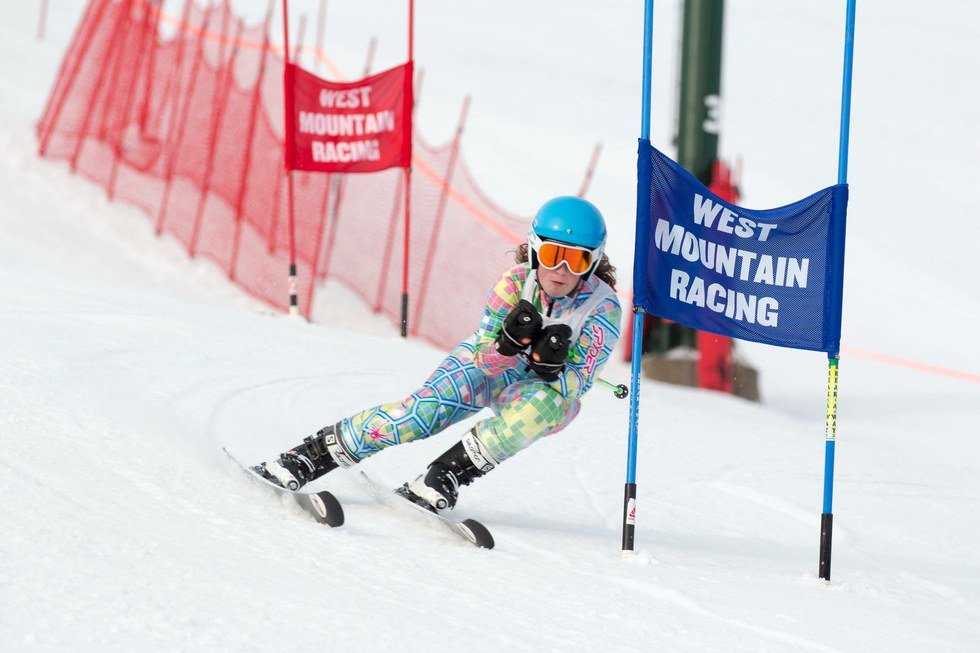
There is simply nothing else in this world that has molded me, challenged me, inspired me, and established me, more than the sport of ski racing. Not only is ski racing a handy hobby to share as an "interesting fact," but it is the most true and essential part of my identity. You see, I was forced into ski racing by tradition, but I fell in love with it by choice. The frost bitten cheeks and the early morning alarms never bothered me, because the pure feeling of liberation and joy that I felt flying down the mountain was worth it all. Amongst the celebratory cheers, broken bones, timeless friendships, mischief, DNF's and DSQ's, and laughter these are the ten most valuable lessons that my ski racing experience has taught me:
1. Hundredths of a second always do matter.
Literally and figuratively. Ski racing is based on hundredths of a second, that is an amount of time that you and I cannot begin to imagine; it is faster than a snap of my fingers or a clap of my hands and it is in that unimaginable amount of time that one person experiences victory and the other experiences defeat. On the slopes, I have learned to minimize these hundredths by wearing the most aerodynamic clothes and practicing powerful starts but in life this theory proves true also. We make decisions within hundredths of a second, some that very well may be life changing. I have also learned the importance of embracing time, each and every hundredth matters.
2. Always thank your parents.
Granted, us racers have it tough. Wearing boots so tight they make us nauseous, spending the day in freezing temperatures, and hurdling down a mountain of ice (at least here in New Jersey that is the case), but ski racing and your success as a ski racer depends heavily on the support of your parents. They must be willing to drive you to and from practice, cheer your name at every race, and unfortunately pay the large cost that ski racing brings with it. Thank them and continue to do so for the entirety of your life.
3. Sportsmanship.
Ski racing is a small world. You continuously see the same racers and coaches season after season at different mountains throughout your region and it becomes easy to establish relationships and a reputation. The way that you act after a tough crash or even an unexpected victory speaks volumes to all of those around you. Acknowledge the victories of your opponents. Wish the racer in front of you good luck. Instead of slamming your pole into the snow at the finish line and cursing, use the anger to conquer the mountain. Be classy.
4. How to handle expectations.
Expectations can be detrimental to an athlete's performance simply because of the mental impact that expectations have the ability to cause. I experienced this later in my ski racing career, when I began to realize how much people noticed me. I began to hear whispers of my name at the finish line, a chorus of "good luck's!" at the starting line, and my name began to appear in the newspapers. I carried these expectations with me each and every time I started a race, the expectations I imagined from my parents, my coaches, my team mates, my friends, my opponents, the parent's of my competition. One day, I realized that this burden was too heavy to fall on my shoulders and was beginning to affect my performance so I began to establish goals instead of expectations. I recognized the importance of racing against myself, improving myself, and reaching my own goals rather than fulfilling the expectations of those surrounding me. This is a powerful skill.
5. Friendship in competition.
I have created some of the most outrageous and spontaneous memories with my ski racing pals. Whether it be snowball fights before awards ceremonies, singing on chairlifts, or wearing suits made of duct tape, my friends were always sure to put a smile on my face even when a run did not go the way I had hoped or the pressure was beginning to build. The best part is, my closest friends were my biggest competition, but regardless of who won the race, the other would proudly shout your name at awards ceremonies or was usually standing right next to you on the podium. The most powerful part of this friendship in competition lesson I have learned, is how important it is to learn from one another's strengths and to always be supportive, whether it works out for you at the current moment or not. In reality, your friendship and the support you have shared amongst one another will matter more than any first place medal.
I hate the thought that someday I will no longer be able to consider myself a ski racer. I may even miss the pins and needles permanently ingrained into my feet from wearing boots three sizes too small and the butterflies I get in my stomach when the starter says, "Racer, ready?" Yes, someday I will have to say goodbye to this key aspect of my identity but all of the powerful lessons that I have learned will always remain with me and I will certainly never lose my passion for competition and for skiing.