

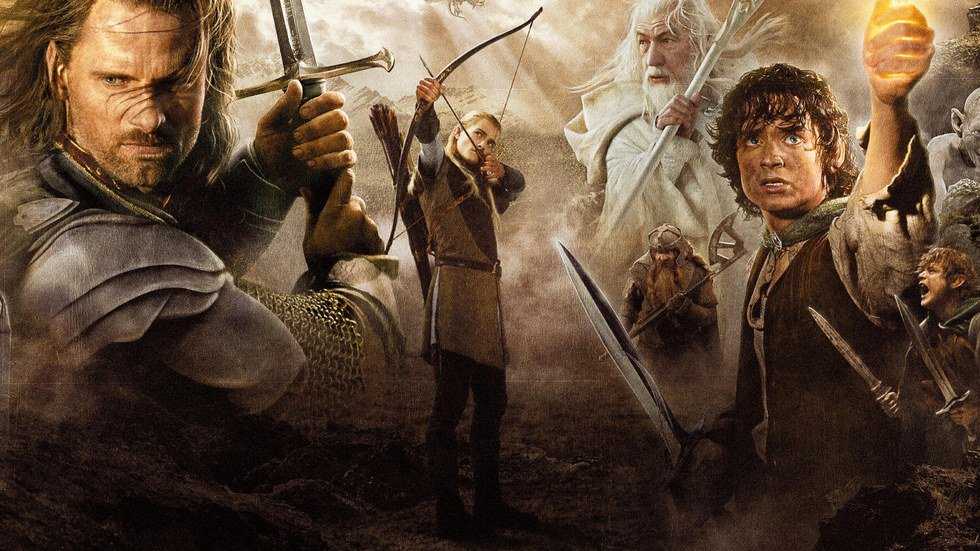
The first thing I’d like to say here is that I am a huge fan of The Lord of the Rings and the mythology of Middle Earth, so I know way more about any of this than I should. The second thing I’d like to note is that none of the misconceptions below are anybody’s fault; I’m not trying to call people out on whether or not they’re a “true fan” of The Lord of the Rings, or say that people are stupid for thinking what they think about it. The Lord of the Rings, The Silmarillion, and The Hobbit are pieces of a complex universe that spanned decades of deliberate and careful planning by one man who, half the time, had no clue what he was even talking about. Needless to say, some wires are going to get crossed when learning about it.
With that said, here are five misconceptions I’ve heard about The Lord of the Rings that I’d like to address.
1. Boromir is just a bad guy.
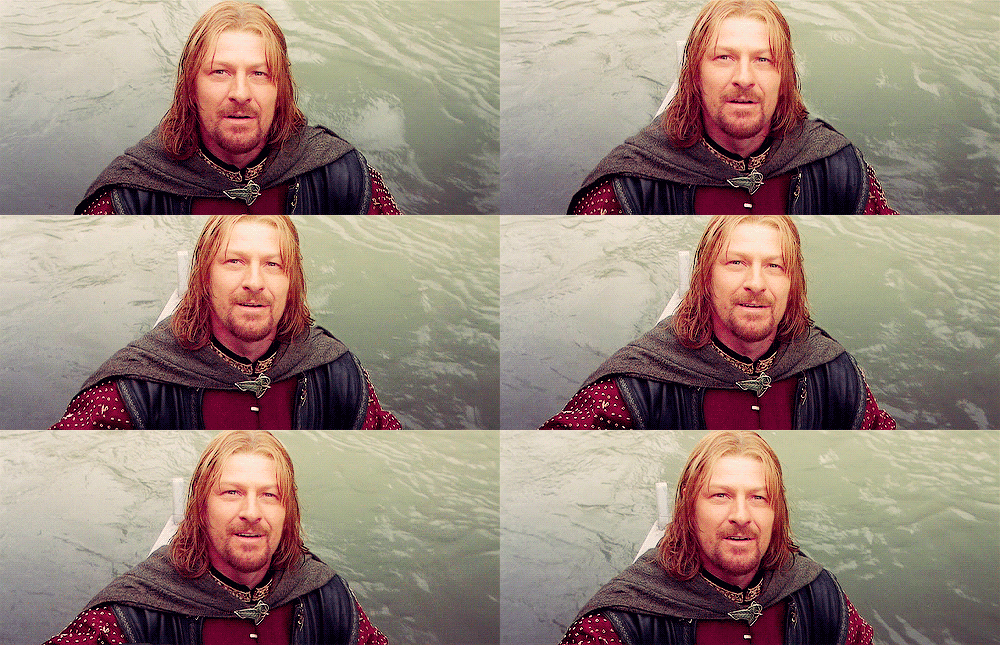
This is one of the most common misconceptions about The Lord of the Rings, especially from the theatrical release’s perspective. Boromir is depicted as a sort of dude-bro of Middle Earth, seeking glory and being mistrustful of other races. All he does while he’s in the fellowship is stare longingly after the Ring and make obvious comments. He even goes so far as to assault Frodo for the Ring. What a dick move. Sure, he apologizes for what he did, but honestly, that doesn’t cut it. Boromir is a complete tool from start to finish.
Actually, the theatrical depiction of Boromir couldn’t be further from who Boromir truly is. Boromir is the son of Denethor, the High Steward of Gondor (which simply means “acting king until the real king gets back”), and Boromir was raised to be Captain of the Guard from birth. All throughout his youth, he and his brother Faramir had been reared on tales of heroics, stories of the old kings of Gondor and the heroics of the first War of the Ring. Naturally, Boromir would grow up to try to emulate those historical figures, especially since stewardship would pass down to him once his father died.
A renowned warrior, Boromir was beloved by the men he led, and wanted nothing more than to protect Gondor and the people who called it home. Despite his father’s venomous affectation toward Faramir, Boromir still loved them both, and continued to love his father even as he dipped closer to insanity. Boromir was also incredibly fond of Pippin and Merry, two of the hobbits in the fellowship, and taught them how to defend themselves. Boromir’s anxiety and fear stem from an inability to protect his people from Sauron’s forces. Boromir is also anxious about being surrounded by people who are from different backgrounds than he is, and thus, may not listen to or sympathize with him. Boromir is one of the youngest in the fellowship, but he is strong and caring, a kind brother, a steadfast friend, and a loyal son. Boromir’s temptation and subsequent realization of his wrongdoing illustrates how powerful and evil the Ring is; it could bend even the strongest warrior to its will.
2. The quest took a few months, starting from Rivendell.
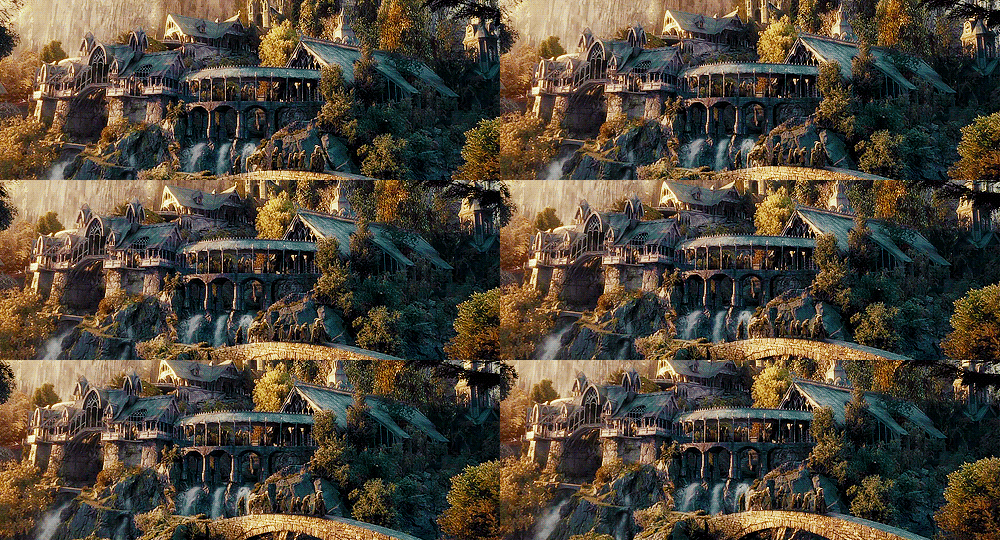
I mean, it didn’t take long for Gandalf to get to and from Gondor to talk to Frodo about his ring, and from there, it didn’t take them long to get to Rivendell. And the events in Rohan and Gondor probably lasted about a week or two—no more, no less. It didn’t take anybody very long to get anywhere and do much, and at the end, nobody seems much older. The quest took only a few months, right? Maybe two or three tops?
Well, bad news: the theatrical release and films were lying to you again. According to them, Gandalf’s departure from the Shire and his study in Gondor’s libraries was a matter of days, maybe a week at most. The lore of the books places Gandalf’s information-gathering along the span of a few months, because it also has to account for Gandalf being attacked by Saruman and imprisoned for a while, then making his way to Edoras before taming Shadowfax and riding back to Hobbiton. During that time, Frodo spends his time devising a plan so the other hobbits won’t think he just disappeared before selling off everything and heading out on his quest.
The quest itself takes roughly a year, starting from when Frodo is told about the Ring. Frodo is told about the powers of the One Ring in April, and Gandalf leaves the Shire for more information in June. Frodo leaves the Shire himself in September, and the Council of Elrond takes place in October. Unlike in the films, where it seems as though the fellowship sticks it out for a few weeks before breaking apart, they actually split in February of the following year—that’s a few months under their belts. The final leg of the quest—the Battle of Hornburg, the Battle of Pelennor Fields, and the Battle at the Black Gate take up the entirety of March.
Oh, and the kicker? Bilbo left Frodo his ring in 3001—17 years before Gandalf figures out it’s the One Ring. Time flies in movies, huh?
3. All elves can become mortal.
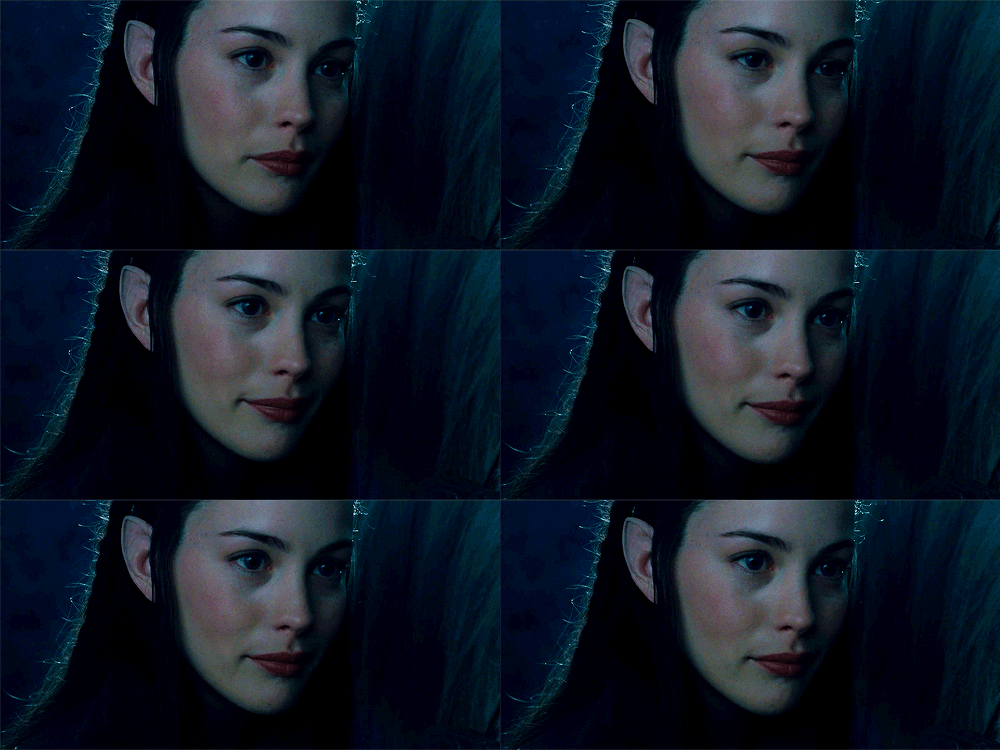
Look at Arwen! She even says she chooses a mortal life, so doesn’t that mean all elves can become mortal for the ones they love?
Sadly, no. Elves are, and will always be, immortal. When Eru, essentially “The One” who created the Valar, made the elves, he gifted them with immortality, which is non-negotiable (unless in the case of violent death, which is established well in the films). However, the race of men were gifted with the ability to die, as immortality was seen somewhat as a curse, since elves were constantly stuck within the “cycles of Arda,” or simply the cycles of the earth. Elves were sort of seen as doomed to a far more violent destruction, while men were seen as free from that obligation, and could live their lives under their own agency without worrying about the world at large.
So how can Arwen forfeit her elvish immortality? Well, her father, Elrond, is super old. He’s done a lot of crazy stuff in his time, and one of them includes being offered (by the Valar, no less) the option to be elvish or to be human. Elrond chose to be elvish, and his brother (named Elros) chose to be mortal. Since Elrond didn’t start off as an elf created by Eru, he is called “Elrond the Half-Elven,” and thus, he isn’t actually fully Elvish. And since Arwen is one of his children, she can choose to forfeit that immortality just as Elrond could choose to have it. Pretty crazy stuff.
Bonus: Elrond has two twin sons named Elrohir and Eladan, and they were with Aragorn at the Battle of Pelennor Fields.
4. Saruman died at Orthanc.

The extended edition of the films would have you believe Saruman was axed off by Grima Wormtongue while trapped on top of Orthanc (and how’s that for poetic irony?) and then doing a sick triple half-gainer only to impale himself on a really impractical water wheel. Uh, nice?
What actually happened to Saruman was much different. This is one place in which the theatrical release actually got it right. Saruman lived a few months after the destruction of Isengard, which unfortunately led to him deciding to try to take over the Shire on his own. That’s where Grima Wormtongue killed him—at the Battle of Bywater, surrounded by hobbits that had just beaten back Saruman’s forces.
Either way you slice it, Saruman didn’t have a really cool ending, did he?
5. Gandalf’s a wizard.
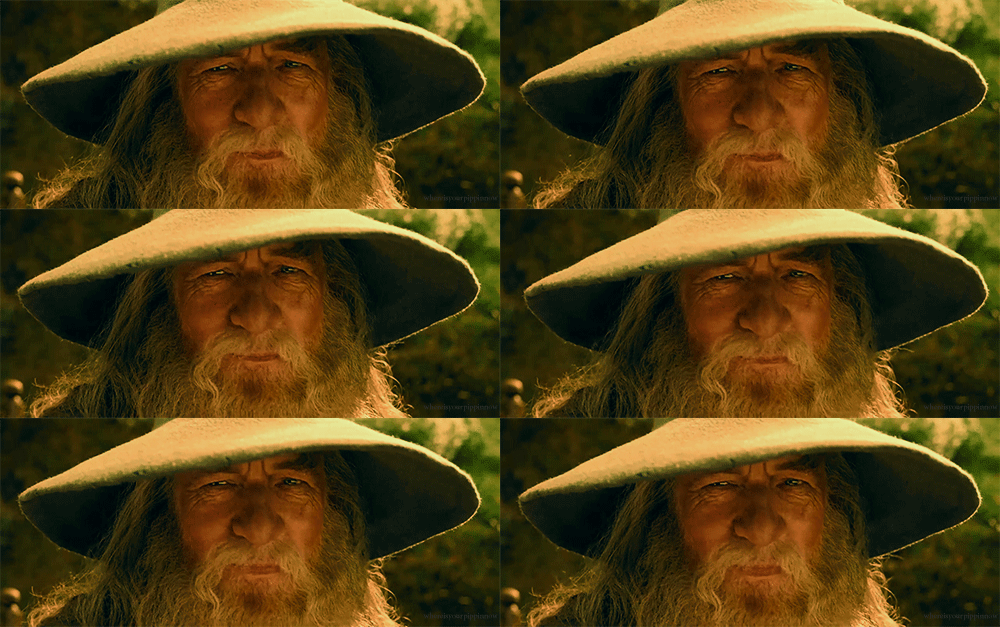
This one is severely complex, seeing as A) it's technically right, except B) we get to see Gandalf die and then be born anew. A lot of people already know that there’s something not quite right about Gandalf simply being a “wizard,” especially since our classic definition of “wizard” usually includes everything Gandalf is except the inexplicable ability to, you know, pull a Jesus with no logical reason.
Luckily, I am a bored nerd who loves to read, so I can sum this up pretty quickly and neatly for you. Gandalf is one of five Istari, which is simply the fancy name for “wizards” in Middle Earth. These Istari are people with extraordinary capabilities who span back to times even before elves were born.
The Valar, the god-like beings tasked with creating Middle Earth, had their own sort of squires, pages, servants, vassals, whatever-you’d-like-to-call-them called Maiar, who were often more involved with one single facet of a Vala’s power than the entirety of it. For instance, Ulmo is the Vala of Water, so he has dominion over water in general, from water vapor to literal oceans. Ulmo had two Maiar, Ossë and his wife Uinen, who both had their own associations regarding water. Ossë liked to rage storms (due to a little dabbling he did with evil in his youth), and Uinen loved the living things in the water, from plants to sea creatures. Some Valar had loads of Maiar, while some only had a few.
Gandalf and his fellow Istari are Maiar in human form, sent by the Valar to protect Middle Earth from Sauron, who was also a Maia. Melkor (more commonly known as Morgoth to some) was the Vala of Fire, and the most evil of the Valar, and Sauron was his Maia.
Gandalf was the patron of the Vala Nienna, who was essentially a goddess of mercy, so it’s easy to see why Gandalf was sent to Middle Earth. His revival is entirely the doing of the Valar, who brought him back because his job was not yet completed.
Bonus: Gandalf died at the hands of a Balrog—which are also Maiar, specifically Maiar corrupted by Melkor. Elves call Balrogs “Umaiar” to distinguish them from generally “good” Maiar.
And there you have it! Five common misconceptions about The Lord of the Rings, hopefully addressed! If you see any problems or corrections that need to be made, drop a comment below and I’ll make sure to add it—with credit, of course.
















