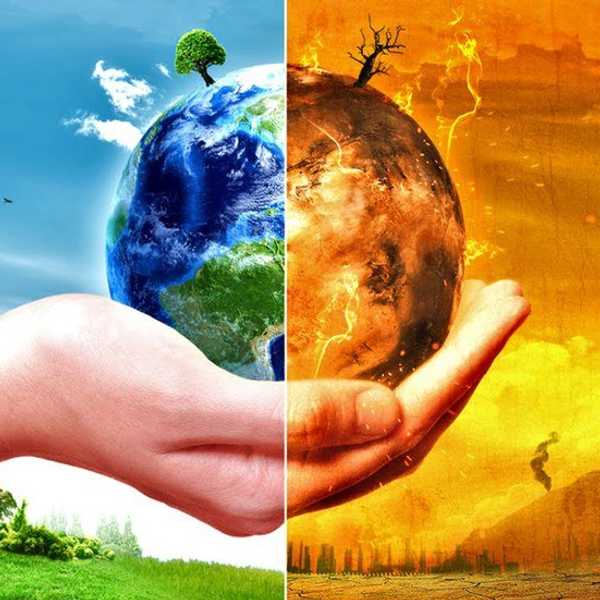
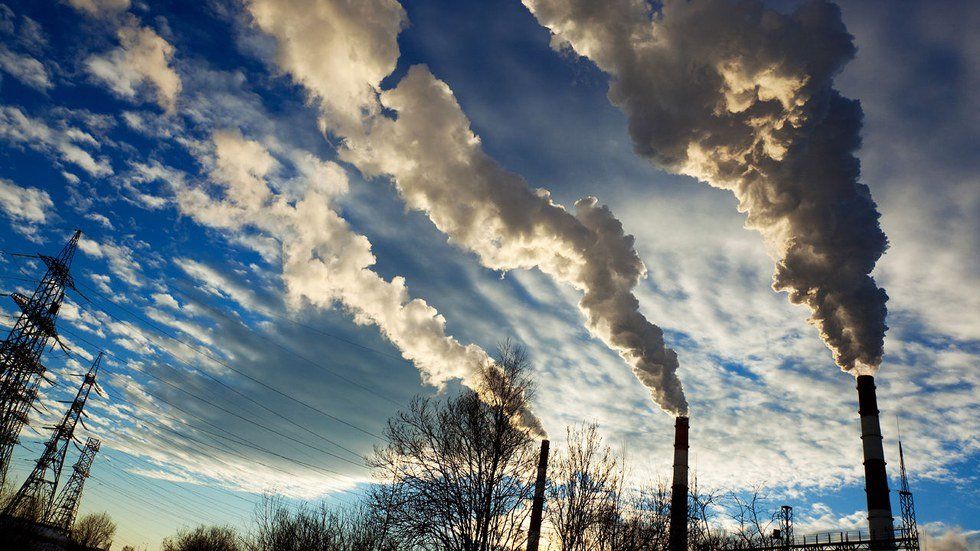
We've reached an unprecedented point in human history. For the last fifty years, we've made international, relatively bipartisan efforts to halt and reverse the devastating impact our actions have had on the planet and its climate. Unregulated carbon emissions led to a hole in the ozone layer and the confinement of greenhouse gasses in our atmosphere. Known as the Greenhouse Effect, we've essentially cooked the surface of our planet. All of this may sound familiar, as it should. However, what should raise some eyebrows is the fact that we just experienced the hottest year ever recorded, and the trend is continuing.
Have Your Voice Heard: Become an Odyssey Creator
The National Oceanic and Atmospheric Administration just released its annual State of the Climate report, which states that 2016 is, globally, the hottest year recorded since scientists began tracking global temperatures in 1880. The last three years have bore witness to an alarming increase in global temperatures, setting record highs internationally that essentially blew any and all other records out of the water. Overall, 2016 was approximately 1.7 degrees Fahrenheit above all global averages from the 20th century. While this may seem like a trivial increase, it's proportionately catastrophic for global climates and their populations. Deke Arndt, chief of the monitoring group at NOAA's National Centers for Environmental Information, on the global rise in average temperatures: "Some part of every continent, and some part of every major ocean basin was warmest on record."
The most common counterargument against climate change is the idea that the planet's global climate shifts periodically -- in cycles -- and we're just witnessing a global trend towards warmer temperatures. This is a very common misunderstanding of the intricacies of climate, characterizing it as some sort of self-regulatory pendulum that checks and balances itself. "Internal variability" moves the Earth's energy between the oceans and the atmosphere, which evolves into short-term surface warming and cooling patterns like El Nino and La Nina. However, these internal shifts in Earth's energy physically cannot cause climate change. The only way climate can change is through external forces disrupting the balance of Earth's energy, such as solar output, albedo (solar radiation), and atmospheric greenhouse gasses.
So, just for curiosity's sake, lets ignore the blatant, scientifically-backed information we have on the rise of greenhouse emissions and their effect on the atmosphere. If we take a look at the troposphere, the lowest level of the atmosphere, we see a distinct rise in temperatures across the globe, while the stratosphere and every concurring level afterwards is cooling. This suggests that less radiation is escaping out to space, effectively ruling out any Sun-related cycles, as the Sun would warm the atmosphere uniformly.
With a President who once regarded climate change as a "hoax" perpetrated by the Chinese now wielding the reigns of the free world, things may seem pretty bleak. However, the progressive policies enacted under the Obama Administration and the international surge towards clean energy with the Paris Agreement paints a very prosperous picture for the world's future. In fact, China has publicly claimed that the recent election of Donald Trump and the self-harming vitriol spewed by the President-elect “won’t affect China’s commitment to support climate negotiations and also the implementation of the Paris Agreement”. World markets recognize clean energy as the wave of the future, and the Paris Agreement solidified this movement. As international corporations begin to shift towards clean energy sources -- like Google announcing that they will function entirely on renewable energy starting 2017 -- it's hard to imagine a world that doesn't embrace this technology, whether the United States is on board or not.