


Once every 20 to 30 years, the American political system undergoes processes of profound renewal known as “realignments.” Sometimes they occur over the course of a decade, sometimes they occur over the course of just one election season. Though their causes vary, by the time the realignment has run its course, the nation is undoubtedly different: One party comes to dominate the other, ideological boundaries become blurred, loyalties shift and the issues change. It happened in 1860, it happened in 1896, it happened in 1932, and it happened in 1968. Whether the 2008 election of Barack Obama qualifies as one of these “watershed” events is still up for debate.
Although it may be too early to call, a messy combination of indicators and statistics seems to show that this upcoming election will be far from a watershed. While challenger candidates like Sen. Bernie Sanders surge in the polls and favorability ratings, the writing on the wall appears to have already ruled out any possibility of upset. This applies even more so to the Republican field, where the Rand Paul campaign appears to already be falling by the wayside. So, in an effort to explore the mechanics of the 2016 Primary Season, let’s take a look at our front runners.
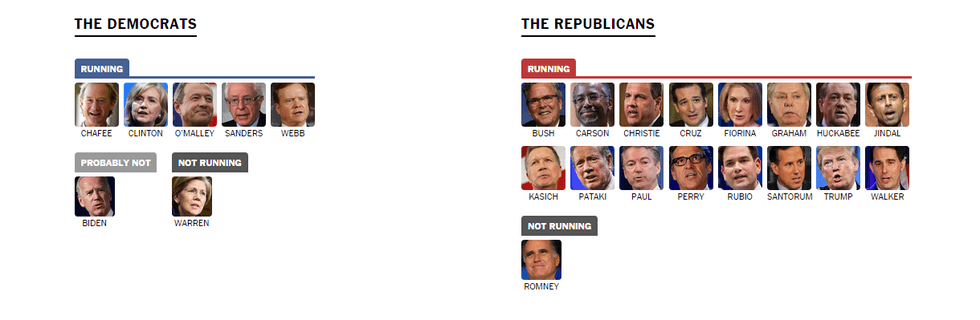
The most obvious (and most boring) prediction would see a general election match-up between former Secretary of State Hillary Clinton (D) and former Florida Governor Jeb Bush (R); however, many would argue that Wisconsin Governor Scott Walker stands just as much of a chance at clinching the GOP nomination as Bush does, if not more so.
Clinton’s standing as the superior candidate in the Democratic primaries doesn’t require much explaining. Most recent polls place her over 50 percent among Democrats, along with a double digit lead over the leading GOP candidate, Donald Trump. She has raised more money than any other candidate in either party by far and seems intent on amassing a massive war-chest in the lead up to the general election. To top it all off, Clinton currently holds more endorsements (which some argue to be the most important indicator this early on in the race) than any other non-incumbent candidate in the history of the Democratic Party. Like I said, not a lot of explaining needed here.
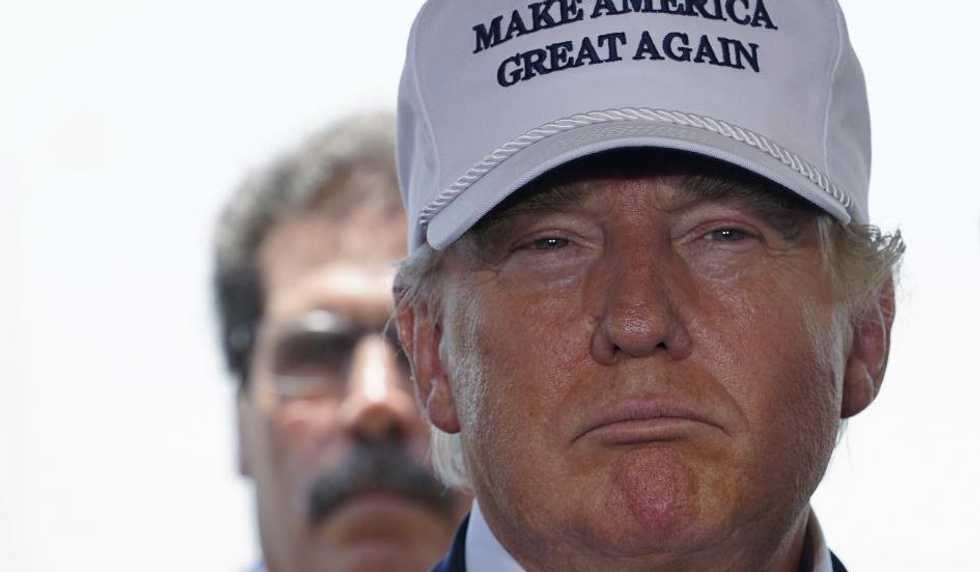
Determining which Republican candidate will come out on top this primary season is a different story. The 17-candidate-strong Republican field is, unfortunately, still being led by real estate mogul and billionaire investor Donald Trump. While this may suggest a high likelihood of his getting the nomination, don’t place your bets on Trump garnering any support outside the GOP’s fiery conservative base.
Moving past Trump, the current darling of the Republican establishment, Bush appears to be the most often cited as the inevitable choice for the nomination. Though his the donations funneled into his super-pac Right to Rise have made him the most well-funded candidate in the history of this country, Bush will not win the Republican nomination. If anyone has a clear path to the nomination, it’s Walker.
Should current strategies continue to be employed, Walker will win the Republican nomination for one simple reason: Primaries voters don’t vote for candidates, they vote for stories. That is, they do not vote based on statistics, voting record or job efficacy, they vote based on the narrative that the candidate is pushing.
For a proper illustration of this, look back to the 2008 Democratic Primary race between then-Senator Hillary Clinton and Barack Obama: Clinton had the money, the name, the experience and the endorsements. So why did she lose?
Simply put, she did not have the narrative. Someone who did not have all those advantages came by and told the electorate a story far superior to Clinton’s detached centrist rhetoric. While Clinton spouted talking points and refused to answer questions on divisive issues, Obama told the electorate a story of Hope and the possibility of Change.
As it was then, so it remains today.
Walker will win because his story involves his being a shining light of fiscal conservatism, which pulled a decaying, bloated, left-leaning state from the brink of economic collapse. All Walker needs to do is apply that narrative at the federal level. Not that any of that is necessarily true, but it is palatable. Especially when viewed in contrast to Bush, who by all accounts has no story at all. Or at least, doesn’t seem to be selling one.
















