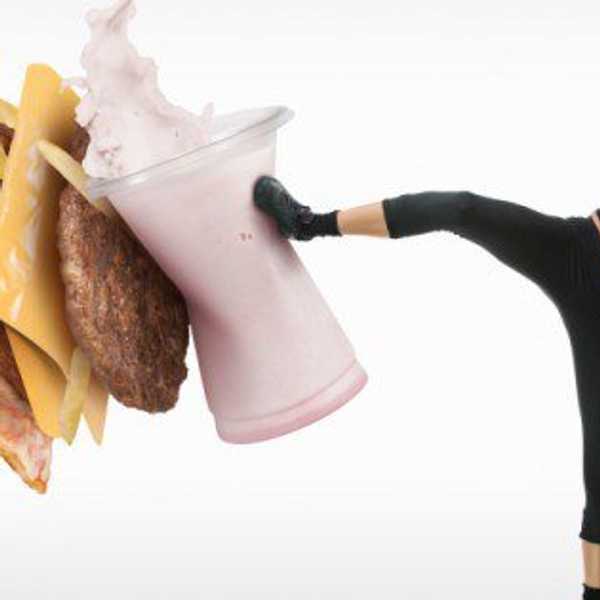

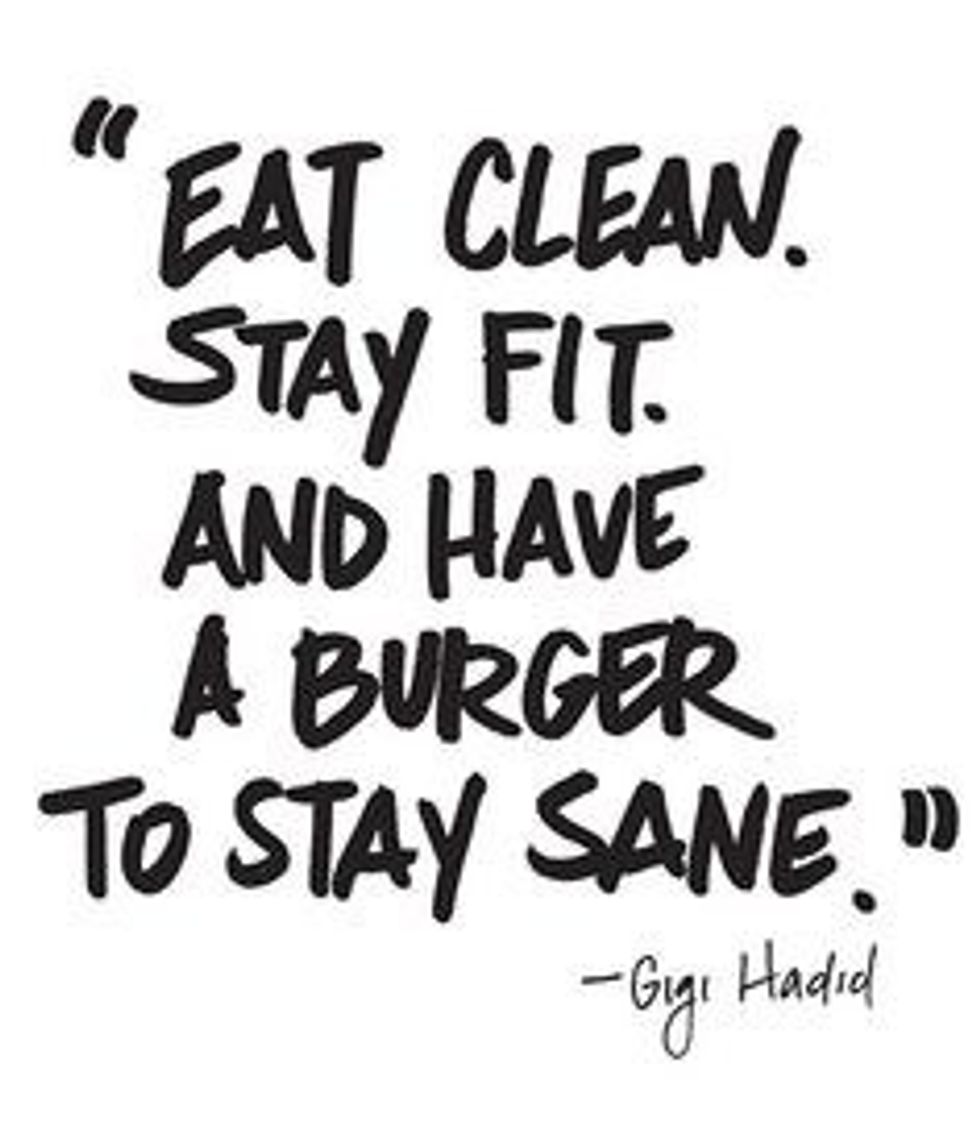
"I've always said, 'Eat clean to stay fit, have a burger to stay sane,'" Gigi Hadid told E! at "The Daily Front Row's" Fashion Los Angeles Awards. It’s similar to saying "everything in moderation," but no one has ever put it so eloquently.
1. Prepare more of your own meals.
Cooking more meals at home can help you take charge of what you’re eating and control exactly what goes into the food you’re eating.
2. Simplify.
Instead of being overly concerned with counting calories, think of your diet in terms of color, variety, and freshness. Focus on avoiding packaged and processed foods, and pick fresher ingredients.
3. Focus on how you feel after eating.
The more healthy food you eat, the better you’ll feel after. The more junk food you eat, the more likely you are to feel uncomfortable, nauseous, drained of energy, or just gross. It’s simple.
4. Drink plenty of water.
Water flushes our systems of waste products and toxins, yet many people go through life dehydrated, which causes tiredness, low energy, and headaches. It’s common to mistake thirst for hunger, so staying well hydrated will also help you feel less hungry and make healthier food choices.
5. Stock up on healthy foods.
Your dorm room definitely doesn’t need to be filled with high-preservative, high-calorie snacks. It’s recommended to buy healthy foods with a long shelf life, like nuts, seeds, dried fruit, rice cakes, and multi-grain crackers. Apples and citrus fruits can sit out for up to two weeks, and raw veggies and hummus are good options, too.
6. Always take the fruit.
College dining halls probably don't encourage students to take food to-go, but typically there's a fair game basket of produce hanging out somewhere near the exit. "Take the fruit!" If you've got it in your bag, you're going to eat it, and chances are it will keep you from grabbing something less healthy on the go.
7. Eat high-quality junk food.
French fries and ice cream are readily available all day every day at dining halls or up and down High Street. But if you're going to indulge in food you know isn't that great for you, you're better off going with something a little higher quality and really savoring it. You'll feel more satisfied, and it will make eating a delicious, buttery croissant more of a treat than an everyday habit.
8. Listen to your body.
We've all heard that late night snacking isn't a particularly smart choice, but if you're hungry, you're hungry. Learn to eat until you're full so that you're not creating an opening for cravings later on in the day. What if you spend the whole day eating well, and you still want that late night snack? Go for it, but instead of packing away a piece of pizza at 1 a.m., pick something a little lighter like popcorn or even some dark chocolate.
9. Find your food confidence.
A nutritionist once shared this little golden nugget of advice: When you make good decisions, you teach yourself that you can be trusted to make good decisions, but when you tell yourself that you're going to make a good decision and do the opposite, you're effectively letting yourself down. This negatively impacts your self-confidence, and you trust yourself less. So when you say you're not going to have ice cream for the third night in a row, don't do it. As you begin to trust yourself more, you'll become more confident in your own ability to make healthy choices, which eventually makes skipping that sundae a little easier.
10. Find your food-spiration!
It works like this: You see an awesome looking quinoa salad in your Instagram feed in the afternoon, and because you've got that on your mind, maybe you skip tonight's cheeseburger and go with a grain and roasted butternut squash mix from the salad bar instead.
11. Establish a routine.
Still wondering what healthy eating on campus really looks like? I found a one-day guide from breakfast through a midnight snack to get you started. As time goes on and you get to know what works for you, you can customize this food plan to your personal tastes and preferences!
12. Limit liquid calories.
Soda is essentially sugar water, which packs a caloric punch. Diet cola, though, clocking in at zero calories also tallies zero nutritional value. And smoothies and fruit juice, though healthier than soda, pack about the same number of calories. But the healthiest choice? Go with water (again, I can’t stress how important it is). Eight glasses are recommended per day, but if you hate drinking plain water, pick up flavored water or flavored seltzer. Unsweetened tea and coffee are good alternatives.
13. Snack smart.
Prepare yourself with smart, portable choices: a whole fruit, a granola bar, or small yogurt are all great picks for their antioxidants, fiber, and calcium content respectively. A guideline: one ounce of nuts is 24 almonds, 18 cashews, 14 walnut halves, 20 pecan halves, or 49 pistachios.
Breakfast: Grab some fruit and nuts, and if you have time, some oatmeal or eggs, which will fuel you for the next few hours. A beginning of the day rule: When in doubt, go for something high in fiber and protein.
Lunch: It's easy to skip lunch, but it's the meal that can set you up for success for the rest of the afternoon. A salad and hearty soup combination or a wrap (the calorie count should be around 500) will fill you up and keep you running at full power.
Snack: Throw a baggie of nuts or a snack bar (pick one that has less than 15 grams of sugar per serving) in your backpack. And remember, you can never go wrong with raw veggies.
Dinner: For your biggest meal of the day, go with a serving of salmon, chicken, or steak with a side of veggies. Going easy on carbs will not only help you stay focused and alert, it can also ensure you get higher-quality sleep.
Late night snack: Keeping almond butter and apples on hand in your room is a good end of day tactic, as is enjoying a really decadent piece of chocolate. And if you've got a pizza craving, skip the pepperoni and sausage—extra salty things have a tendency to make you feel bloated and tired the next day.
14. Curb your sweet tooth.
Candy, cookies, and cakes, oh my! But sugar, the simplest form of carbohydrate and found as lactose (milk sugar), fructose (fruit sugar), and sucrose (table sugar), is also part of an addictive cycle, and consumption causes peaks and valleys in your blood sugar level and leaves you craving more. Try to limit how much refined sugar you eat. White, brown, and powdered sugar are all culprits as well as honey and syrup. So choose low-sugar breakfast cereals, opt for fresh fruit for dessert, or simply cut out your daily can of Coke. It may seem like a big sacrifice, but it'll make a big difference.
15. Indulge socially.
I’m not one to tell you not to eat dessert, trust me. But how frequently you eat it (not to mention what kind of flaky, buttery, or sugar-laden treat you choose) can drastically effect your diet. Since many desserts are, for the most part, nutritionally empty, consider implementing a rule where you only indulge outside of the home a slice of birthday cake at a party or split dessert at a restaurant. This helps with overindulging on cookies or candy while watching Netflix in bed or eating ice cream out of the container after a long day of classes.