



Writing is ever-present. Be it tweets, blog posts, newspaper articles, text messages, term papers or full length novels, I don’t think we’ll ever stop the use of the written word. So for anyone looking to write anything, I have some catch all ideas to share about how to express yourself clearly, concisely, and without blemish.
1. Know what you’re trying to say.

It’s tough enough to put anything into words even if you do know what you mean to convey from the start. From writing a novel to giving your girlfriend the butterflies on her work email, you have to know what message you’re trying to get across. Sometimes, it’s that the middle class is slowly but surely sinking into an increasingly large lumpenproletariat in a technologically advanced super future, and sometimes it’s that your girlfriend looks very beautiful in her new dress. Sort it out before you begin. Try to write your summary in one sentence; once you have that, build from it.
2. Read texts of the same genre.

Yes, this works with any genre of writing. It’s like beginner’s practice for your brain, except it never gets too boring or too easy for you to enjoy. You’ll be able to pick up on how the writer uses certain description in certain places and where they leave all the details up to the reader and write with the bare minimums. Think about what effect the style has. Does it fit well with what they’re trying to say or what their goal is? Use their structures in your own writing.
3. Don’t skip words you don’t know.

Seriously, this isn’t sixth grade when you’re reading out loud in front of the girl you have a crush on and you skip over the word “presumptuously” because you have absolutely no idea what that is and you’re embarrassed. It’s okay. In fact, when you’re reading for school or for fun, keep your dictionaries out. Or, since it’s 2016, keep your Google tab up. If you don’t know it you can do a quick definition search and learn a new tool for your toolbox. Now you can use it later in your own writing if you wish.
4. Be specific.

Don’t just say, “his father was nice.” Say, “his father helped us wash the dishes until his hands were as pruned as ours and he even cooked us his homemade chili. I spent more time laughing with John’s dad than I did with John!” Replace simple boring statements like these in order to really further character development, not just outline a vague shape for a character, place, or moment in time in your writing.
5. Be concise.

This one often seems to make writers feel like they have to sacrifice number four. I promise you don’t. Description is awesome; just take out everything unnecessary. For instance, you don’t need to tell subscribers to your blog that you’re drinking coffee at 11:48pm while writing a last minute post (whoops!), totally irrelevant. In the example passage above, I would leave out details such as “there were so many loads of dishes and our drying towels were wet by the time we were finished,” because it’s redundant; the pruning fingers are enough to let readers know there were a ton of dishes to be done. Say it and move on.
6. Proofread your own work at least once before sending.
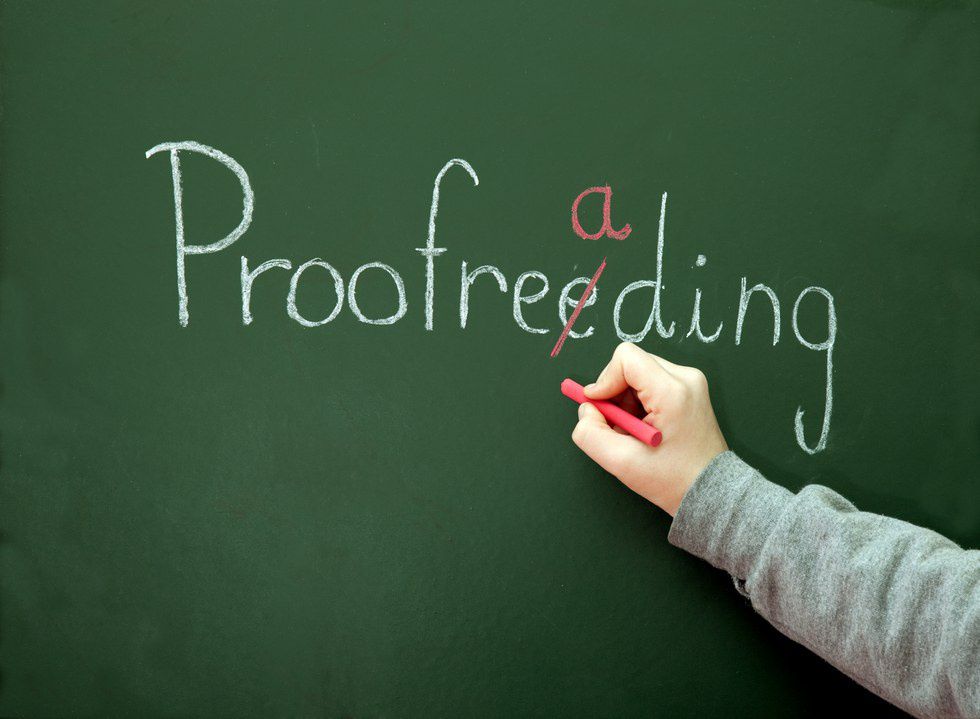
For the love of God, just proofread it! You spent four hours on a four page paper and it’s already late, just take a second to check for typos and formatting. Those autocorrect fails? Just proofread it. Recipe instructions? Double check those measurements. I know sometimes you’re in a rush, but so much trouble can be saved by just looking it over at the very least one time.
7. Study up.

If you want to write a poem about the war in Iraq, you’ve got to know some basics about it. Get your hands dirty in some real research--official death records, YouTube videos, interviews with veterans and anything else you can find. No one is going to appreciate a flowery poem with a completely off-base take on a subject so important. Take all of your writing seriously and be knowledgeable in whatever you’re writing about.
8. Ask your friends.

What do they think you could be doing better? Phrase it just like that. Otherwise, you’ll get compliments on everything you’ve done right, and you may not get any useful criticism at all. If you’re shy or if your friends are too nice to tell you that your writing bores the hell out of them, post on a Reddit thread and ask strangers the same question. Anonymous people will be more honest and it’ll be a better learning experience. I’ve done this many times. It only stings for a little while until you write your next piece and they have less to say about it. Growing pains aren’t just for teenagers and bodybuilders, you know.
9. Practice with no pressure.

Practice is always important, but make sure to spend some time creating things that aren’t going to earn you the grade which makes or breaks your scholarship funding or that will be sent to the love of your life. Write things you plan to throw away. Write things you plan to lock up in your journal forever, my-eyes-only style. It helps with the writer’s block because if you mess it up, it doesn’t matter anyway. You can get your practice in without feeling like it has to be perfect and you can always edit later because it’s not due for a deadline.
10. Don’t give up.

I know your reporting skills aren’t as good as Suzie, the girl who sits next to you at the office. I know that your poetry might not be as popular as the Instagram account with 2,000 likes on every verse screenshot. Everyone knows it. And that’s okay. Perfectly okay. Don’t give up, ever. You’ll never get better if you quit and you’ll never be happy giving up something you love. Most famous authors are never fully appreciated until they’re dead anyway. So keep it up!

















