I think we've all started to notice it.
Current events that are important and impactful are being discovered and covered exclusively on the internet. Television, radio, and newspapers will completely fail to cover large protests, paramount legislation recently passed, or scientific research that would change the way we view the world around us. It's so common that we've even come up with a term for it: "blackout." Media blackouts are a terrifying form of censorship, yet it's not the only trouble the U.S. is experiencing with our media outlets. Information is stretched, sensationalized to the point of becoming meaningless, and portrayed with such bias that it doesn't really classify as proper journalism.This is not to be taken lightly.
Journalism through all media forms is supposed to be a tool for democracy. We have a right to be informed about what's going on around us so that we have the opportunity to openly disagree for our representatives to hear. That's how we can help shape our country into what we want it to look like politically. If we are ill-informed, our representatives do not know (and will not ask) our opinion on an issue and act of their own accord. This isn't the way a democracy should be run.
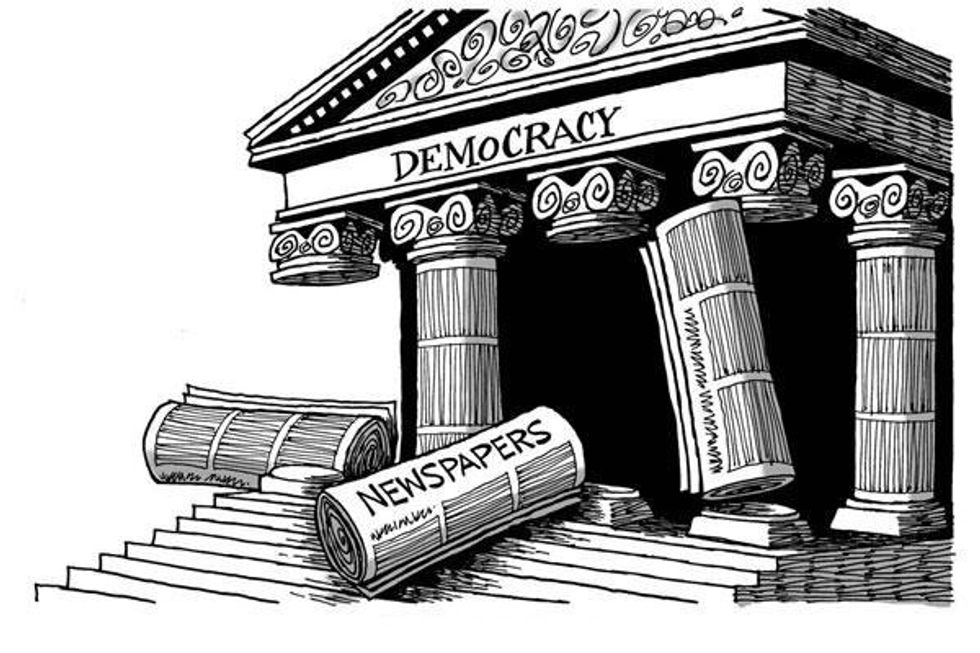
We need more watchdog journalism, which reports on the actions of those in power. All news should objectively and accurately report on what affects the public's needs, wants, and critical events.
Instead, most news stations are giving us entertainment.
Repetitive tragedy stories are dramatized to the point of soap opera-like portrayals and irrelevant things such as funny internet videos are being shown on the evening news. In fact, Fox News went to court in 2003 over falsifying information and won the case based on the lack of laws requiring the news to be factual. In the United States, "there is no rule against distorting or falsifying the news." What a nasty side effect of our beautiful first amendment.
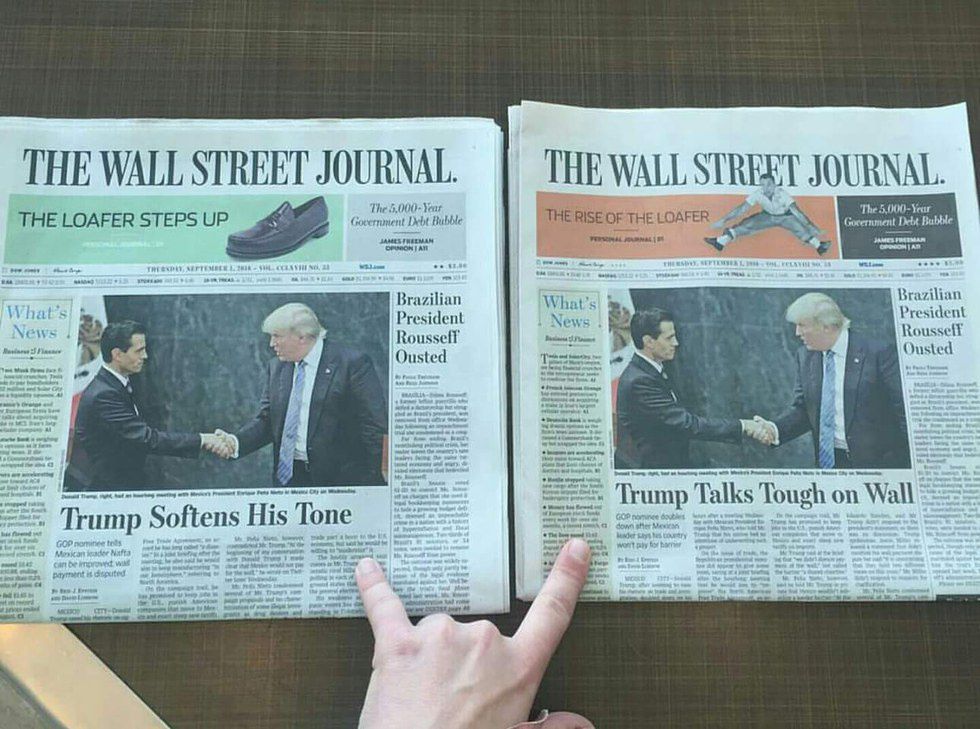
As a result of this, mainstream media can refrain from covering any story or event they want regardless of whether or not it should ethically be told. Anything can be considered "news." Information is legally skewed; bias is sprinkled on every page of the newspaper. For example, take a look at the two front page headlines below: the same information is shown, with the same photo, from the same publication, but two completely different scenarios are painted. One shows Trump as "soft," and the other "tough." Different versions of the same paper can be distributed in different areas to appeal to separate audiences. This can happen when two areas have opposing political views based on voting patterns. You're shown what you want to see.
As for omitting important stories, the blackout concerning the Native American Dakota oil pipeline blockade is a current example. I haven't seen a single thing about this on the television or heard about it on the radio yet, but I've learned about it through online outlets.
So why are some things covered to no end and some ignored?
Firstly, as with all things in the entertainment business, ratings are important. Channels need more people to be watching when their show comes on; more people need to be buying the newspaper when it comes off the press; people need to like it. Therefore whatever makes more people interact with your product, the more you'll keep doing it.
As for complete blackouts, these may be the result of these outlets predicting their ratings will go down after publishing these stories. Controversy often fuels views, discussion, and thus more coverage, which is why some controversial stories become overplayed to the point of exhaustion. If a story is a big deal but not controversial, it may be ignored. This suggestion applies to the situation in Dakota and is argued tactfully by Nick Bernabe who says that since the issue isn't polarizing--all sides of the political spectrum agree on the subject--it won't spark enough debate to be a successful story for a company. Unfortunately, a story failing to produce ratings and better earnings for a TV station can cause a protest to be unacknowledged or an unfavorable law to be swept under the rug unnoticed.
Coverage lacks diversity because those who own our media companies lack diversity.
According to an article published by Forbes last June, 15 billionaires own most of U.S. media companies and can exert a powerful influence over the way they operate. The overwhelming majority of those on the list are white males. Although the concerns of the wealthy are important, I don't think it's exactly representative of our population to focus solely on what they think is worth publishing.
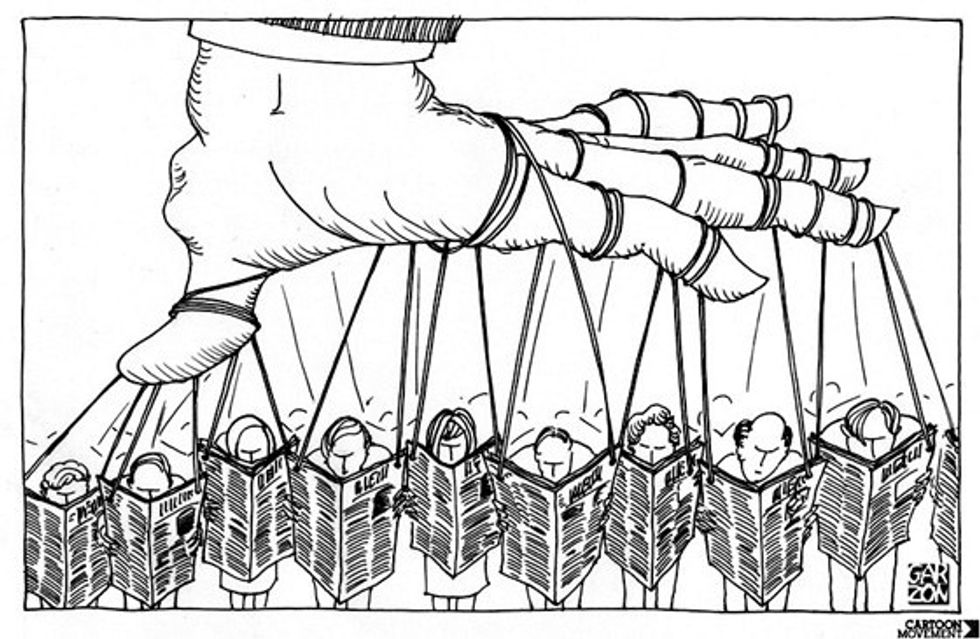
This is also why the news you'll find on the internet is so much different. Everyone and anyone is producing it. News is found informally through cell phone videos and formally through publication websites, as well as in tweets or photo journalist galleries. Online news better reflects the diversity of our country. A problem with this form of media though, is you can choose what you want to see and what you want to ignore by what you choose to click on. However, thorough research can be done.
What can we do about this?
Always be aware. Pay attention to what news stations you're getting your information from and know which way on the political spectrum they lean so you can prepare for bias. Get your news from multiple sources and outlets so that if your favorite website or paper fails to report it, you can still be informed. Read stories coming from both conservative and liberal voices (Fox 2 versus The Week, for example). Don't fall prey to your own biases. Fact check. Expose sources you find to be wrong.
Most importantly, seek to be informed, not entertained.