
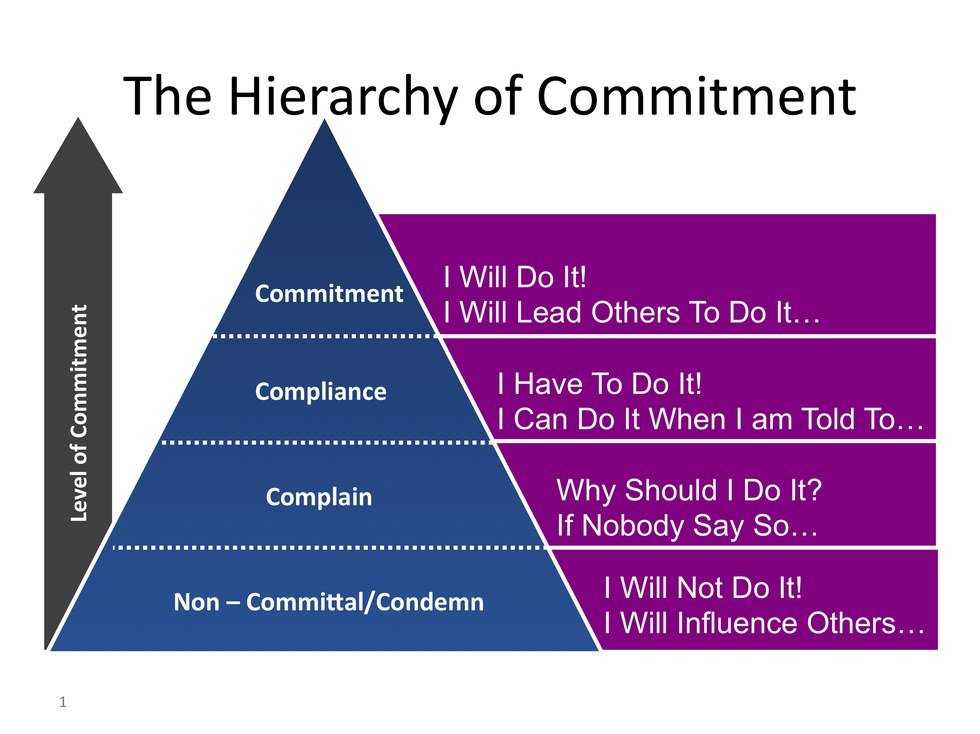
To some people, the concept of a commitment is a mixed bag. While a commitment may be defined as "the state or quality of being dedicated to a cause, activity, etc" some hold their word near and dear to their hearts, with unwavering loyalty and initiative to carry out a promise. Others don’t view a commitment as important. They might not necessarily lie to your face habitually, but they aren’t as committed, dedicated, to what they said or agreed to do. Whichever side you might stand on, today, I plan to go in depth in to what I believe a true ‘commitment’ to be, as well as how I carry myself with regards to its concept.
I’ve always been someone who values integrity and tries to do right by myself. I may screw up every here and there, but I try to make sure that when I do, it’s not because I tried to do something sneaky, take a shortcut or screw someone over who didn’t deserve it. To me, you can really call just about anything a commitment-- from lifelong commitments such as wedding vows, to much smaller ones such as a promise to take your parents’ money and spend it on a carton of eggs and a couple gallons of milk rather than that candy that looks really delicious. Me, I try to, as a general rule, never lie to anybody unless doing so would protect someone, be it the person I’m lying to or someone else, from something that would be very dangerous otherwise. Whether it’s someone I met 5 minutes ago or someone I’ve known my whole life, my word means a lot to me and I try to keep it as clean as possible.
However, integrity is not merely upholding a promise, or avoiding telling a lie. As such, a commitment isn’t merely limited to how honest one might be. If I sign up for a class here at MCLA, I have committed to showing up to as many classes as humanly possible while putting forth my best effort day in, day out. Doing any less would be neglecting my commitment, which wouldn’t be fair to my professor, wouldn’t be fair to my hard working classmates and most importantly, it wouldn’t be fair or right to do to myself.
Dependability and being reliable also tie into commitments. If you haven’t figured it out by now, telling someone you are going to do something and fulfilling your word to the best of your ability is an example of commitment. If I tell Emma Monahan, president of WJJW, a club I’m on the E Board for, that I’m going to have a flyer advertising an upcoming meeting created, printed out and distributed around campus, and I am able to successfully do that in a timely manner (I was), this is dependability. If I did that and it took me a week to create it, days to contact the people I’d need to contact to get it approved, and another few days to have the flyers distributed, or if none of this stuff ended up happening, even if I meant well, this would be an example of a lack of reliability which damages your ability to truly commit to something.
Another thing that ties into commitment, and to some degree dependability, is doing something in a timely manner, or doing it when you say you will. If I tell Kaitlin Wright, president of the MCLA Debate Club, another club I’m in, that I can meet her at a certain time to drop off something off that’s important to an event the Debate Club is running, and I make it on time (I did), that is an example of dependability and accomplishing something in a timely manner that was agreed upon. If, in the same vein, I ended up being late without good reason or I don’t show up at all, then I’ve not only just wasted someone’s valuable time, I’ve shown them that I don’t care enough for A. My word in saying that I’d accomplish this at a certain time, B. My reliability in being able to accomplish something and/or C. That I don’t value their time, or them as a person, enough to stick to something I told them I would do.
I’ll end off on the notion that you can lack commitment and/or reliability without even having bad intentions. If I tell Ally Thienel, the president of MCLA’s Television and Film Society, another club I’m in, that I can edit an entire 3 hours worth of film in a single day, since this goal is completely unreasonable and impossible to meet, I am setting myself up to fail. Worse yet, by saying I can do something, while later not being able to do it, I am compromising my integrity and commitment to achieving the goal. Even if Ally knew I meant well, TFS’ operations may or may not have been based that particular day or period of time around my ability to achieve the aforementioned task. This means that, for a best case scenario, a backup plan was made in the event of my failure and the losses were minimal. For a worst case scenario, stock was placed into my ability to achieve a task. Having failed it, I would, in this instance, not only have wasted a ton of valuable time that could’ve been used achieving something more important and valuable, but it also means that a backup plan was not put into place, which could potentially place the entire project into jeopardy. This would mean that, even though I meant well, my actions could have a severe impact on a large group of people, on a personal and business level.
In short, the important thing to note here is that making a true commitment you can abide to requires a few things. First, you have to be willing to actually uphold your commitment. Second, you have to know that you have a reasonable chance at being able to achieve your promised goal. Third, you have to understand your own limitations as a person in what you are trying to do, and not to place an exorbitant amount of stress on a commitment to the point where you cannot fulfill it. In these instances, it is better to just not make the commitment and to find an alternate way to achieve what you need.
Have a path, travel it. Prepare for the journey you are embarking on and don’t abandon it.