

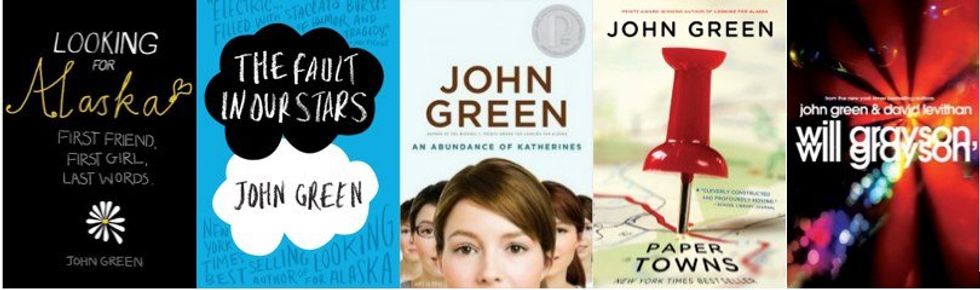
Recently, I came across an article by Entertainment Weekly entitled “11 YA novels not just for kids.” I was befuddled when I read this title. As a massive reader of young adult fiction, I was confused as to why anyone who was familiar with the genre would categorize it with so-called “kids” books. Even an article written in Writer's Digest attests that young adult and children/middle grade novels have differences. You could consider “Harry Potter and the Prisoner of Azkaban” a children's and young adult novel. However, that doesn’t make other books, such as “Paper Towns” by John Green, automatically fall underneath this category.
There are certain themes in young adult novels that kids most likely should not be reading, yet it seems as though the entertainment industry is adamant to put them under their own, all-encompassing genre, which includes both children and young adult novels. There are 3 reasons (although probably more if one truly sat down and gave it a good think) why the young adult genre should not be classified as kids books.
1. Growing Up Too Fast
A lot of young adult books set expectations for what life will be like as a teenager/early 20-something. Readers that are younger than the suggested age for these novels may begin to think that they should try to become like and act the same way the characters in the novels do. Whether it be worrying about appearance, insecurities, relationships, and so on, young adult novels can implement unnecessary qualms in younger audiences. These younger audiences may not have even reached the age where they would normally think about such things. Kids need to focus on being kids, and not who they should be when they become teenagers.
2. Sex, Alcohol, Drugs, and Language
Young adult novels, although hardly ever extremely explicit, explore coming-of-age themes such as sex, alcohol, drugs, and language. High school parties, explorations of sexuality, and bad language are not uncommon in the genre. Plenty of young adult novels aren’t about high school teenagers smoking, drinking, and trying to figure out who they are. Some are considered science fiction or fantasy. This, however, doesn’t mean those books are void of these themes. Even in the young adult fantasy series “Throne of Glass” by Sarah J. Maas, the 17-year-old main character more than hints that she and another main character in the series finally decided to take their relationship to the next step. A reader of the younger audience may be taken aback at reading this, and depending on their maturity level, may not be entirely comfortable or understanding of the situations spreading before them on the page.
3. Tough Stuff
These days, young adult novels are beginning to explore “tough stuff” more than ever before. Depression, anxiety, mental illness, sexual victimization, etc. are main story lines for many novels in the genre. Books such as “The Perks of Being a Wallflower” by Stephen Chbosky and “Speak” by Laurie Halse Anderson are examples of young adult books that explore these themes. It’s good for students in high school to be aware of such things, but for audiences younger than that it may be shocking, unnecessarily upsetting, and maybe even confusing for them to think about.
All three of these reasons are completely subjective to the reader, of course. There may be younger audiences that are familiar with these themes depending on their life experiences. However, that does not mean the media and entertainment industry should be advertising them as “kids” books.
This is especially true of young adult novels that are being turned into movies, such as “It’s Kind of a Funny Story” by Ned Vizzini and “Paper Towns” by John Green. While watching “Paper Towns” in the movie theater, I noticed there were many kids there with their parents. Perhaps their parents were led to believe this would be a film they could enjoy with their children. Little did they know that there would be a scene in the movie where one of the main character’s friends jokes about getting intimate with his attractive mother. Needless to say, most of the parents’ expressions were surprised and embarrassed at this scene along with a few others that they did not expect.
These books and movies, among many others, therefore may not be for the audience that the media says they are for. It’s important for the media to be more wary of what they say is and isn’t a kids novel. Many avid young adult readers can attest to this as the debate continues on what is and isn’t considered young adult. With the genre gaining more noise and popularity these days, one must remember to break down the title of “young adult” and remember that the word “adult” is the defining word in the term. With that in mind, perhaps readers will be more aware of what they’re suggesting their children and/or younger peers should read.