
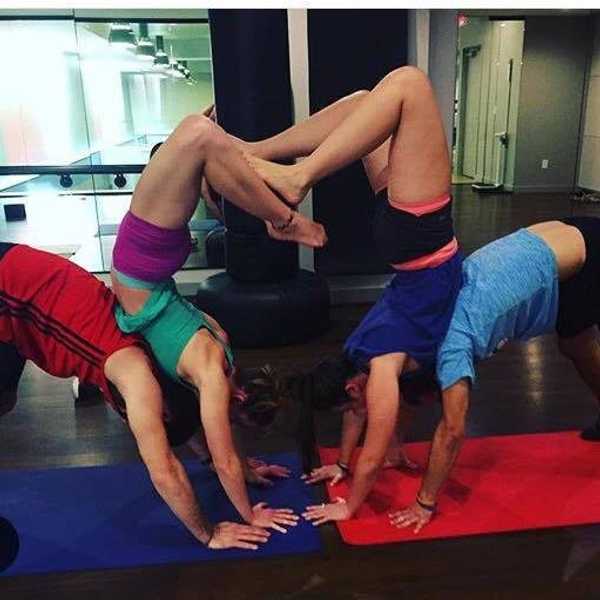

When people hear that I practice yoga, it garners many reactions and assumptions -- I must be super flexible, zen, focused, healthy, spiritual, Buddha-like. Only a few of those are true. But injury and pain are often not associated with yoga, in fact, they are considered the opposite, but like any activity, it is only great when done properly, safely, and dare I say, mindfully?
I have practiced asanas (yoga postures) since 2011. The first time I took a yoga class, I absolutely hated it. My mom took me to a class and I didn't expect the movement to be challenging because I considered myself to be flexible, and I did not have the patience to move slowly into somewhat uncomfortable and strenuous positions. I wanted to look and be exactly like everyone else in the class, but I was a beginner.
A year later, I returned to the studio on my own and I committed to classes and developed my strength mentally and physically. It wasn't until I went through and completed my 200-hour yoga teacher training in 2016 that I could say with confidence that I understood the importance of asana and the other seven limbs of yoga.
When I went back to the first studio I practiced at, I was disappointed that the Level 1 class didn't seem as safe of a place to practice as the studio where I trained. In my coursework, there was an emphasis on alignment, learning what the body must do to sustain an asana, creating hour long sequences that focus on strengthening and stretching in order to build up to challenging poses, and correcting the issues that have developed from years of bad habits. This class threw me for a whirl because there was no gradual shift to more difficult poses!
In my training, there were very simple instructions for different positions that would protect joints such as the knee from being strained or torqued. For example, in Warrior I (heel-to-inner-arch alignment) and Warrior II (heel-to-heel alignment) the position of the feet are slightly modified to protect the knee. In this level 1 class, everyone had different footing and therefore, some foundations were not as strong as others.
Reinforcing these habits in a class is one of the worst things students and teachers can do. When teachers do not inform students the basic foundation of a pose, offer modifications for a pose, or gauge the level of a class, they are doing their students a disservice. Everyone in a class comes in with a unique body and while a teacher cannot correct everyone individually, they can see what people are struggling with and address it -- in fact, that makes for the best kind of teacher -- one who is receptive and observant of their students.
The reason the other seven limbs of yoga are important to any practice are because they encourage the thoughtfulness and awareness of body, breath, and mind. Instead of rushing through poses and ignoring the importance of foundation and structure, all eight limbs should be known when practicing asana. While I don't expect every student to recite the limbs and learn Sanskrit, I do expect teachers to show students good habits and correct when students err.
At the end of the day, yoga is meant to be practice for physical and mental growth, not a quick fix. Discipline, reflection, and openness have made my yoga practice much better. I love the feeling of muscle getting stronger after an intense and structured class. I cannot emphasize enough that each and every student should feel safe and strong in a yoga class. If something doesn't feel right or pain arises, child's pose or any resting pose, does a student more good than pushing, pushing, and pushing some more.