

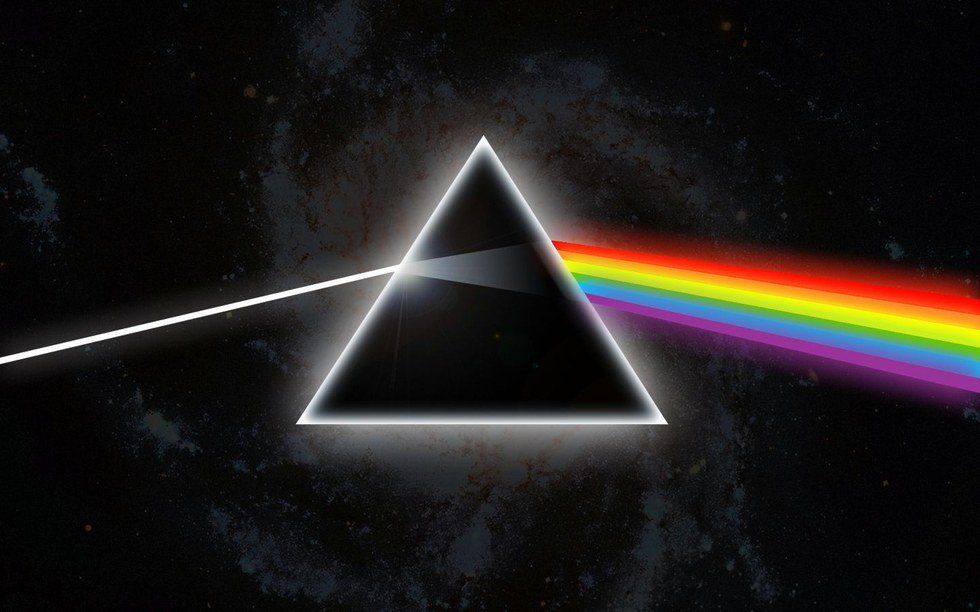
This week in class, we started learning about the principles of Yin and Yang. I was expecting the talk about balance of the opposites, but it was much more complex than that. While I was struggling to understand their interdependence and constant morphing, I realized that I had already comprehended a part of it (or, at least, my own version of it), 2 years ago, during a long car ride listening to Wish You Were Here and thinking far too much about it.
Wish You Were Here by Pink Floyd is a song about absence. It has very little to do with Oriental philosophies, at least as far as I'm concerned, as its own name indicates the contrary of contentment and self-sufficiency. Nonetheless, an interpretation following this line is still possible, specially if focusing on the first strophe:
"So, so you think you can tell / Heaven from Hell
Blue skies from pain / Can you tell a green field
from a cold steel rail? / A smile from a veil?
Do you think you can tell?"
The song is saying that, without the absent person (Syd Barrett, a former integrant who was lost to the drugs), everything is the same, even Heaven seems like Hell. According to the principles of Yin and Yang, though, all things can become their opposites at any time, and not only Heaven might be like Hell, but Hell can be just like Heaven also. It's a matter of perspective, as each person has their own ideas of what they love and what they hate, but it's also a matter of transformation, of one morphing into the other when an extreme is reached. The Yin-Yang symbol itself gives a sense of that, with one half chasing the other endlessly.
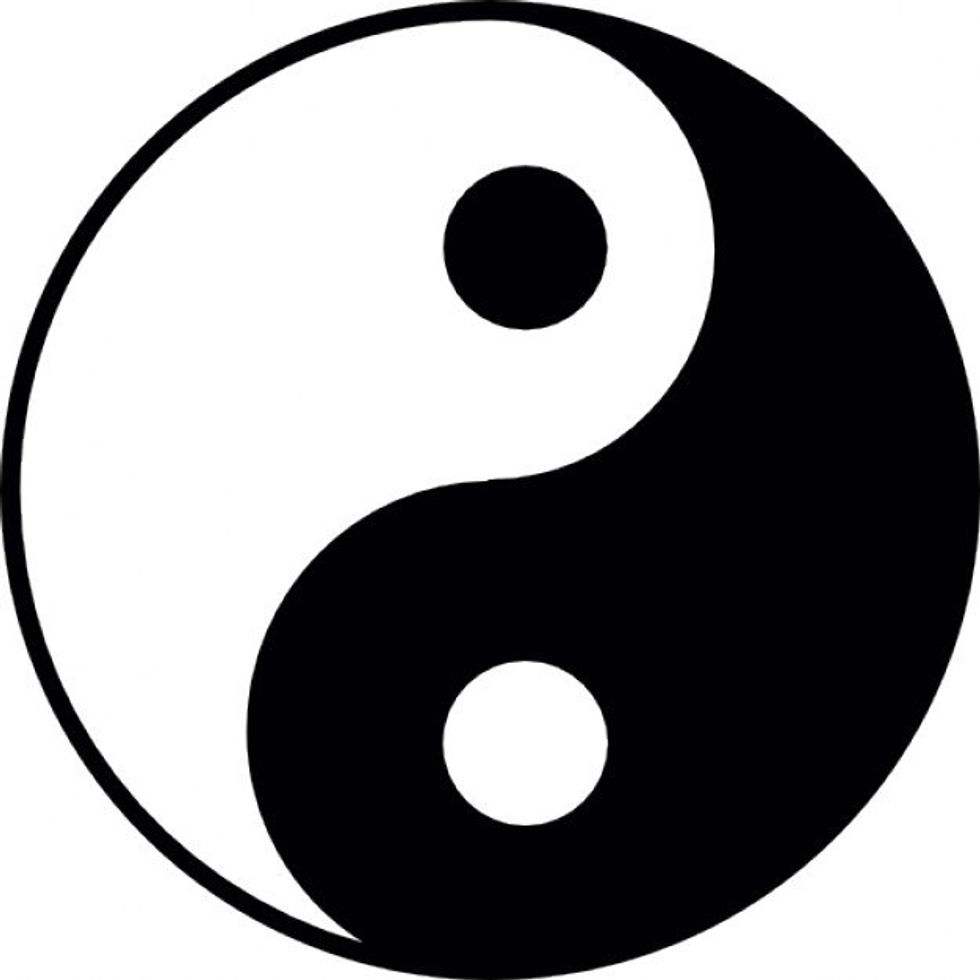
In Wish You Were Here, also, it's implied that one of the sides is good, while the other is bad. There's no such thing in Yin-Yang. All the knowable things have a bit of each side (idea represented by the dark and white spots), and none of them is either good or bad. Yin is darkness, passivity, and femininity, while Yang is light, activity, and masculinity. Some things have more from one than from the other, but what's aimed is a balance, although it's understood that a perfect balance would be static, no longer being desirable. Change is appreciated, for it's natural, just like Night and Day. The only bad thing are excesses, as none of the halves can fill the circle by itself.
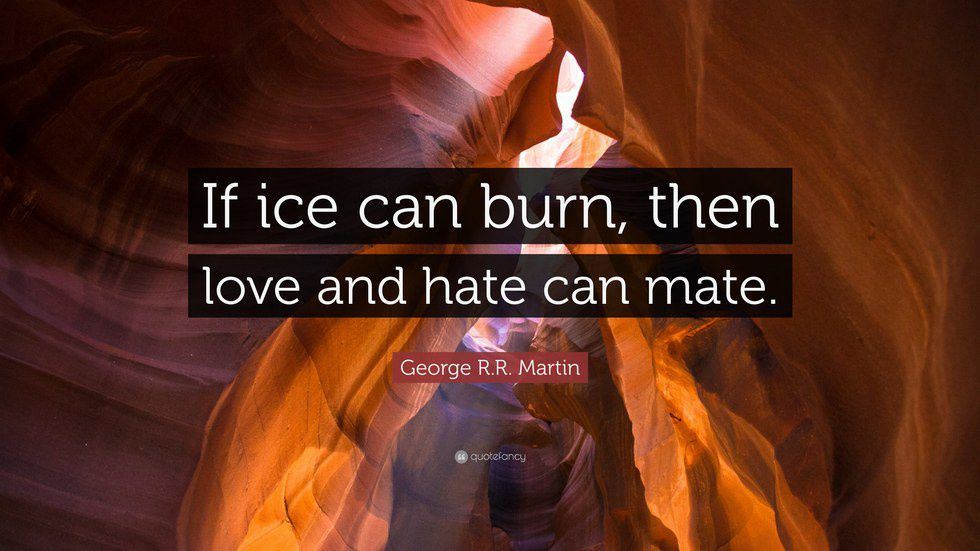
Listening to Pink Floyd's song, I started thinking about the "Cycle of Life". Maybe I was under the influence of George R. R. Martin and had been wondering too much about how ice can burn, but I was struck by the idea that the extremes of opposites might actually be the same thing. A fool and a sage might make the same decision, great enemies need each other as much as best friends, and so life turns around this circle in which it's impossible to tell apart two completely distinct things. Yin-Yang says that we can only determine something by knowing its opposite, and that's where all the harmfulness of the extremes lies. Transformation must be natural, swift. It's not a brightness that strikes you blind, but the rising and the setting of the Sun. The moment you don't know anymore the contrary of your actions, you no longer know what you're doing, and the barrier between the sage and the fool is just the conscience they have over their decisions.
From these thoughts, I can take the perils of judgment as a lesson because it's so easy to be mistaken about in which level of the circle someone else actually is. I myself don't know in which I am, as I'm not sure if everything I just said actually makes sense, but I'll try to put some of it into practice and just accept that knowledge, like everything else, is always changing. I might come to comprehend Yin and Yang better later, and not swearing by what I say is a way of leaving myself open for new discoveries. To conclude, as I wrote this article based on three almost unrelated authors, I see no trouble in adding just one more:
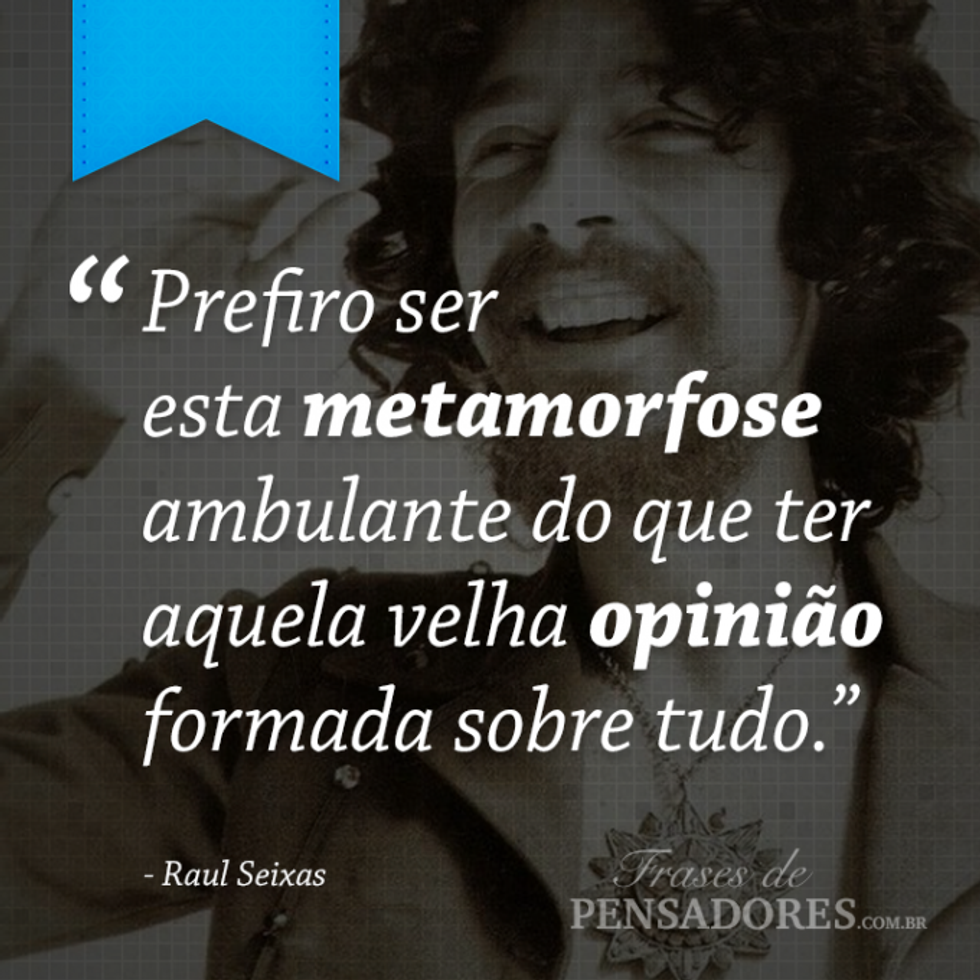
"I would rather be this wandering metamorphosis than have that old formed opinion over everything" - Raul Seixas