

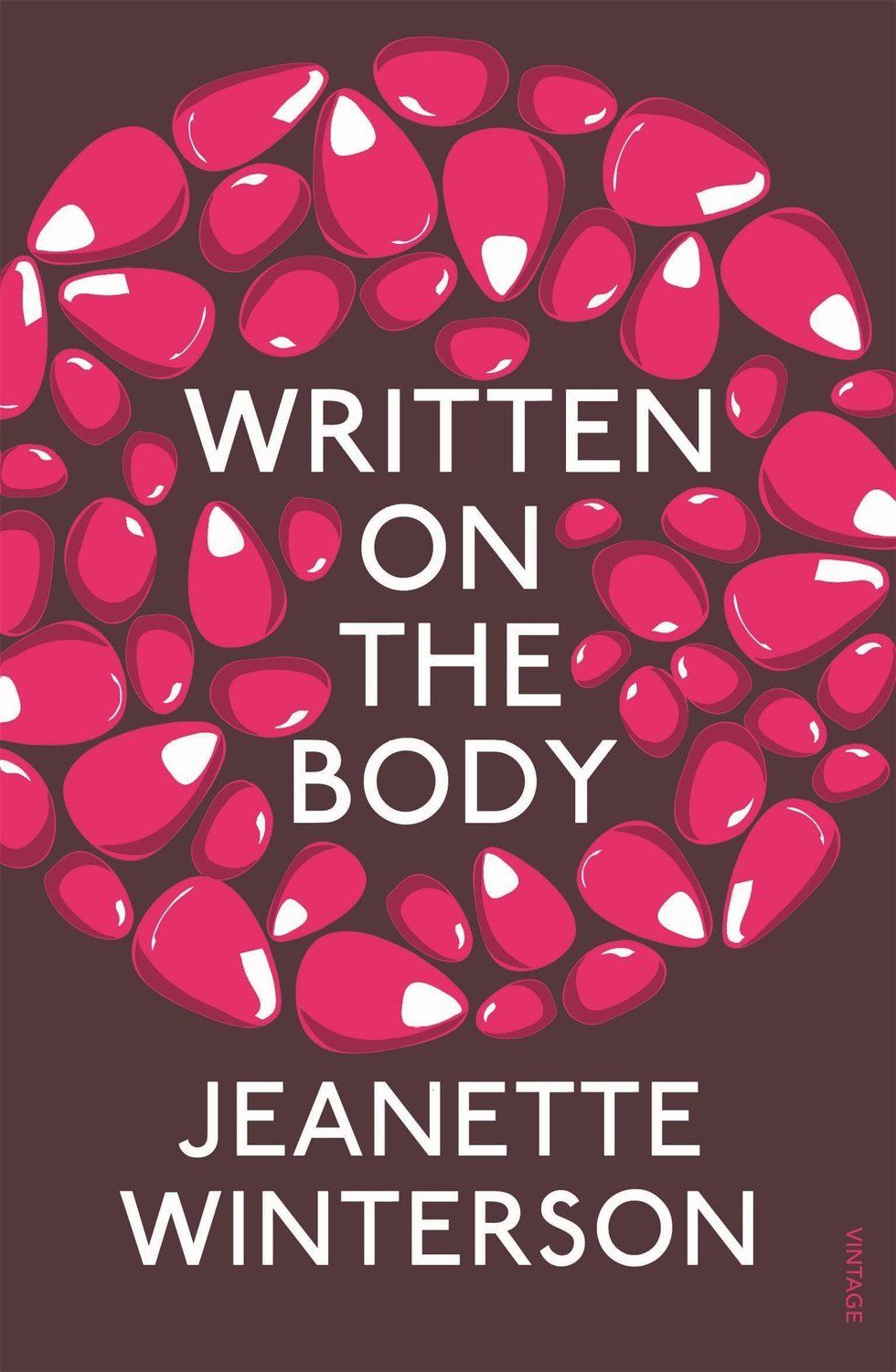
Occasional book enthusiasts, queer veterans, and non-normative novices, this one's for you. Picture this: an genderless narrator navigating romantic relationships while acting independently of social constructions. You've got Jeanette Winterson's book "Written on the Body." Through the use of an ambiguous character independent of almost every normative structure that exists in modern day society, Winterson says an alarming amount about the formats in which we're supposed to live our lives. She does this with stunningly beautiful language, captivating metaphors, and vivid imageries. It'll take you on a wild ride, but ultimately you'll be happy you did.
"Written on the Body" questions different societal frameworks in a soothingly, erratic way by use of certain events in the narrator's life and Winterson's meaning-filled language. One of the most prominent tensions is that the reader doesn't know what gender the narrator is, or whether or not they even have one. This proves to be really complicated yet exciting for the reader as they try to figure out this non-existent detail. At times, you will find yourself referring to them with the pronouns "he/him," but at other points "she/her." You'll find it both frustrating but also very intriguing, so you just stick with "they/their."
The narrator, acting independently of gender, proves that they can still love and be loved. The fact that gender or gender expression isn't playing a role in what constitutes love or being in a serious relationship breaks down not only heteronormativity but other social constructions of gender. The narrator's fluidity shows there are more options than simply being male or female and that one can pursue love without stigma, at least in the narrator's world. Winterson highlights on this idea that you don't have to adhere to the binary identities in order to find happiness. The only problem is that we live in a world that makes being queer very difficult.
The narrator then finds themselves caught up in an adulterous affair, but this is not the first time. However, this new relationship with the seductive and fiery Louise is completely earth shattering to the narrator as they fall helplessly in love with her. Although the book focuses primarily on this relationship, Winterson confusingly but elegantly weaves in their past relationships and the narrator's constant diversion from monogamy. Once, again highlighting more ideas about straying from the normatively enforced monogamous relationship, and the fact that sometimes playing the field should be socially acceptable.
This book also has quite a bit to do with the idea of time. If one isn't paying close enough attention, you could get seriously lost in this book. The narrator constantly floats in and out of different time periods by referencing previous lovers and other character's timelines, while also grappling with the idea of running out of it. These seemingly jumbled events don't happen by accident as Winterson is merely providing commentary on the idea of queer time.
Winterson brings into attention that time itself is a heteronormative construct. Now, what does this mean? This means that the way we mark time has heteronormative tendencies. Minutes? Days? Years? Yes, but what about puberty, college, marriage, children, and death? Main markers of time like marriage and children are centered around the nuclear family: a heteronormative construct. With a narrator that acts independently of gender and normative monogamous relationships, all of this comes crashing down and makes us question just what is time.
The thing is humans like labeling their milestones and time periods. They like associating them with normalized tendencies. Jack Halberstam, a Professor at the University of Southern California, discusses this idea in her book "In a Queer Time and Place." She says, "... the cliche goes, 'There is a time and place for everything.' These formulaic responses to time and temporal logics produce emotional and even physical responses to different kinds of time; thus, people feel guilty about leisure, frustrated by waiting, satisfied by punctuality, and so on. These emotional responses adds to your sense of time as 'natural.'" These trivial, emotional responses get ingrained within us repeatedly as we grow, along with the different, more complicated social constructs. You have to go to college after high school. You have to get married before you're 30. Kids before you're 40.
Anything that diverges from these norms is not considered acceptable. You're out of place because you're acting outside of time. The fact that Winterson's narrator is acting outside of this normative timeline, but still has a place, suggests that they are participating in what is called queer time. They're diverging from the norm but still finds a spot in society. The language, also acting in queer time with varying syntax and the absence of chronology, brings this notion to the forefront of the reader's attention. It makes you grapple with it. Decipher it. And realize that it's damn right. You'll find yourself having many of these moments in this book.
I can't even come close to defining and interpreting everything that happens in "Written on the Body." And even so, you and I would uncover different possibilities. We all approach a piece of literature with distinct backgrounds and experiences, unlocking new mysteries in different ways. This book will make you question everything you once believed about not only love and relationships, but the oppressive social constructions that are deceivingly prominent in our society. Please give it a read. What will you discover?