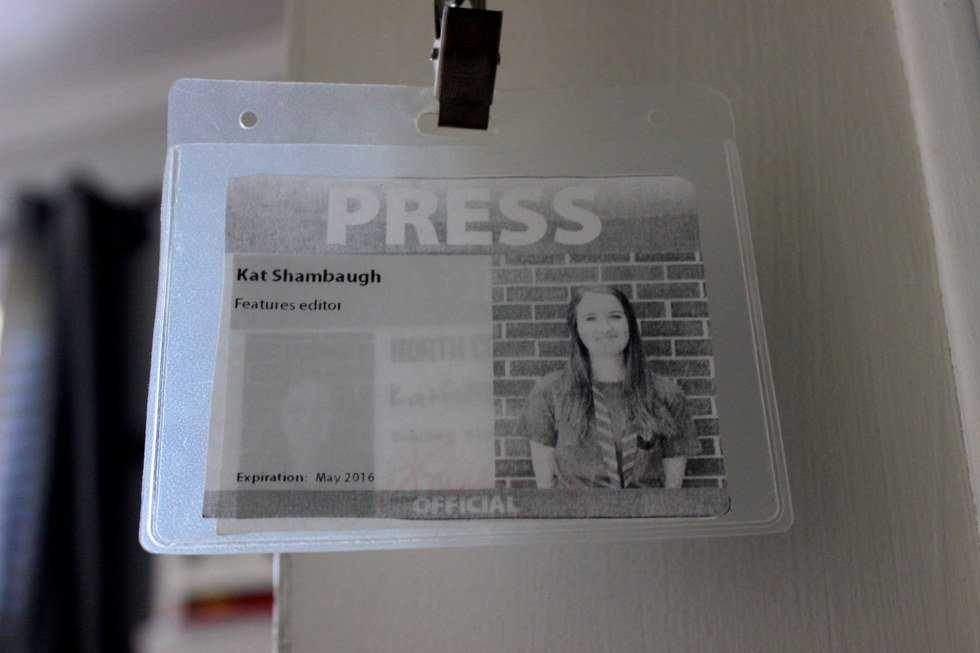
Walking into the publications office at North Cobb High School reveals a glorified storage closet filled with Macs, whiteboards, and a surprising amount of Internet memes plastered on the walls. On any given day, the office ranges from full and buzzing with writers — both those hard at work and those playing indoor basketball — to the silent domain of one student putting in overtime for the publication.
The traditional school newspaper brings to mind young journalists covering the Homecoming game, tackling the dress code, and not much more; however, old-fashioned ideals vanished as new media outlets grew. Now, every journalist, no matter the age or experience, works for and impacts the public. Though not reaching the same breadth of audience as major newspapers, high school journalists express the same passion for writing and bear the same responsibility to serve their communities.
My passion for journalism began in the third grade when my teacher, Mrs. Laudick, encouraged me to present stories to the class. My love continued to grow as I joined my high school newspaper as a reporter and photographer in my sophomore year.
My time on staff started out slow as I learned the basics and worked towards a groove. The new students and I brainstormed ideas but no one wanted to stand up and take them. We felt powerless as journalists at a high school level, like children playing dress-up.
Still, I remember the pride after publishing my first story. I felt famous, and the feeling quickly became addictive. I started to take on insane loads of work as both a reporter and photographer. Every story and photo posted added to my passion.
As I improved my writing, photography, and eventually editing, I felt less like a child lost in a grown-up’s world. I became more outgoing, using my press pass to interview the mayor and other officials without worrying about coming off as annoying. My advisor and Editor-in-Chief stressed our responsibility as a news website and the power of journalists as more than just students.
With greater courage and responsibility, though, comes certain challenges. Students cannot cover every topic due to lack of resources, sources, or inappropriate subject matter. The laws of freedom of press do not always cover students, and newspapers can easily become a way for the school to control its public relations. School journalists may feel trapped without the capacity to impact others.
To succeed, student journalists must meet and rise above each challenge. The best magnify their power: they push their limits as students, reach out to major figures and cover important issues, and take on the responsibility of their paper as seriously as an occupation.
Reaching an audience with unbiased and timely news, features, opinions and more drives high school journalists across the nation to make their voice heard in a world dominated by adults. They no longer represent children pretending to be journalists for a day: they now exemplify the ideals of the press with the responsibility to improve America’s media and, as Theodore Roosevelt said, “work hard at work worth doing.” No other goal could be as rewarding.