
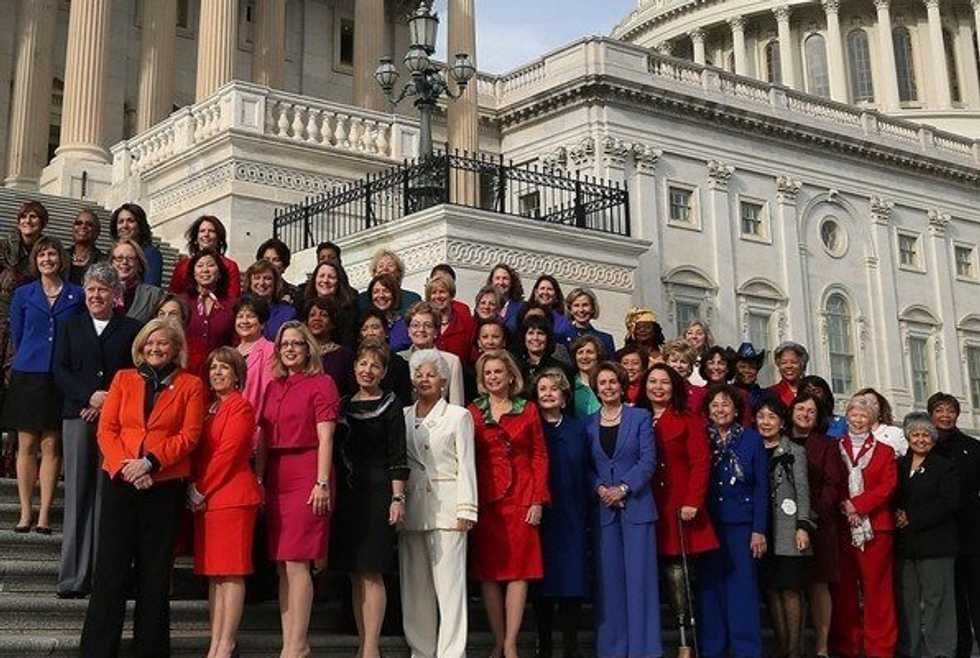
As Senator Lisa Murkowski looked around the room on January 26, 2016, she noticed that something was a little bit different than usual. The first day of work after the winter storm, Jonas, shook the East Coast, all of the US Senators had something in common. They were all women. All by an interesting coincidence, not one man showed up for work that day.
“I think it’s genuinely fabulous,” commented Senator Lisa Murkowski about the attendance and dedication of her female coworkers. She continues to say, “Perhaps it just speaks to the hardiness of women that put on your boots, and put your hat on and get out.” So what does this instance say about the stereotypes of women in the workplace?
It’s widely known and accepted that men are considered the more competent workers. Whether a woman is equally qualified or not, she will be considered a less valuable worker than a man. Successful women have what is considered to be stereotypical male traits such as assertiveness, strong commitment to work, and strong decision making skills—traits that should be considered gender neutral. And while a woman who wishes to succeed is expected to have these “masculine” traits, if they lack femininity they are also looked down upon, leading to many implicit biases against women. But, as demonstrated on January 26, these stereotypes are completely obsolete. If men are the more competent and dedicated workers, why couldn’t one of the 83 of them show up to work? It is clear that these antiquated gender stereotypes need to be abolished.
Because women are thought to prioritize other commitments, such as family, fashion and of course, romance, over their job, they are less likely to be hired for positions of power. When women who have children return from maternity leave, studies show that they are often perceived as having a much lower intelligence level than before the pregnancy. It’s a widely conceived notion that women are much more focused on their looks than anything else in their life, and it is also known that if a woman does not look a certain way, she will not be taken seriously. Just think for a minute about the way your professors dress. Most likely, the female professors will dress more professional, while most male professors will dress in jeans and more casual attire. Women are also asked more about their love life and when they will have children. They are judged about the amount of male partners they have had and if they are married by a certain age, while it is acceptable for men to not marry at all.
How does this stigma surrounding women females in power? Their interviews are focused around topics that have no correlation with their career and they are asked questions that men are seldom, if ever, asked. An interviewer in 2014 asked former Australian Prime Minister Julia Gillard if she “[made] a bad choice of boyfriends,” as if this had anything to do with her political career. Democratic Presidential Candidate, Hillary Clinton has been asked sexist questions on multiple occasions, such as “Will this country want to watch a woman get older before their eyes on a daily basis,” and “Who are your favorite designers?”
We can only hope that in 2016 we quit with the sexist biases and start viewing women for what they are. Whether it be a hard working politician, actress, teacher, mother, or any combination. We cannot even hope to progress as a society if we allow these stereotypes to remain. We need to applaud diligent and dedicated women such as the workers that showed up for the Senate Meeting, and realize that this is generally the rule of women in work, not the exception.