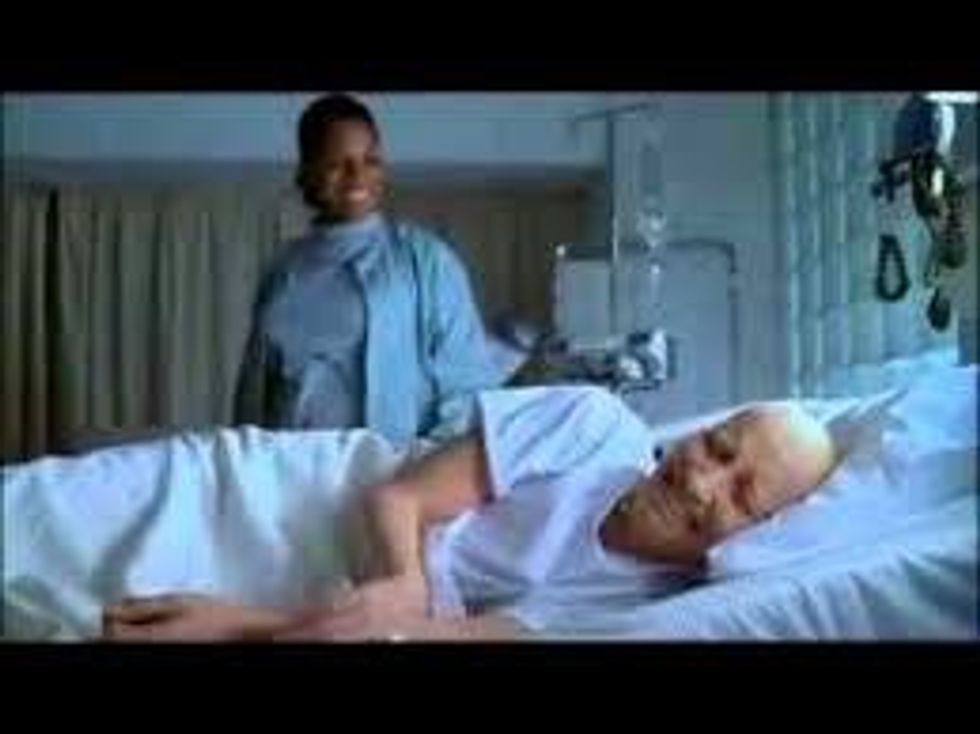
This week as part of my Communication in Nursing class, we were assigned to watch and review a movie called "Wit." It tells the story of an English professor, Vivian, and her battle with ovarian cancer. However, it not only highlights her disease, it highlights the problems surrounding the treatment of patients by the very healthcare system that is meant to be founded upon patient advocacy. The movie profoundly impacted the way I look at my nursing career, and two scenes in particular inspired me to ensure that I'm treating the patient, not just the disease.
In the first scene, the CNA walks in quickly, asks Vivian “how are you feeling today?” without making eye contact and is halfway out the door before Vivian can even answer. It is clear that Vivian is feeling isolated and the nurse’s behavior not only exacerbates her mood, it makes her feel as though she is unimportant and even a burden to the very people who are supposed to ensure her well-being. That is exactly the kind of nurse I do not want to be. I promised myself as I watched that I would make my patient interactions more than the same compulsory, monotone questions asked over and over. I want my patients to feel like they are cared about, that I am there to help them in any way that I possibly can and that they can feel free to share how they are truly feeling with me. In order to get to that point, it is necessary for the nurse to pause and build a relationship with their counterpart instead of just directly launching into the bare minimum and leaving as quickly as possible.
The second scene that resonated with me was when the medical students barge into Vivian’s room to review her condition and treat her like equipment to be tinkered with. Not only do they whip back her gown without pausing for permission, they begin to talk about her as if she were not there. It is not until the end of the assessment that someone finally addresses Vivian and not her pelvis. I reflected that as healthcare professionals, we often find ourselves swept up in the intrigue of the maladies we are treating; after all, part of the reason we chose healthcare is because we are enamored with the promise of eternal learning potential. However, this scene reaffirmed another one of my overall career goals: treat the patient, not just the disease. This does not mean we neglect the root of the problem, it just means that we remember that these are real people with their own distinct characters who are feeling extremely vulnerable and in many cases, stripped of their dignity. Something as simple as a quick conversation and asking for permission to assess before you begin can give the patient a bit of their own autonomy back and help them feel valued, well-taken care of and simply human.
"Wit" has left me with a renewed desire to be the nurse who makes a difference and has shown me the importance of putting the patient first. Through these three experiences, I have taken away several valuable lessons and goals that I will be sure to put into practice as I treat my own patients. If nothing else, I hope my efforts to treat my patient will lessen their burden and help to restore the humanity they are entitled to.