

The first time I was called bossy, I was eight years old and suggested my classmates and I play wall ball over four square on the school's blacktop at recess. It made me cringe. It made me feel uneasy, implicitly suggesting that being confident and outspoken would make me unlikeable. The very act of casually being myself was suddenly frowned upon, and I could feel myself crawl back into my shell. I believed that artificially coming off as shy was an everyday tradeoff everyone around me had had to do in order to be liked, so I made an effort to adhere to societal expectations of being quieter.
I went through my earlier school years flying relatively under the radar, deciding that being unnoticed was better than being called aggressive or bossy. After all, I thought, that was more for guys. They were the ones who took charge and directed what would happen. Being told you did something "like a girl" was a dire insult and was indicative that you were weaker and meant to be more in the background. I'd distantly noticed the golden rule of being docile equating to being more liked applied more to girls than guys, but I accepted it as a fact of life and moved on.
However, my self-trained introversion was overridden by my ambition, and I joined the debate team. In the beginning, I caught myself apologizing at every opportunity for coming off "too strong" or speaking too loudly or communicating my point or even cutting my opponent off, something my male opponents never thought twice about, even when they'd done the same to me over twelve times.
By the third debate round, I became sick of having to be apologetic to even exist and just communicated my points as they were and treating my opponents as they were me. I was doing things "like a boy" and I felt a weight lift off my shoulders. I was still respectful, but I felt more myself that I had in years.
At the end of the round, I was told I'd won and my opponent turned to me and snidely told me I was a b*tch as soon as we were alone. Instead of recoiling like I thought I would, I could feel a warm glow in my chest. If being confident and assertive and myself made me a b*tch, I wasn't going to apologize for it; it was a negative reflection of him, not of me. If my opponent thought calling me that would put me in my place, he was wrong. I looked at him and asked whether he'd have called me that if I were a guy and walked out of the room without looking back.
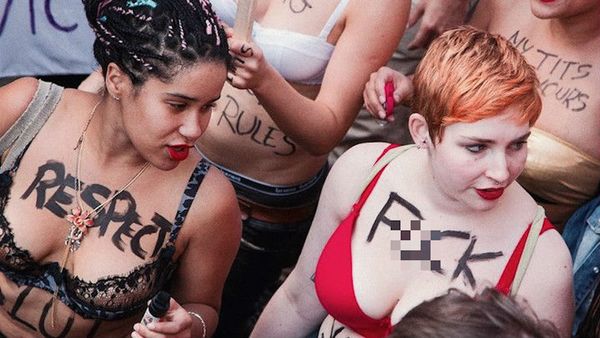
Unfortunately, there still remains the stigma that women are doing something wrong by putting ourselves out there and leading, that we're doing something unnatural by being assertive and ambitious, traits that are often lauded when they're found in men. While this isn't necessarily anyone's fault, we're all responsible to challenge societal expectations and no longer fear being the "bitch in the boardroom." Only though steadily and repeatedly challenging the stereotype that women are meant to be in the background can we move forward and become a more equal as a society.
However, until the day comes in which gender and leadership are in entirely separate spheres, I'll wear the title of bossy with pride.