


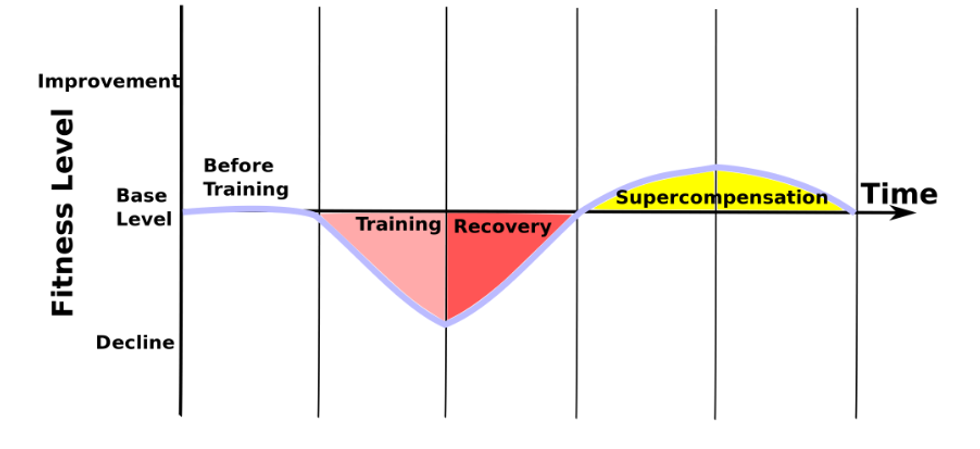
Deloading: Taking some time away from the gym or significantly decreasing the intensity for period of time to illicit super-compensation.
Super-compensation: The body’s ability to become stronger after enduring a difficult training cycle given adequate recovery time
Too many people are under the impression that to get results in the gym you have to go hard 24/7 365. Part of being big in the fitness community is having the appearance of being larger than life. With this comes a façade that many fitness people put on that makes it seem like they go hard every single day, no days off. While this method may work for some people, especially experienced lifters, the body can often benefit more from taking a week off than keeping the rev counter in the red and burning out.
As I’ve written about extensively in other articles, proper recovery is as important as how hard you go in the gym. When it comes to overtraining, I prescribe to the concept that for a majority of people there isn’t overtraining, just under-recovery. Deloading is a way to help your body become stronger by giving it the time it needs to grow and adapt to the stress you put on it every day at the gym. By doing this, you can benefit from super-compensation, and actually, grow stronger by taking a week off.
There are a few different ways to go about a deloading period, and each has advantages and drawbacks.
Drop Intensity/Volume: This is the best way to deload after a heavy training cycle. A cessation of training altogether may feel like it is helpful, but often times too much recovery can lead to a decrease in performance. When I deload I will perform most of the same exercises, but drop the intensity to around 55%-65%. I will also drop a set from the heavier compound lifts. This means that my body is still recovering, but I am keeping my gym routine in place and still burning some extra calories. You can also deload by dropping certain exercises, or just deload on a specific lift (say squats or bench) and keep the rest of your program the same.
Active Recovery: Another method of deloading is to take a week away from the gym, but still stay active. This can mean going on hikes or walks, playing some basketball, tennis, or any other sport that raises your heart rate. This is a great way to take a mental break from the gym in addition to a physical one. It can be a fun way to deload while burning calories and not losing your routine. You can also mix this in with a drop in intensity of volume, maybe lift 3 days a week and play some ball the other 4.
Total Break: Although I don’t recommend it as much, sometimes the right option can be just taking a week away from the gym altogether. This can be bad for a number of reasons, primarily losing the routine of going to the gym you have built up. For some people going to the gym every day can be a struggle. When you build a streak up it becomes easier and easier to go. Taking time off could have a negative effect on gym attendance. It is easy for one week to quickly turn into 3, and then you have more than deloaded, you have lost gains that you worked hard to earn. For other people, having to sit out a week from the gym to deload is more difficult than going to the gym. These are the people that would benefit most from just a decrease in volume or intensity.
Timing a deload is as important as what you do during it. Most people can benefit from a deload week after anywhere from 8 to 12 weeks of TRAINING. Training means consistently being in the gym for the past 8-12 weeks and pushing yourself one way or another EVERY DAY! Taking a deload week after 2 months of going to the gym every Tuesday, Friday, and every other Sunday isn’t going to work. Other good times to deload are when you can feel that you aren’t performing like you should be, you have physical pain, or you have just finished peaking for a competition.
An important thing to note: deloading from the gym DOES NOT mean deloading from your meal plan. Odds are you won’t be burning as many calories with your easier workout, and this combined with a week of poor nutrition is a recipe for disaster.
So, to summarize:
- Don’t stop exercising, just take it easier
- Deload when your body feels really worn out (12 weeks max)
- Deload from the gym, not from your diet
Further reading:

















