Remember back in 2008, when a politically-engaged television celebrity staged an impressive run for President of the United States? It was hilarious—and refreshing. Eight years later, we face a nearly identical situation, at least in premise: a politically-engaged television celebrity has announced his presidential candidacy. This time, though, I’m not laughing.
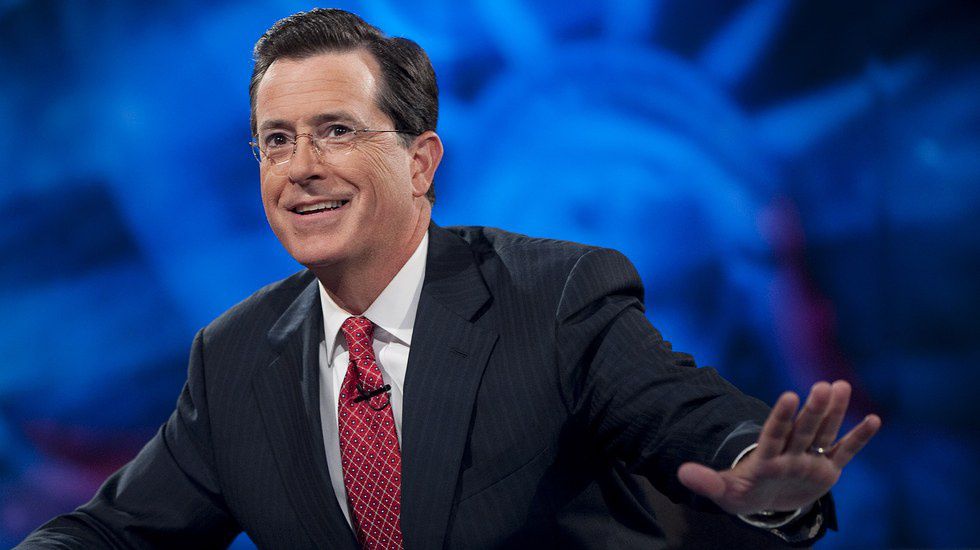
When Dr. Stephen T. Colbert, the onscreen character of comedian and satirist Stephen Colbert, championed his candidacy in the 2008 presidential election (from Oct. 16, 2007, to Nov. 5, 2007), there was widespread speculation about the authenticity of his campaign. Colbert met this speculation with his trademark wit. He wobbled between serious politician and jokester at all times, yet maintained his desire to “bring truthiness to the '08 race.” In the 2016 race, the celebrity in question is Donald J. Trump. You may know him alternatively as:
1) the guy who owns numerous hotels and golf courses around the world
2) the author of such books as "The Art of the Deal," "Time to Get Tough," and "Think Like a Billionaire," or
3) the face under that toupée that quivers in joy every time it fires someone on the TV show "The Apprentice."
Now, Trump is also known as one of the trillion fourteen declared candidates for the Republican nomination. And you can be sure: Trump is 100 percent serious.
We could talk about the finer points of his platform—his stance on the major issues and his proposed policies—but that’s not what I’m interested in discussing. Instead, I am interested in the effect Trump is having on the 2016 presidential race, an effect which is distinguishing the current race from those of the past few elections.
In the interest of full disclosure, I do not support Trump; nor do I agree with most of his stated opinions. I can affirm that I will not vote for him in any primary or general election. Like many other Americans, I’d like to pretend this is all a joke, albeit not a very funny one. I cringe at Trump’s ethnically ignorant comments, his rejection of immigrants and refugees and his outright condemnation of Islam. Alas, it’s not a dream or a comedy sketch or even a nightmare. Nevertheless, Trump’s presence in the presidential race intrigues me. In fact, I’ve come to see Trump’s candidacy as a critical moment in the politics of the United States today.
As tempting as it is to write off Trump and his abhorrent remarks as the rantings of a misguided celebrity, his run thus far demonstrates that we need to take his candidacy seriously. Currently, Trump is leading in the polls for the Republican nomination. At the time of writing of this piece, Trump’s Twitter account is followed by 5.34 million users. His early prominence in the race is strong and clear. Whether or not this lead is sustained in the coming months, Trump’s success thus far should be noted by citizens on all ranges of the political spectrum.
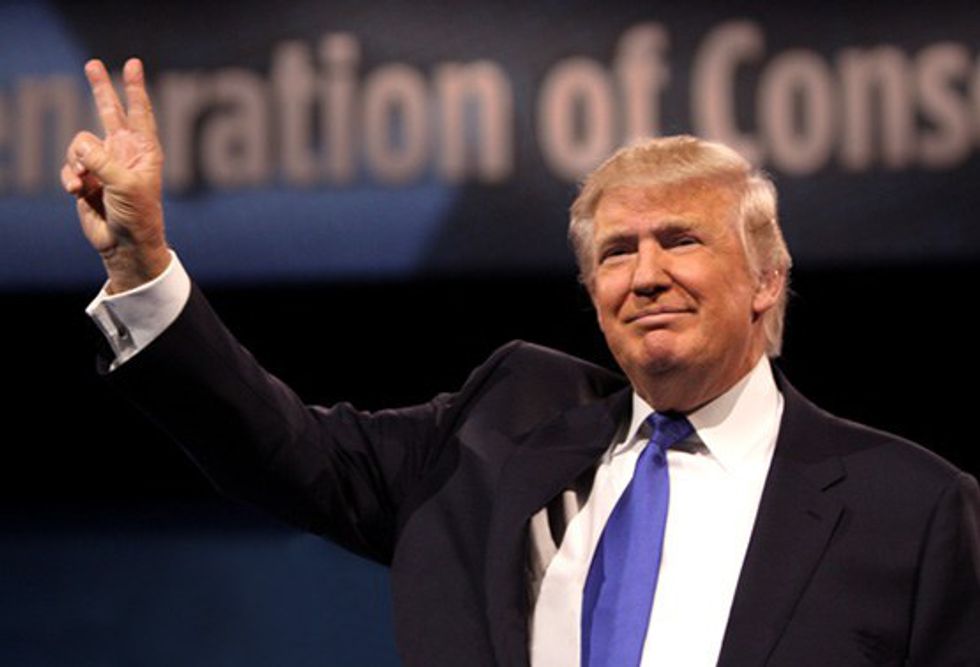
Even if Trump’s message—that our country is severely crippled on all fronts and that he will “Make America Great Again”—does not appeal to our personal beliefs, we must recognize the apparently large portion of our nation’s population that does find him appealing. If Trump’s platform and its widespread support come as a surprise to us, his supporters are not to blame: we are.
By this I mean that if the opinions Trump is voicing have never before been given such free reign—but are now being echoed by a significant section of the population—then these sentiments are not new for many Americans. We should not be surprised that these positions are so strongly held by some of our fellow citizens because we should have already been having these discussions. We must admit, perhaps, that we have previously written off his point of view, declaring it invalid.
Our society, however, is founded on the antithesis of this. The “greatness” of our democracy lies not in its economic strength, its military force, or even the effectiveness of its government (all things with which Trump seeks to improve). Rather, the potential for our country to be great is based on the ideals which directed its founding. Of these, one of the most cherished is the freedom of religion, expression, assembly, and petition afforded to us by the First Amendment to the Constitution.
Trump’s thus-far successful campaign demonstrates the importance of freedom of speech, because, as a result of his candidacy, we are being forced to confront the validity of any fellow citizen’s opinion—especially if we do not agree with it. At the same time, Trump has called for a ban on all Muslims entering the country. His rhetoric, therefore, contradicts the idealistic pedestal he would like to claim. As such, it is all the more crucial that each and every United States citizen invest themselves in the upcoming elections. Trump may not speak for the United States you would like to see. But have you done any of the work to figure out who might?
Voter turnout is historically a perpetually-uphill battle. The highest voter participation the United States has experienced in recent decades was in the 2008 presidential elections, at a whopping 61.6 percent of eligible voters. That still leaves some 80 million people who abstained from voting. Ideally, everyone who is eligible to vote would take advantage of this opportunity. However, to simply increase voter turnout without likewise increasing our willingness to engage with the controversial issues our nation cannot avoid in this world is fruitless. Donald Trump’s presence in the 2016 presidential race reminds us that we have a right and a privilege to have a say in the shaping of our government and in the future of our country.
Your voice and your vote alone may never change a thing on its own. But if every one of us contributes to the discussion, we can build a democracy that reflects the true composition of our nation.
Here's how you can help.
Register to vote in your state at RegisterToVote or USA.gov.
And more importantly...
Find out where you stand on issues.