

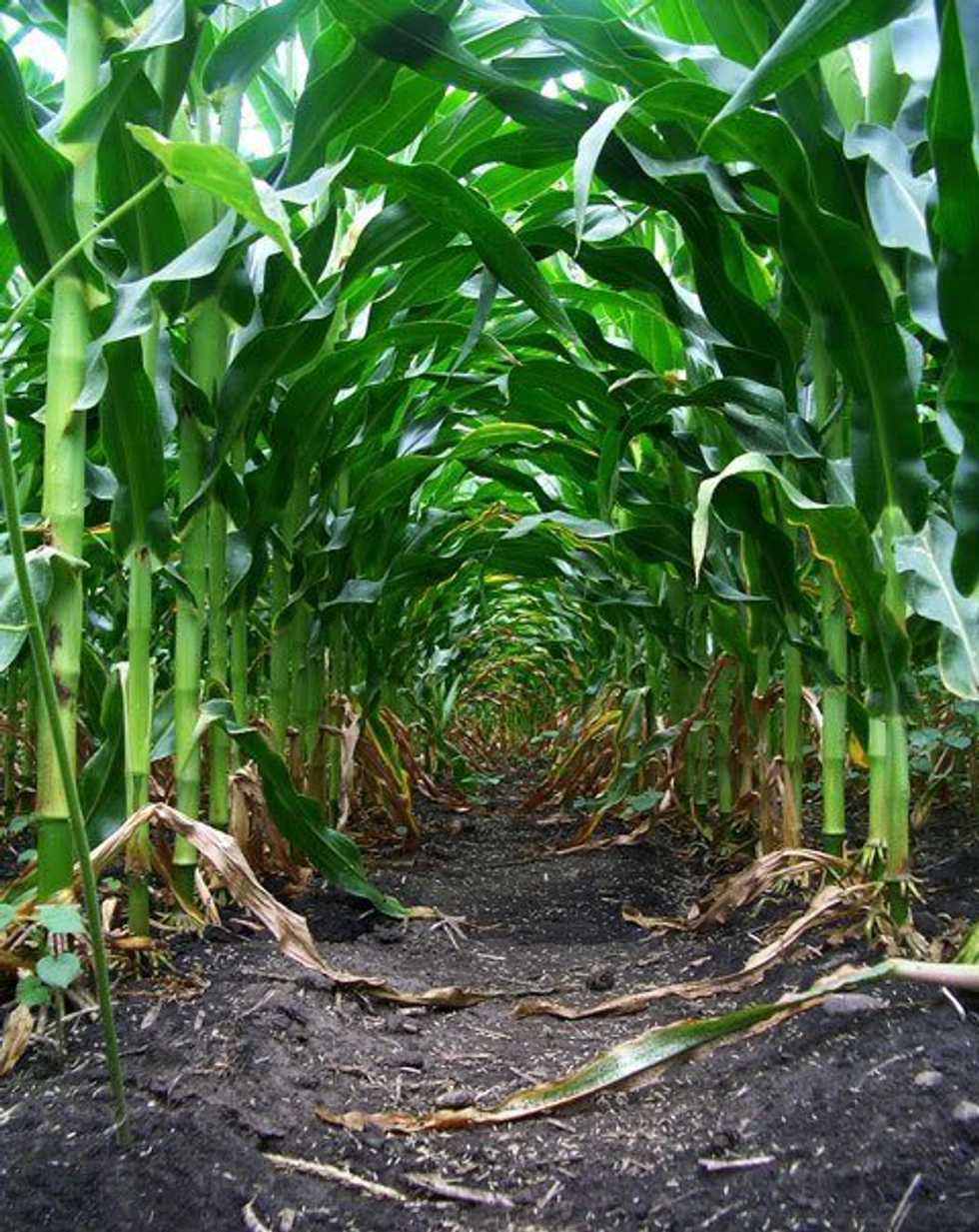
Every summer hundreds of workers mobilize in order to ensure correct cross pollination in seed corn fields. Even if you live in Nebraska, you may not know how this whole cross pollination process works. I learned myself about two years ago, and I had worked in the fields for eight summers prior; it isn’t common knowledge how this is done.
After talking with an agronomist that works for Monsanto, this is the basic outline of how this process works. In order to create a successful hybrid, each parent line must be pure in the genetic trait that is desired to be passed on to the hybrid breed. In order to ensure this purity, the parent line is subjected to 10 generations of testing and weeding out. Let’s use the example of a certain hybrid needing to be Roundup ready, as well as able to produce three ears of corn per plant.
The first parent line will be bred so that every plant is Roundup ready and the second parent line will be bred to always produce three ears per plant. As I mentioned before, the process of creating these parent lines involves planting 10 generations of plants from the same plant breed, which are allowed to pollinate themselves. The first year in the test plots (small numbers of parent line plants) parent line corn plants that have a natural resistance to Roundup and are planted. Over the course of the growing cycle, these plants are subjected to Roundup treatments. The plants that survive the treatments are harvested and used for the second generation of plants. The same process is repeated, with seed from the surviving plants in the previous generation being planted in the next generation, where they are also subjected to Roundup treatments.
After 10 generations of planting, the resulting corn plants should be one hundred percent Roundup resistant. The same process is used on the second parent line. In the first year, corn plants from a specific breed are planted and allowed to pollinate themselves. When the growing season is over, the plants that displayed the desired genetic trait are harvested and replanted as the second generation, for a total of 10 generations. The resulting plants of the 10th generation are guaranteed to produce three ears of corn. The parent lines are now pure for their desired trait after 10 generations. It is time to cross pollinate the two parent lines to achieve a hybrid that has the desired genetic traits from each.
One breed is designated the male plant, while the other is designated as the female plant (full disclosure: I am not entirely sure how this decision is made). The two breeds are planted in a pattern across a field that will allow the male plants to pollinate the female plants. In order to ensure successful pollination, the tassels of the female plants are removed through a process called detasseling so that they are unable to pollinate themselves. Surprisingly (to me at least), after only one generation of cross pollination, all the resulting seeds will produce a plant with the desired parent line genetics. This seed is sold to farmers who want the benefits that come with the traits of this hybrid.

















