

This election season in America has made it clear to almost everyone that some form of political change is needed and this can be argued for many different reasons. With Donald Trump as the presumptive nominee for the Republican Party and Hillary Clinton to be likely selected to represent the Democrats, it seems like the election is fairly straight-forward as the primary season finalizes over the next several weeks with the final national conventions, yet a large lesser-heard group of voices still persists as the primary season comes to a close: the third parties.
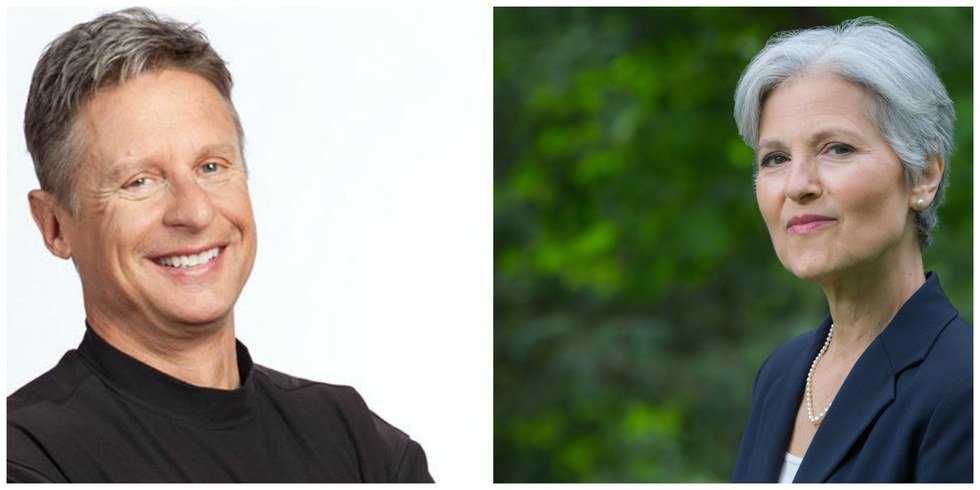
Third parties are nothing new in American politics; in less than 200 years, multiple have ran and performed very well, including three former presidents. This election, however, is seeing the largest polling numbers for third party candidates in recent history. After having shy of 1 percent of the votes in the 2012 election, some polls are putting former New Mexico Governor and Libertarian nominee, Gary Johnson, as high as 11% popularity as the general election draws nearer; similar polls show nominee Dr. Jill Stein ranking at a record 4 percent for the Green Party. Both are predicted to increase even further as the election season continues. You might ask yourself: these people aren't even going to win with these numbers, why should I even vote for them? Two major things result from this: They will never win with the age-old attitude that American politics have to be binary and most importantly — voting for the "lesser of two evils," is still voting for evil.
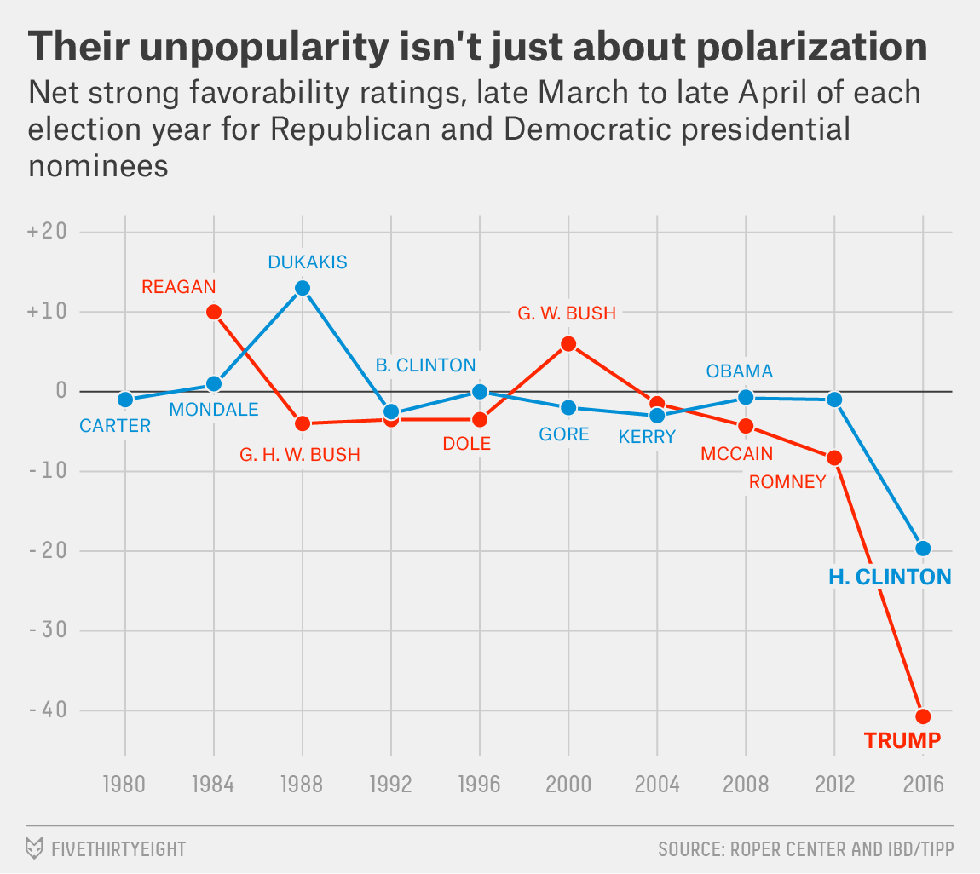
The best part of the political change that is going on in this election, in my opinion, is that people are starting to disregard age-old bipartisan politics and favoring Governor Johnson and Dr. Stein at least eleven times more than the votes they received in the last election. This can be attributed to incumbent President Barack Obama being unable to run for reelection, but I think it also shows that massive numbers of people don't want either of the presumptive nominees for our two major parties. With studies showing Trump and Clinton as possibly the least favorable candidates in recent history, it's only natural that people will vote for neither of these two "evils" because of their personal values — the way we should have been casting our votes all along.
The largest drift in current American politics today is largely due to our polarized major two parties. This polarization provides fertile ground for Libertarians like Johnson to appeal to the more liberal/moderate republicans and to the more conservative/moderate democrats. While Vermont Senator Bernie Sanders has vowed to stay in the race until a final decision is made at the Democratic National Convention in Philadelphia, many of his supporters are contemplating voting for Stein and the Green Party for the general election because her agenda lines up well with Sanders's but also because she has more progressive ideals than some of Secretary Clinton's.

As Americans, it's almost in our nature to oppose the "choose the lesser of two evils" scenario, because that's essentially why we have fought the American Revolution, the American Civil War, and many other conflicts of war, politics, and social issues: we see a better and/or alternative option. These parties have just as much chance of winning political positions, but the biggest hindrance is from people saying it's the equivalent of "throwing your vote away"; these parties can win and all we have to do is vote. Regardless of if Stein or Johnson wins, if they receive at least 5 percent of the vote respectively, they qualify for additional grants and funding from the Federal Election Commission — making a 2020 Libertarian or Green president more likely. Even if your values line up with Trump's or Clinton's, we should still vote for people that fit our values like we have done with other conflicts in the past and vote as Dr. Stein said, "…like our lives depend on it — because they do."