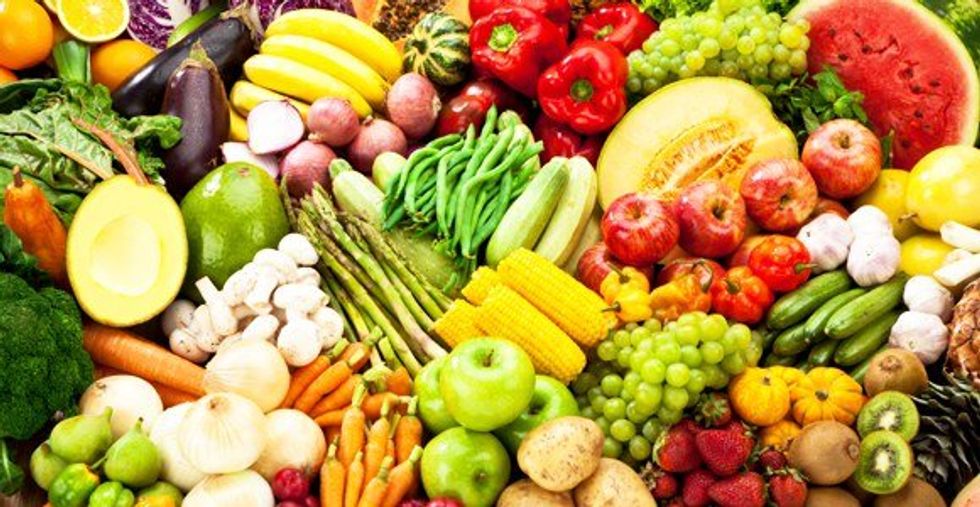
When I tell people that I’m vegan, I often get the same response. It’s something along the lines of: “Wow, I commend you, but I could never do it because I couldn’t give up cheese (or bacon or fish or chicken).” The food in which one can’t bear to give up varies, but the reasoning is consistent.
Information about how animals are genetically engineered and killed for consumption and the conditions under which it is done is widely available, but the vast majority of people choose not to seek it out or even think about it because it’s too difficult to give up certain foods.
As a member of a developed and free society, and as one who unconsciously reaps benefits from my position in this society, I have the ability and feel the responsibility to make conscious choices that minimize the suffering of those less advantaged than me. Giving up certain foods that had healthier, more sustainable alternatives seemed like an easy choice when I kept this moral obligation in mind.
Before going vegan, I already had to be on a fairly restricted diet. I had wanted to go vegetarian for a while at that time for moral, ethical and environmental reasons. However, I just didn’t think I would be able to because I already couldn’t eat certain foods and I didn’t want to make finding food to eat even more difficult for myself.
At the beginning of this year, I met a few people who were vegan for the reasons that I had wanted to go vegetarian. After doing research and seeing if I could do the diet and still get the nutrients I needed, I tried the diet out for a week. I felt no adverse effects, which is what I was worried about. My skin had even cleared up tremendously!
It has been about ten months since I last had meat. I’m as healthy as I’ve ever been and I feel good about the choice I am making for myself and the environment. Even though I am very restricted in the foods that I can eat, but that just means I need to be more creative and flexible both when cooking at home or when I go out and order food.
I understand that certain lifestyles and health problems can prohibit people from being able to live without consuming animal products. I don’t advocate for anyone to go vegan or vegetarian if it is simply not feasible, as it isn’t for many. However, there are always ways to live a life that minimizes negative effects on the environment and the animals that live in it.
I also understand that going vegan is an extreme commitment. I am passionate about animals and the environment, and that made it easier for me to make the changes needed to adopt this lifestyle. It is necessary to take dietary supplements to get the nutrients I miss out on by not eating meat, and I do need to be more conscious of what I am eating to make sure I am not consuming anything that is derived from an animal, but because it is something I am passionate about I didn't mind adopting those changes when I chose to go vegan.
Humans are omnivorous animals and a part of the food chain. While meat is a natural part of the human diet, many of us live in a society that gives us the option and ability to live a fulfilling and healthy life without consuming animal products. Also, very few people decide to hunt for their food “naturally,” deriving our meat instead from large, inhumane factory farms.
Your diet and lifestyle are your choices, and I will not pass judgement on anyone who decides that veganism or vegetarianism is not the right diet for them for whatever reason. However, I challenge you to think about if the choice to minimize your negative impacts on the environment is a feasible one. If you can give up meat on day a week, or make more sustainable food choices whenever possible, you are taking a step in the right direction.