
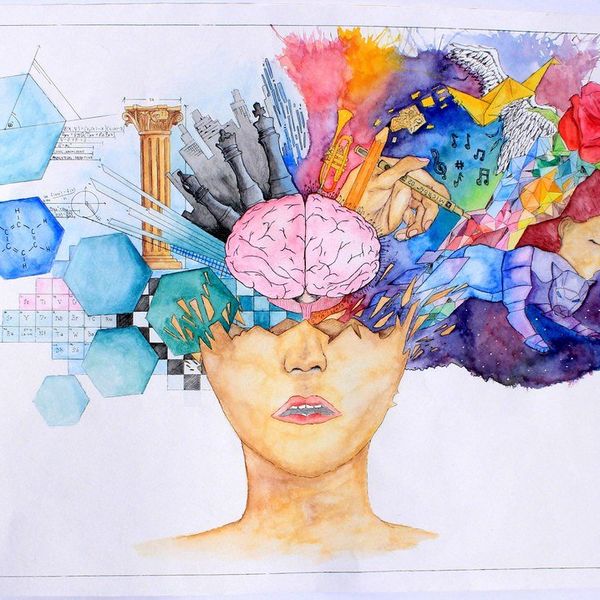

Which sounds more appealing: a sponge that simply soaks up everything in its' surrounding, then spends all of its' time stagnantly festering in the newly consumed information, quickly becoming an overwhelmed object harboring a jumble of information; or, a sieve that separates the finer particles from a large amount of insignificant, coarser particles? If you opted to be the sponge, then you will glide through life receiving information that you allow to consume your entirety without ever having the chance to sort through that information to find what makes sense to you. However, if you opted to be the sieve, then you will constantly sift through information in search of those more valuable pieces. As a sieve, you filter out all that is incessantly piled onto you until you are left with intriguing items; then, through questions and observations, it is your job to determine which of those intriguing items left behind you will keep as your treasures. Do you prefer to passively move through life, or spend your time here actively engaged as you constantly putting forth your best effort to learn more about this capacious world?
Questioning can spark change in all aspects of life because a question can unlock the door to realms of the unknown. After proposing the initial question, after you have found a key that fits the mold of the door's lock system, go ahead and twist the handle and push open the door. Now, step through the doorway, and do not be afraid to explore what all is on the other side of that door. Many people are afraid to question the way things are done due to the fear of insubordination, but it is important to reshape our thinking so that asking questions is no longer associated with insolence. The power of inquiry is limitless and although that is an initially intimidating thought, it is actually a really inspiring notion. If we allocate a respectable amount of time and thought to ponder any subject of our liking, then the results will act as a springboard to future breakthroughs, and that is truly inspiring. Why should we sit back and allow things to be the way they are simply without knowing why or how these things came to be. And while most of the time, there is no definite answer for a question, just the act of questioning in the first place will stimulate fresh perspectives that could lead to the generation of new ideas.
We should strive to improve our capacity to question, individually, while also encouraging those who are around us to feel comfortable when they ask questions. How can we promote the art of questioning? One important step is to establish the mindset that questions are a tool for intellectual growth, no matter what topic the question revolves around. Why would anyone want to prohibit the use of the greatest tool that we all have access to in each of our toolboxes?
In order to be more productive members of society, it is necessary that we ask questions. While it is easy to move along on auto-pilot, are we truly striving to our reach our full, individual potentials? When examining the world, it is imperative to challenge existing realities that are usually just accepted. Furthermore, it is okay to accept these commonalities as long as you are content with the extent to which you have chosen to evaluate and ponder these ideas because you are allowing these beliefs as a basis for your way of thinking. Asking questions displays your willingness to understand unknown concepts, rules, and ideas so that way you can live a more engaged life.
So, I ask: What is preventing you from asking more questions?