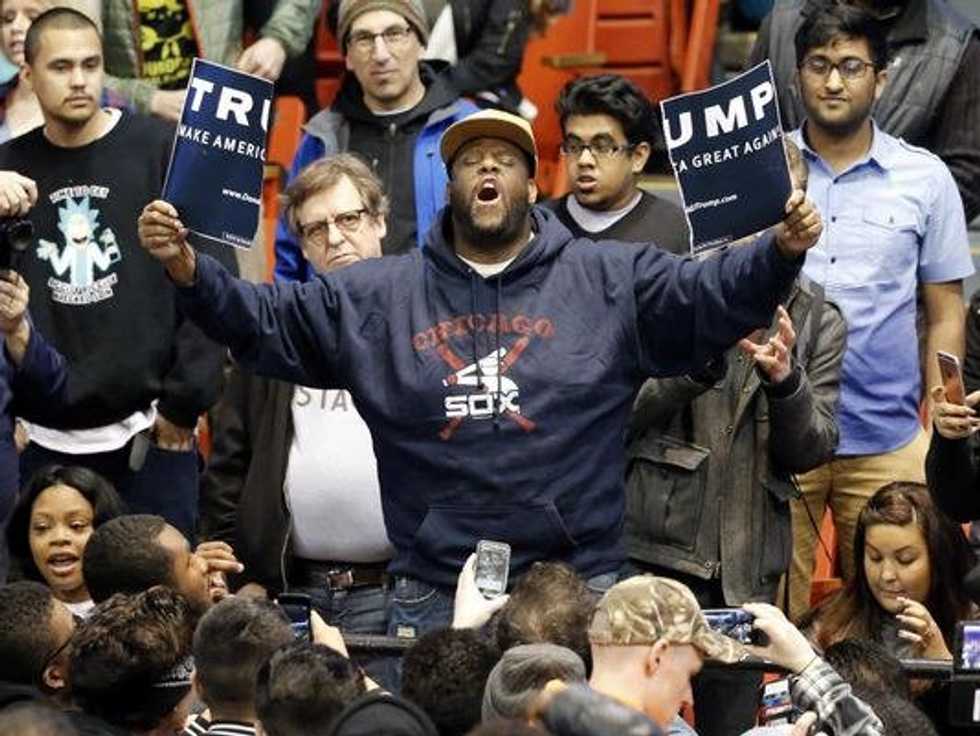
On March 11, 2016, Donald Trump decided to postpone his rally in Chicago due to "security concerns" (which has proven to be a very transparent face-saving falsehood) from thousands of protesters, many of whom have expressed vocal support for the Sanders campaign. As other publications have noted, the scale and success of this particular protest at one of Trump's rallies seems unprecedented. But as @People4Bernie, an unaffiliated grassroots Twitter account reminded participants and bystanders alike, the shutdown of Trump's rally "wasn't just luck." We must give praise to these activists' tenacity and the continuing development of progressive organizations in countering to the frightening rise of pseudo-fascist agitators. It's honestly a breath of fresh air for those of us on the left, seeing people enter the political sphere passionate about combating hatred, prejudice, and the encouragement of false consciousness among the working-class whites in America.
But even as progressives and radical leftists revel in our latest triumph, there are always those in the center and on the far-right who think that this kind of violence is "divisive" and "unproductive" to the overall political discourse. And that rhetoric is reactionary, rather than progressive. It's the same talk that condemned the righteous violence of the protesters who stood up for the unjust death of Freddie Gray in Baltimore; it's time we re-think how we talk about non-white violence in the United States in response to injustice. It's part of an ongoing, much-needed and honest conversation about race, racism and racial politics in the United States between white people and people of color (with particular notice to indigenous First Nation peoples and black folk).
A bit of history (this stuff ain't nothing new, my friends). As far back as the Boston Massacre in 1770, black Americans have been condemned for their commitment to fighting for freedom, and most often by rich white people. It's only when white people and other people of color join black Americans, realizing how widespread economic and racial justice are in our fair country, do their critics become louder and the government responds with violent suppression.
Why all this historical framing? What does Donald Trump have to do with Nat Turner or Crispus Attucks? The point becomes this - you need to be aware of what historical side you're on when you criticize violent protests against fascism and racism, even if you don't say anything at all. I'm not sorry to say that there is no binary when real living human beings are beaten and dying at the hands of white supremacists. We must speak out. We must get involved, or our nation falls victim to its legacy of Whiteness once more.