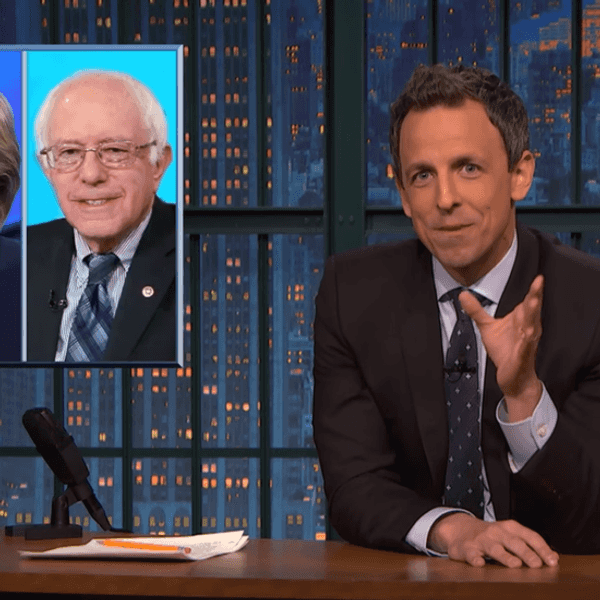
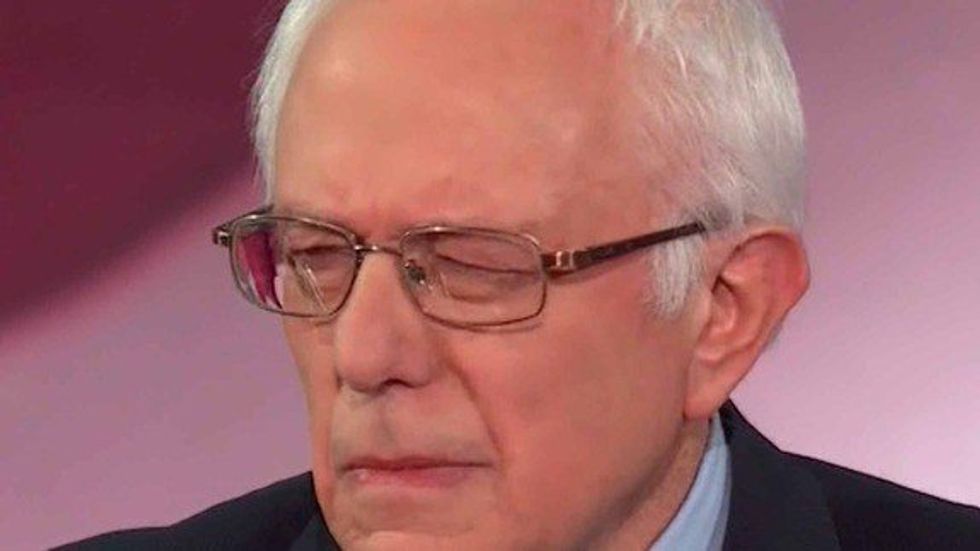
During the 4th Democratic Debate, three things were evident: Clinton amped up her attacks on Bernie Sanders, Bernie Sanders gave the best side-eye, and Martin O’Malley was…well, yeah that’s about it.
Now, to sum up the Debate on its most basic level, here’s what went down:
1. Clinton might as well be President Obama’s best friend now, as she appeared more fervent than ever on her position to continue what President Obama started.
2. Sanders emphasized how Clinton has always been friendly with the big banks and businesses.
3. O’Malley said some things which ultimately got muffled among the clamor between Clinton and Sanders.
4. Clinton tried to point out Sanders’ inconsistencies and tried to shine some light on the fact that Sanders wasn’t a zealous supporter of President Obama’s issues regarding Wall Street regulation.
5. Sanders let the people (mainly Clinton) know that he isn’t a competitor who should be neglected anymore.
What’s interesting about all of this is that Bernie Sanders, in the eyes of Generation Y, was never just another candidate running against Hillary Clinton. In fact, he has remained consistently popular especially among the young voters. But why? And what could this mean moving forward?
Sanders is an adorable 74-year old man who is well known as a civil rights activist back in his day; a man who is fun to listen to with his thick New York accent, a man who probably initially seemed like the last person anyone from our generation could connect with. But what is most appealing about this guy (besides his integrity) is how he plans to bring change to our government (whilst not tearing President Obama’s work apart), and how he, a democratic socialist, wants equality. Hence his plan of Medicare for all via a single-payer national health care program where, in his words, people of all incomes are ensured health care.
On the topics of college tuition, he is passionate about making public universities free of tuition. He also emphasizes something that all of us have thought at one point or another. He asks how our country’s higher education system has become more about being a business. He problematizes how healthcare has become more of a way for the government to make money, and less about readying its younger generations for the real world--one that they can tackle without being buried under piles of student loans and debt. But now the question is, how realistic are any of these plans?
Undoubtedly, Sanders’ ideas and his solutions to such issues are inspiring, and they spark a sense of optimism among a generation that has to re-think whether they can only afford a 2-year university vs. a 4-year university, or college at all. But mind you, this is also the same generation that is gradually becoming numb to mass-shootings, in part due to the fact that it seems like partisan fighting blocks any progress around gun-laws and gun control. What I’m saying is, let’s not get completely blindsided by these socialist ideas, and let’s remind ourselves that a president alone cannot accomplish anything if most of Washington is not on the same page as well.
As a to-be-first-time-voter in the presidential elections, I still am not sure for whom I want to vote. But what I do know, and this is something that I think we should all at least consider, is that no matter if we’re talking about Clinton, or if we’re talking about Bernie, or whichever candidate, we should not just eat up the facades of slogans and campaign promises. When it comes to Bernie, if he gets elected president and is able to put his ideas into action, we could see major changes that our country has needed for decades. But we should also consider one cold fact of life: for everything we gain, we also lose. As in, at what would the cost be of all of these things that he is promising?
With that, I want to add that if Bernie is elected president but at the end of his term is unable to follow through on his promises, we should try not to 'bern' with disappointment. The fact of the matter is, the world is a tough place, and politics are even more so; there is only so much change that can be made, regardless of who becomes President. And maybe that’s a good thing, maybe it’s not. We’ll have to wait and see.