

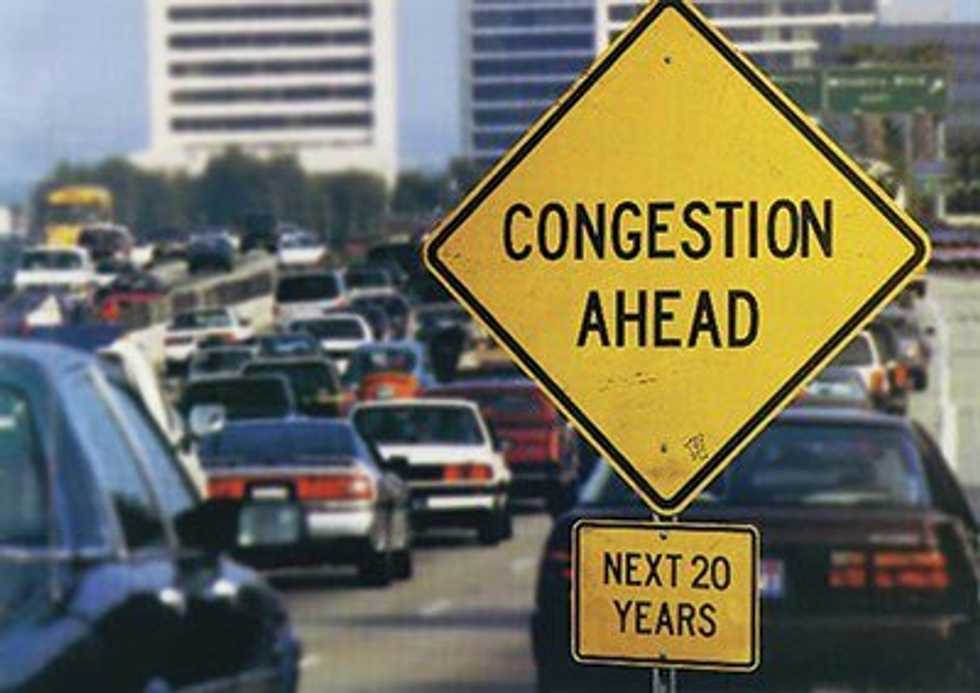
If you live in the general Los Angeles area, you might have noticed something. The streets are pretty much dominated by single-person driven automobiles. Well, that, or Uber cars. Straight off of the all-knowing Wikipedia,“People in Los Angeles rely on cars as the dominant mode of transportation." That seems to be the only way a majority of people get around the city.
This isn’t to say that the intercity transportation system is as bad. Union Station in Downtown LA is a hub for people looking for cheap and convenient transportation to places as diverse as Santa Barbara, Chicago, and New Orleans. The intercity bus services like Greyhound and Megabus, too, offer decent and affordable transportation to closer destinations such as Las Vegas, Anaheim, and Compton. And of course, LAX is the fifth busiest commercial airport in the world and third busiest in the United States, handling several millions of passengers every year. But the problem remains with intercity mass transportation.
The main crux of the problem is that LA wasn’t really built with a strong public transportation system in mind. Mind you, they probably also didn’t expect three million people in the city and nine million in the county. And if you have any hopes about the actual feasibility of walking anywhere in LA, think again. Literally 3.4 percent of the population does that—and it’s probably because their place of work is somewhere on the same block (or in their living room). Los Angeles is pretty pedestrian-unfriendly as well as public transportation-unfriendly, to say the least. About 75 percent of residents commute in a car by themselves, while less than 10 percent actually use any form of public transportation. And whether it’s the all-powerful automobile and fuel industries and their proponents fighting all lobbying for better transport and strong-arming the governmental forces involved or not, people pretty much get pushed into completely unsustainable automobile usage, and it has dire consequences for residents of the area.
Firstly, the insufficient network of buses and local trains makes daily commutes all that much harder and all that much more expensive. Especially for members of lower income and minority communities, the gas money or Uber payments definitely add up to a significant proportion of their income. That’s not to mention the huge initial cost of cars, costly insurance, parking payments, and even tickets and the like. Taxes AND massive transportation costs don’t really help solve the increasing income gap. People have to sacrifice other crucial costs just to cover getting to and from work every day. And some people even have to get second jobs just to cover commuting to the first job...
Somewhat in the same vein, being a [broke] international college student isn’t great transportation-wise either. College students shouldn’t need cars, but with the Los Angeles area being as vast as it is, how else do you get around? Student discounts are great, except where’s our transportation discount? We still have to spend a significant amount of money getting around—which means less human dinners and more oh-so-nutritious microwave popcorn and mac and cheese. Cars are also the primary cause of drunk driving accidents, something very easily preventable if drunk people had another safe means of getting home.
Even though there are a lot of social issues involved, it’s extremely important to also consider the environmental side. The millions of cars traversing the streets every day emit tons and tons of harmful gases, consume obscene quantities of oil, and require so much input and labor to build, creating severe air pollution, noise pollution, and a whole lot of health problems. The congestion and pollution has gotten so bad that any kind of fog-like atmosphere in the area is immediately classified by onlookers as smog. And most of the time, they’re right.
LA public transport is erratic, unreliable, and often not that safe. The whole horde of problems that come along with the barrage of cars and lack of mass transit systems could so easily be solved, but there’s a long way to go until the system is functional. Until then, stick to Zipcar for long distances, and biking for short—try to exercise (except not on highways)!
















