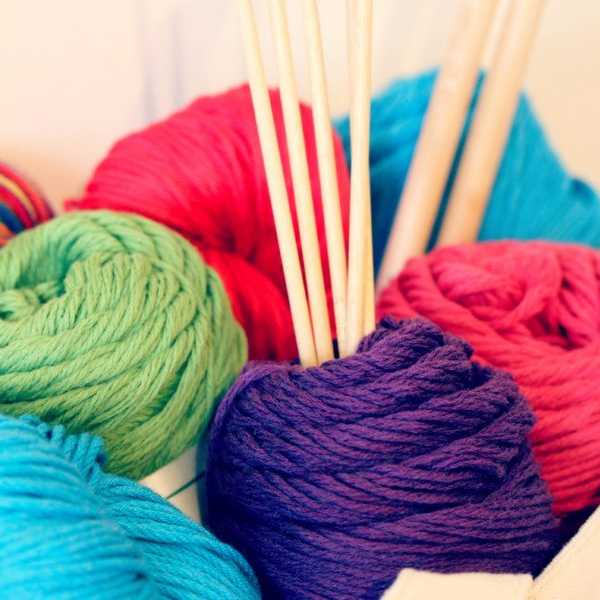
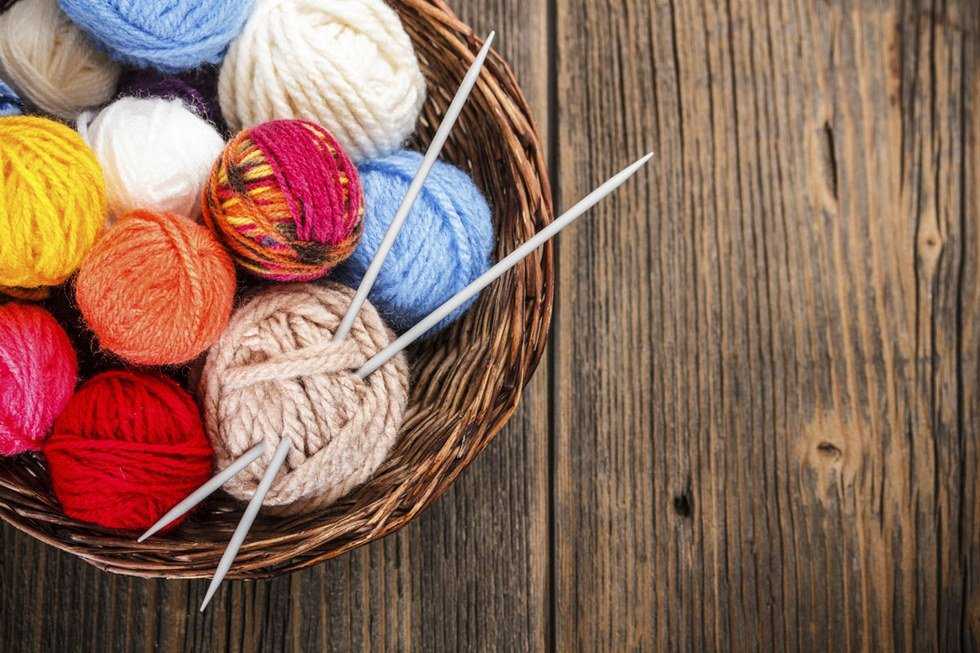
I've always thought knitting was something for old ladies. I thought it was an “uncool” and “dorky” hobby. Well, the tables have turned. When I received a DIY knitting book, along with yarn and needles for Christmas, I quickly fell in love with the craft.
As I mentioned before, I’ve always thought of knitting as something eighty-year-old grandmas do. I never realized that I could enjoy this hobby I once mocked. I took up knitting in high school, after a classmate of mine knit during a break in class in the 10th grade. I was mesmerized for about 10 minutes. I knew then that I wanted to do what she did. For Christmas during my junior year, I got everything I needed to learn how to knit: yarn, needles, and a how-to guide.
All knitting is comprised of two stitches: the knit stitch (which looks like “U”) and the purl stitch (which look like “V”). If every knitting pattern is a recipe, then these two stitches are salt and pepper, by which I mean essential ingredients. By combining these two stitches you can make many beautiful patterns. Examples of different patterns include the garter stitch, which is just knitting every row, and the stockinette stitch, which is alternating between knitting one row and purling the next.
Some people may say that knitting is just a mindless hobby. After all, what possible benefits could wrapping some yarn around two needles have? Activities like knitting and crocheting have been used by physical and occupational therapists to stave off symptoms of depression, and help improve motor function in people with Parkinson's disease or arthritis. The repetitive and rhythmic motions of knitting make it easy to relax, and because of the focus it involves (e.g. making sure you’re following the pattern correctly, watching for mistakes like dropped stitches, etc), it’s easy to forget about your anxieties. It can also help prevent the onset of arthritis because the constant use of the joints in your hands keeps the cartilage from becoming stiff. Some schools also use knitting to teach children math and pattern-recognition.
Knitting also instills a sense of pride. Because knitting isn’t a very “mainstream” hobby, someone who has no idea how to knit will be amazed by your yarn witchcraft. A survey of 3,500 knitters revealed that 81.5 percent of participants felt happier after knitting. I always show off my latest project after it’s finished because it’s exciting to think that you made a brand new article of clothing with your bare hands.
Another benefit of knitting is that you can make money off of it. I’ve sold scarves to kids when I was in high school, and to students here at Hastings. People love to buy handmade crafts, especially around the holidays. They make great gifts. Why not make a little extra money while also potentially making someone’s day? It’s like the old saying, “If you’re good at something, never do it for free.”
Along with the health and financial benefits of knitting, there’s also social benefits to it. Many local yarn or craft stores offer classes or knitting groups. By going to these, you can learn a new trick or two, as well as make new friends. Many prisons offer to teach inmates to knit because it helps relieve prisoner stress, and gets them out of their cells and interacting with other inmates in a positive, meaningful way.
Unfortunately, there’s also somewhat of a stigma around the craft. The common image of what a knitter looks like is that of the grandmother I myself fell victim to. Many say that knitting is only for women. Well, both those images are wrong. I don’t mean to say there aren’t little old ladies who knit, or denying that knitting is a popular craft among women. No, what I’m saying is that knitters come in all ages and genders. The most common thing I hear from people who don’t knit, especially from men, is that knitting is “a woman’s hobby, it’s not for men.” Which, of course, is not true. This claim is based on the antiquated notion that a woman’s place is in the home, mending and sewing clothes, staying in the kitchen, raising a family, and all the other old-fashioned gender roles.
I once offered to teach a male friend to knit and he said, “No thanks, that’s gay.” Right, because wrapping some string around a needle completely changes your sexuality. I think the reason many men are so fearful of learning a craft that’s perceived as traditionally feminine is because to them being seen as “feminine” equates to being seen as “weak.” There’s nothing inherently wrong about being seen as feminine; it’s the misogynistic culture that we live in that makes it seem so. Anything that’s deemed as feminine is seen as frivolous, unimportant, and inferior to anything that’s deemed masculine.
Knitting is not just for old ladies, it’s for everyone. Along with benefits such as staving off depression and other illnesses, develop fine motor skills, and offering a way to make money, it provides people with a way to make friends and get involved with other members of the community.