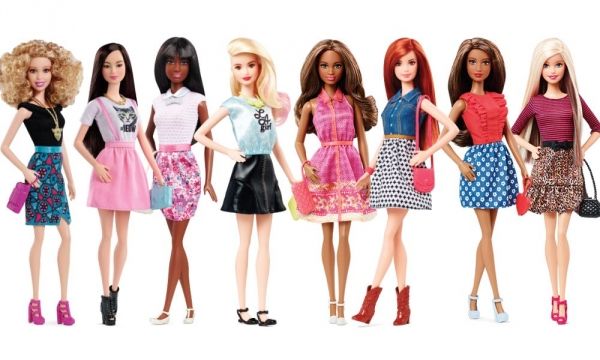
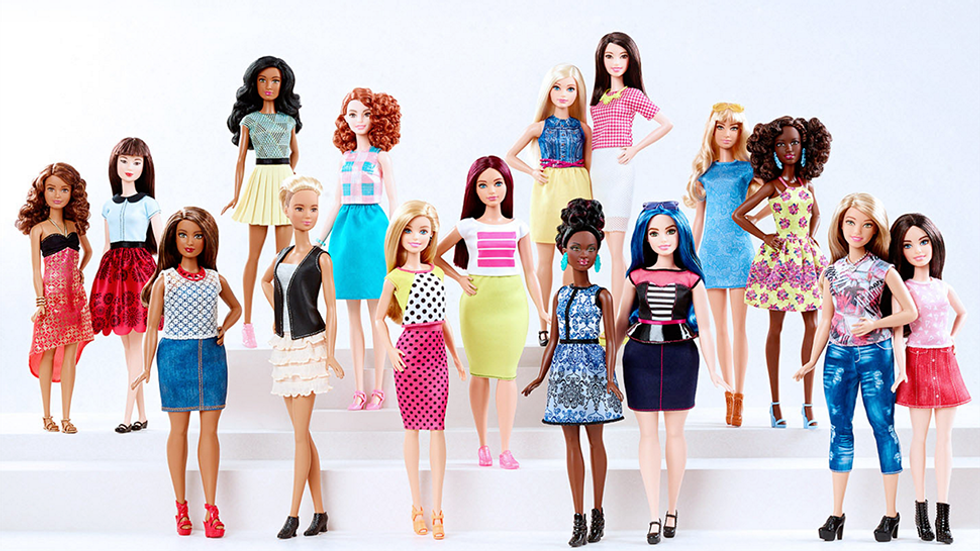
Available now, The Barbie Fashionista Dolls are made up of seven skin tones, four body types (curvy, petite, tall, and original), 24 hairstyles (including different textures), and 22 eye colors. Looking back where Barbie started – that’s a lot of change. But there’s still a long way to go, a lot of work to do and a big discussion ahead of us.
As a child, I remember walking down the toy aisle and seeing nothing but pink, skinny, white, and blonde. Barbie was beautiful, fashionable, and did almost everything. I wanted to be just like Barbie when I grew up because she had it all: the dream house, the wardrobe, the sports car, and the feminine appeal that Barbie taught me to desire, as it was desired by everyone. Career Barbie made me strive for higher standards. She was an astronaut, a vet, a doctor, a teacher, an Olympian, and almost every other occupation. Not only was she beautiful, but she was intelligent, and practically ran the world.
However, there was a problem with all of that. Barbie made me idolize all of the wrong things. Barbie made me look at myself and notice all my imperfections: my thin, brown hair, wider waist, pale skin, and lack of “style.” After Barbie, it was television, music videos, magazines, commercial ads, and many more, that negatively influenced me. It depressed me that I didn’t look anything like the women anywhere. It also depressed me that the career Barbie I looked up to was sexualized in almost everything she did. Whether it be her short skirts, or her tight clothes, she was purely an object that increased the expectations for women in our society as well as diminish the importance of being a career-woman.
Because of all these negative influences, I’ve carried around negative body issues with me for years, and I’m not the only one. We have all been conditioned to think that women should be a certain size, act a certain way, and limit themselves to the domestic (as I have been trained by living in the South) lifestyle. Barbie had a large part in doing so.
This is where the New Barbie comes in. Although experiencing much media backlash at the moment for not being good enough, lets talk about the good these products will do as of now:
Introducing new shapes, sizes, and racial identities, will provide younger generations with a more realistic view of women’s bodies and people overall. Children who will play with these dolls will grow up with Barbie as an icon that represents the beauty of all bodies rather than idolizing a blonde, white woman.
It will take years to see the changes in statistics of body image disorders in younger people, but with these new dolls, the statistics may go down. When looking at, “original,” Barbie’s body measurements on an actual woman, everyday activities such as walking and eating would be nearly impossible. Her, “ideal,” body is completely unrealistic, unhealthy and should be avoided. Girls won’t look at Barbie, or a variation of her, and tell themselves they have to be just like that. Not only in size, but also of skin color, hair texture, and other features.
The body positive aspect of these dolls will also hopefully bleed into other forms of media such as music videos, television, film, magazines, etc. There have already been efforts towards this such as a recent cover of Women’s Running Magazine. This is the time where its no longer a discussion, but rather becoming an active movement for change.
Now let’s talk about all the bad behind these products. Barbie has a history of being racist and sexist (as late as 2014), and has also denied their male audience of realistic versions of themselves.
It’s no surprise that Barbie has been directed towards the female gender for the entirety of the product’s life. Barbie’s color of choice has always been pink and with her focus being fashion (including the many career Barbie’s), the doll has done nothing but promote fragility of women. Many people see Barbie as an icon that has shaped the minds of young people everywhere. Mattel has so much power, yet they have continuously failed to discuss body positivity and female empowerment.
For instance, last year Mattel came out with their book I Can Be an Engineer! where Barbie was pictured saying ultimately sexist dialogue such as, “I’m only creating the design ideas,” and, “I’ll need Steven and Brian’s help to turn it into a real game!” In the book, Barbie was a computer science student, a major stepping-stone for the doll, as it would inspire younger girls. This book could have told girls everywhere that they could do much more than make something pretty on the surface. This isn’t their only offense: “Teen Talk Barbie,” released in 1992 uttered phrases such as, “math class is tough,” and, “party dresses are fun!” Mattel has also struggled in properly representing different racial identities in their products. Between the white and black Barbies, there are price and value differences, leaving the black Barbie as the inferior product due to white Barbie being the main icon for the products.
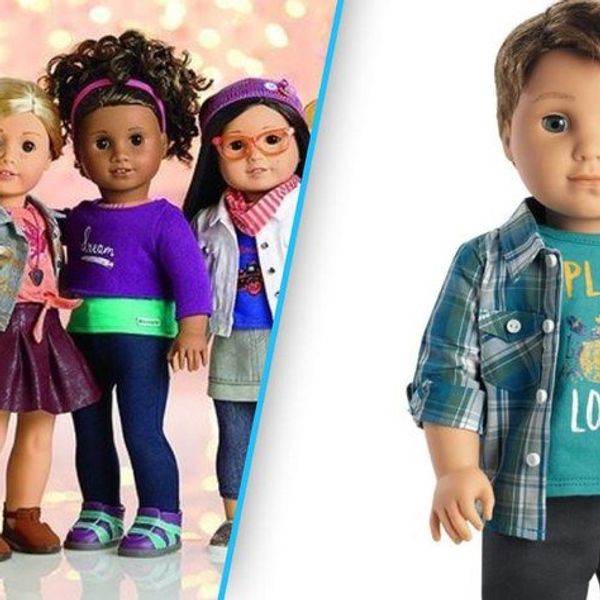
Even though patriarchal society may not like it: boys play with dolls too. These boys see the Ken doll as they play and see that he has muscles, perfect hair, tan skin, and a great smile. This isn’t a fair standard for men. Even though society (in my opinion) is more accepting of a heavier man rather than a heavier woman (i.e., any romantic comedy with Kevin James, as he is always paired with gorgeous actresses like Rosario Dawson or Leah Remini), it still isn’t fair to instill these expectations in men.
To reflect, what Mattel is doing now with the new line of Barbies is fantastic and will start more than a discussion. Mattel took a step to actually create these dolls and do something for the cause rather than sit back and take the blame. They may have only done this particular move to cover themselves after taking a financial blow from losing profits from the success of Frozen dolls, but regardless they did something.
But the media backlash isn’t totally wrong, there needs to be much more done to totally represent the diversity of their customers. They need to promote other cultures (accurately), gender equality, and body positivity, in order to stop the pressure of children to grow up into a life of self-hate among other things.