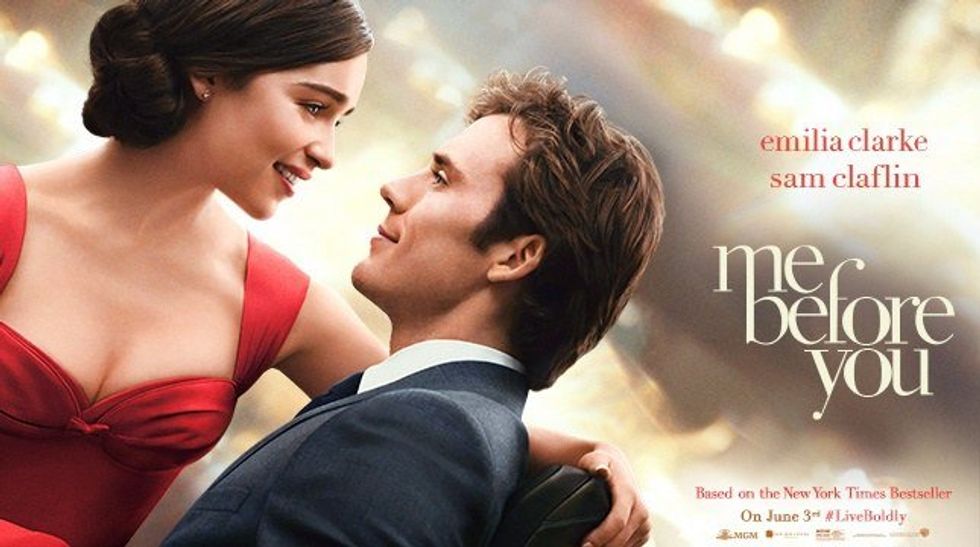
The trailer for "Me Before You" essentially reveals it all; another pitfall of recent trailers, but I digress.
It starts cheerfully as it introduces Emilia Clarke as the charmingly giddy and guileless Louisa while she looks for employment. It's easy to see that she's failed to maintain a job for a long period, but the music's tone escalates and the opportunity to care for Sam Claflin's character, Will, arises. The rest of the trailer sets up the film to be another Cinderella archetype with a twist: Will once had it all, but a tragic accident left him paralyzed from the neck down. His grim perspective on the world is evident, but it's confirmed when he plans on opting for Dignitas to end his life. This looming conclusion is what kicks the whole plot into play as Lou tries her best to show Will that life is worth living. However, disability advocates everywhere have decided to boycott and protest this film for its depiction of assisted suicide, and although I love controversial film premiers, I think that their protests are missing the film and book's point entirely: it's about having a choice.
Hopeless romantics everywhere bemoaned the film and book's ending when Lou's efforts didn't prove to be enough for Will's change of heart, but any other ending would have betrayed the characters' personalities. In the book it is made clear that Will was an active and successful businessman who lived a luxurious and adventurous life, but his accident crippled him physically and emotionally. Prior to meeting Lou, he had been paralyzed for two years, and during that time he made the decision to take his own life. Lou had little to do with his decision, and his determination to maintain it after he met her was eventually triumphant.
A grim and macabre one, Will's decision isn't laying well with disability advocates, because they see the film's conclusion as an assertion that it is it is better to be dead than disabled. They also think it's sending a dangerous message, and that this film is a disservice to people with disabilities. Although their cause can be understood, it should be noted that this film is about choice. For instance, at the film's conclusion Lou can be seen traveling to a French café Will once loved; she is seemingly better traveled and exploring the newfound strength Will inspired within her. He gave her the resilience to explore the power of her choice despite fighting against his for so long.
Disabled groups, like so many others, are generally ignored in mainstream media. Consequently, their representation, when it's done, is riddled with multiple inaccuracies and associated insensitivities. However, their desire to protest a film that explores only one narrative is a tad preposterous, because they cling to one of the film's details instead of its overall message. Other advocacy groups claim that the film romanticizes a literal death wish, but again they challenge a person's right to have a choice; even if the choice is the one to end their life.
Despite the controversy surrounding this film's premier, I believe it manages a small victory: It's making people talk about disability. In addition to talking about the casting, romance, and plans to see the film, it's also making people think about a community in our society that is often ignored in mainstream film and television. Although it cannot please everyone, this film succeeds in portraying the advantages and disadvantages of choice. Even when it means not everyone will have their happy ending.