
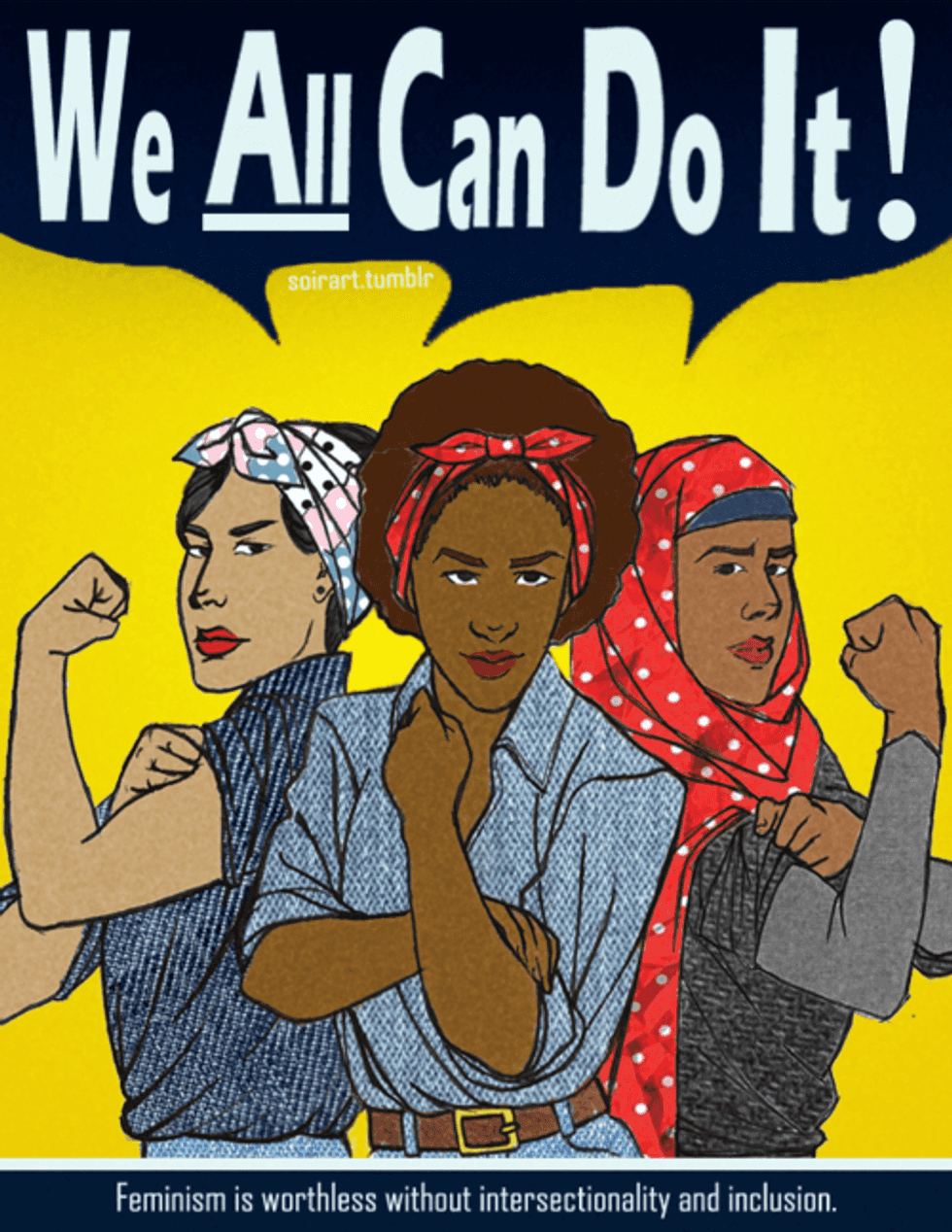
With all the recent criticism of feminism, you might call me crazy for still identifying as one. The fact that it doesn't always accept race and class issues as just as important as gender, its radical, and misandrist faction, and the stigma of the "3rd wave" as nothing like the feminism America used to know are all valid reasons to ditch the label. I can see that. People have begun to turn to labeling themselves as humanist or egalitarian with the same positions feminism takes (the original definition) but a different name. Feminism is the new F word. You have to be careful who you use it around.

But I am still here. I am still with the rest of the cause fighting for equality, which isn't as small as people think. There are many of us. And personally, I have a few core reasons for standing my ground.
People say feminism is broken, but I am a firm believer that much of what is broken can be fixed. It won't be easy, but if there are not those of us willing to keep on being a feminist despite what kind of reactions that label gets, it will never change for the better. Feminism will truly fall into sexism, violence and aggression. But by identifying as one, as well as doing my part to confront these militant feminist misandrists, myself and many others can in fact inspire reform.
The radicals are not a huge group. Despite their vocal nature and the attention the media gives them, they are a minority in feminism. If many of us feminists actively reform, push out the sexist individuals, that is how the cause will be repaired. There need be no huge rally or rebellion, just many people proving the perception wrong. It starts on an individual level. And these misandrists won't just go away. They have to be stopped.
Also, I want feminism to be seen as a good thing when my children see it years from now and when my children's children see it. I want it to be there for them and their generations to raise them up and help them be heard if they feel silenced by society. I want it to be a movement for them to turn to and express their problems, not have to justify or prove them. Not to have their issues dismissed or minimized. It is in this way that feminism can be such a cause for positive change. It's just not quite there yet.
A final reason has to do with privilege. And I'm not just talking about white, male privilege. Feminism has begun to open people's eyes to the privilege they have. Whether it's that a person is white, whether it's that they are of middle or upper class, many people have privilege. Feminism, in conjunction with sociological scholars, has spoken about how it's high time we start recognizing our privilege, instead of ignoring or denying it, and stop seeing others pointing it out to us as a personal attack. Because it isn't an attack. It is to indicate the overarching structures in society that benefit one group at the expense of another. They favor certain people over others just because they are members of those groups. Feminism argues that change can never happen on a larger scale and people will never be seen as equal until people are ready to see and accept the privilege they have. This is one of the big accomplishments of the movement, even through the criticism and controversy.
So here I am, and here I will stay. I will not forfeit the cause and the label for radical feminists to take. I will not let them have it. Because I think that we all need feminism, and we all deserve the benefits we will get through its reform: its inclusion of race and class as aspects that work with a person's gender not independent of it, mindfulness of other people's needs based on their group's traits, and a diversity in the foremost faces and voices of feminism. The restoration of its reputation is important to me; I want feminism to start truly benefitting all types of people that feel oppressed or silenced by society as it was meant to. I will not turn my back on it.