
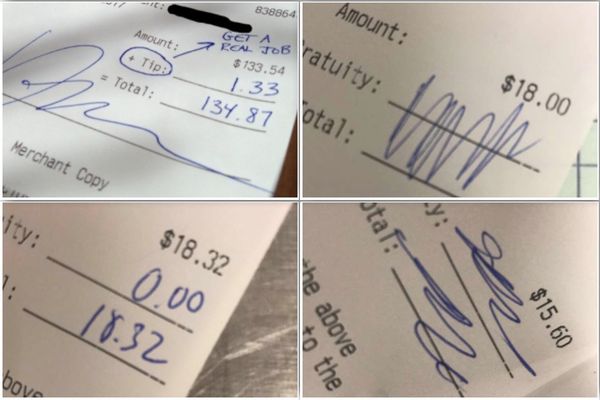

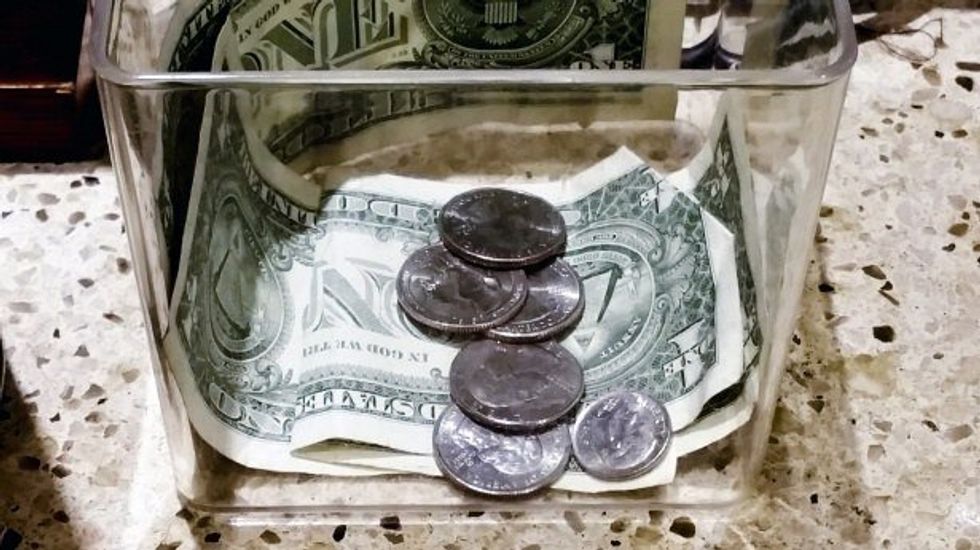
While tipping is seen by most as a cornerstone of the American service market, the practice is more controversial than you might think. Many prolific publications such as Salon and Vox have published articles speaking out against the practice, Salon saying that tipping "breeds indentured servitude," while Vox accuses it of "perpetuating racism, classism, and poverty."
By most people, tips are seen as an extra perk on top of the employee’s wage, a thank you for doing their job correctly. But tips aren't usually a something extra that employees get to keep along with their comfortable paycheck. With a federal minimum wage for tipped employees less than $3, author Lynn Truss points out that if you “give a 'thank you' that isn’t green and foldable and you are actively starving someone’s children." So in reality, tips are asking consumers to help do the employer’s job of providing a living wage for their employees. For tipped workers, economic security can be very hard to achieve. Rather than making a living wage for doing their job, they must cater to every customer's subjectivity in order to be paid enough to survive on.
The size of tips depends on so many factors other than the actual quality of service provided. The weather outside, the atmosphere of the restaurant and the attractiveness of the server are just some things that can influence tip giving.Those that suffer the most from the biases inherent to tipping are people of color and women, who face far more harassment than white male employees already, and who customers are more likely to tip less due to their own biases. On slow business days, even if employees are doing their job perfectly, there may not be enough customers for them to get enough tips to make a satisfactory wage. It is unfair to have the income that employees need to live relying on something as subjective as consumer whims.
Tips are also seen as a tacit agreement between customers and workers, a way for the customer to motivate the employee to do their best work. This is where another problem comes in. How can customers be expected to be objective and evaluate the performance of the server? How do they know what goes on behind the scenes? It should not be the customer's job to evaluate the employee's work, and frankly they are not qualified to.
If the practice is so unfair, what are we supposed to do about it? Many small businesses across the country are taking a radical move away from tipped work, paying their workers a living wage that is covered by the price of their goods and services rather than expecting customers to subsidize the wages through tips. Until getting rid of tips is a more widespread occurrence, we have to change our mindset and stop seeing tips as something flexible and optional to pay.

















