Students in higher education have seen the costs of attending college increase more and more over the years. As achieving a degree is seen as a necessity for getting jobs and for a successful career, students are under a lot of pressure to get one. According to a new National Bureau for Economic Research (NBER) paper, from 1987 to 2010 the cost of college rose about 106 percent. As students and their families have become more and more weary, loud promises from Democratic candidates of “free” college tuition have become more popular. This meteoric rise in college tuition is caused by the dramatic increase in the demand for a college education over the years. One part that’s driving this expanded demand is the perceived necessity of a college degree in order to achieve a career. Employers use degrees as a primary signal for measuring applicant competence. This is why career opportunities and earning potential increase with a college education. The demand for a higher education has rapidly increased as a result.

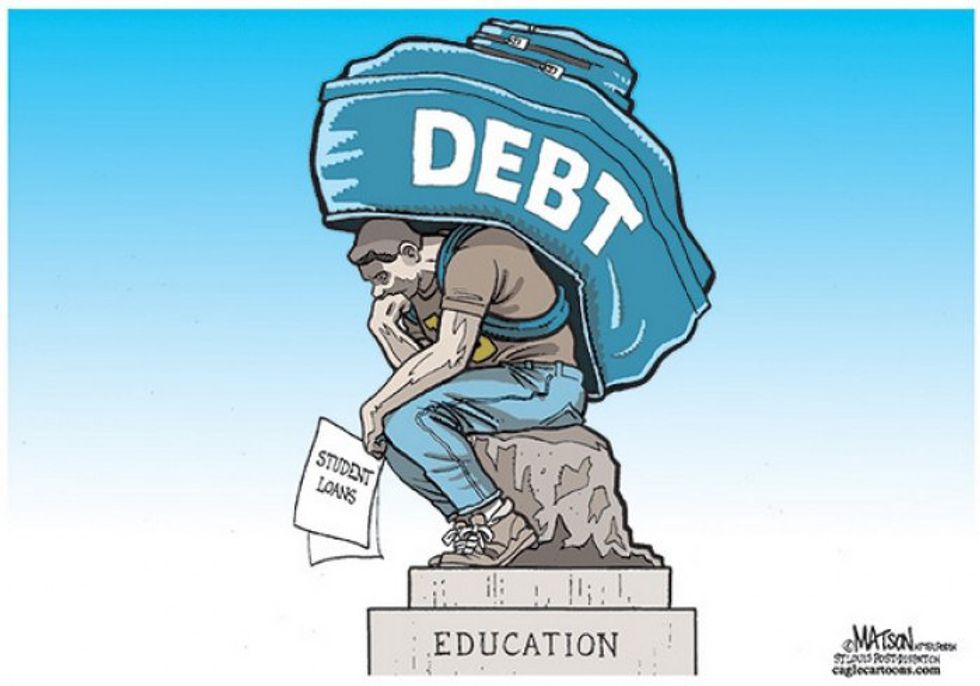
A greater reason for this increased demand is the expansion of student loans. These loans steadily increased in the '80s with the goal of making college more affordable for students. Because this is seen as a noble cause, there is also intense political pressure to continue growing the amount of these loans. The new NBER paper suggests that changes in the Federal Student Loan Program (FSLP) have accounted for most of this increase in tuition. While tuition has increased by 106 percent since 1987, the changes in the FSLP have accounted for 102 percent of it.

Expanded loans give colleges an incentive to raise tuition because they’re essentially a subsidy for higher education. Following economic logic, subsidies make the cost of consuming a good artificially lower, which increases the demand for it. As a result of this increased demand, the price increases higher than its initial price. So, expanded student loans initially artificially lower the cost of a college education, which means that more people decide to pursue a college education. In turn, the new tuition becomes higher.
To account for this increased demand, colleges can try to make more room for the influx of students, but building new halls and dorms or expanding upon existing ones could become costly. They could also increase their standards for admission, but these standards have increased considerably over the years and haven’t caused a significant change in this influx. So, what colleges can do is increase their tuition rates.
People often say, “No matter what the price, a college education is still the best path to achieving a career.” This demonstrates the inelastic demand for a college education, meaning that price increases have a negligible effect on the quantity demanded.

So, since colleges acknowledge the highly inelastic demand for their product, they have a significant incentive to continually increase college tuition, which increases their revenues. The new NBER paper supplies this theory with solid empirical support. Although people aren’t completely wrong when they call these actions by colleges “greedy,” it’s a far more accurate analysis to say that the meteoric increase in tuition is the logical response to an artificially expanded and highly inelastic demand for the product of a higher education.