

You've heard it. Someone talking about injustice in the world and they say something along the lines of "I don't understand it, we're all technically the same!"
That always makes me cringe.
I understand that people who say this mean well. It's just that while all human beings are basically identical on a genetic level, everyone's experiences vary greatly. A person's experience in the world depends (among other things) on their race, gender, sexuality, nationality, economic standing, education level, physical and mental ability, as well as their health.
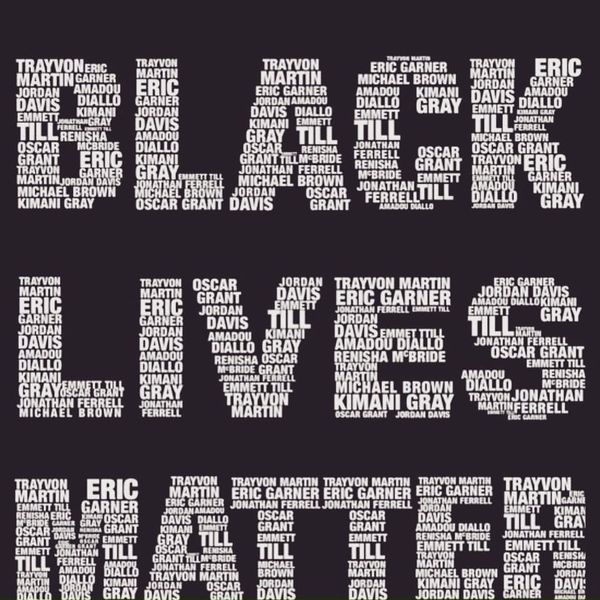
The whole "we're all the same" mentality erases all of that. Because of it, it's easier to treat, say, the shooting of an unarmed black trans woman by a police officer as a one-time tragedy. It's just one person shooting another person, and that's really terrible to begin with. If everyone were "the same," the conversation would stop there. But that erases the issues of institutionalized racism, violence against the LGBTQ community, the criminal justice system, how police are trained, sexism that women face, transphobia that trans people face, and the misogynoir that black women have dealt with since the founding of America.
That's a lot of stuff to deal with. It can seem overwhelming. And for many people, it is. But they don't want to seem insensitive to all of these issues, so they throw up their hands and wonder why we, as human beings, treat each other badly when "we're all the same".
But the thing is, we're not "all the same." America credits itself as a "melting pot," and in order for that to be a valid statement, we have to acknowledge that people are different from each other. As a nation, we're very good at acknowledging our diversity when it's convenient, but pushing it away when it isn't. We're happy to celebrate the first black president, but hesitant to talk about the incarceration of 120,000 Japanese Americans during World War Two just because they "look like the enemy."
We have to acknowledge differences consistently, in times of celebration and times when it's uncomfortable to talk about. It's great to praise an accomplishment, like when Sonya Sotomayor became the first Latina Supreme Court Justice. But we also have to examine the state of things when Daniel Harris, a deaf man, gets shot by the police over a speeding violation because he can't hear the sirens of a police car.
Differences are what make the world a complex, fascinating, beautiful place to live. And even though it's hard, we have to address what makes us different, instead of weakly insisting that we're all the same.















