
Dialects are variations of a language that often is often associated certain cultures. Growing up in a small town in Upstate South Carolina, the only dialect that I knew to be normal was the Southern accent. I often thought that the people who spoke differently were different. I did not understand their culture, their background, or why they spoke the way they did. Since coming to college, I can now appreciate dialects different from my own. I have learned that there are far more people that do not speak with a Southern accent than do. Through classes such as Political Science and Linguistics, I now understand why people speak the way they do. According to the author of Language Files, the United States has seven major dialect regions. In this reflection, I focus mainly on the dialects of the Appalachian area, as well as the South.
As our nation progresses, many of the Southern communities, I have noticed, have drifted towards a more standard American English. My community, however, still has a strong remainder of the old age accent. To understand why people speak the way they do, a look back in history can shed explanations. In Language Files: Materials for an introduction to language and linguistics (11th Edition) , A. Bergmann comments that, “the arrival of African slaves along the southeast Atlantic seaboard contributed significantly to the development of southern varieties of English" (425). When the populations of the early settlements mixed, a dialect emerged. In addition to African slaves, a strong presence of Scotch-Irish also settled in many areas of the South. It is important to note that the Scotch-Irish that settled in the south can trace their migration many years earlier than those in the North. Culture also plays a major role in accents. In the Washington Post article, "Which of the 11 American Nations Do You Live In?," Ried Wilson comments that, “Dixie still traces its roots to the caste system established by masters who tried to duplicate West Indies-style slave society” (Wilson). After the War of Southern Independence, many southerners wanted to seclude themselves from the people of the North. This seclusion can also explain why the accent is so strong, geographically, as well as politically.
Physically, the southern accent is different due to the use of “the short front vowels with glides so that they become diphthongs instead of monophthongs” (Bergmann 425). When speaking, there is a physical way in which the mouth moves. Bergmann explains that variations on language are performed differently within the mouth. One example of a variation is “the use of the phrase fixin’ to, as in I’m fixin’ to clean the gutters, to signal the intention of completing an action at some point in the near future” (Bergmann 425). Before studying language, I had always used this phrase. I had never realized that it was a variation used in the South. When using the word fixing, southerners often leave off the letter "g."
Another example of language variation used in the South is the double modal. The double modal combines two modals. Modals are verbs such as can, could, might, and would. Southerners often combine two to make, I might could. This is another combination that I have grown up hearing, and never realized that it was geographically specific. Bergmann explains that, “the use of two modals in a verb phrase, also known as a double modal, to indicate that a plan has a high degree of tentativeness” (425). In the southern culture, people often try to avoid bluntness in order to maintain cordialness.
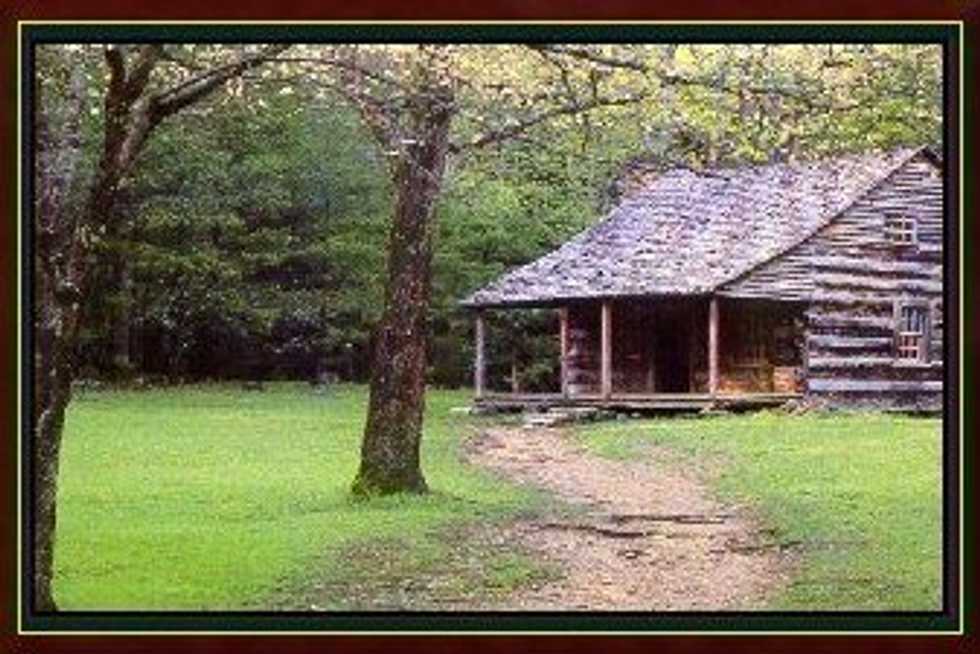
The Appalachia area is another dialect that is studied by the authors of Language Files. The author explains that the Appalachia area extends from the mid and southern regions of West Virginia, western North and South Carolina and Virginia. The Part of the Appalachia area that extends into South Carolina is near my community. The settlers of the Appalachia area included English, Scots-Irish, Pennsylvania Dutch, and French Huguenots, who all contributed to the language varieties that developed in the area (Bergmann 426).
Some of the variations of Appalachian English can be seen in my community. For example, “cigar is pronounced cigar rather than cigár, November is pronounced Nóvember as opposed to Novémber, and insurance is pronounced ínsurance rather than insúrance” (Bergmann 426). Each of these variations can be heard throughout Appalachia, as well as the bordering areas. Another example of the dialect is through the a-prefix. Appalachian English has preserved the prefix a- (which was used commonly in English from the twelfth to seventeenth centuries) in certain verbal constructions, such as He come a-runnin’ (Bergmann 426). The isolation of the Appalachia area over time as preserved its settler’s original language. It is interesting how isolation has helped preserved an area of middle English that has been forgotten.
In conclusion, studying language has made me understand the many components that produce speech. I have learned how speech is conducted and transmitted. One aspect of language that I was always aware of, but did not understand is variation. The United States has many different dialects of English, and linguistics has helped me appreciate each of these dialects. The accents that people hear today have political and cultural significance that can be contributed all the way back to the early settlers.