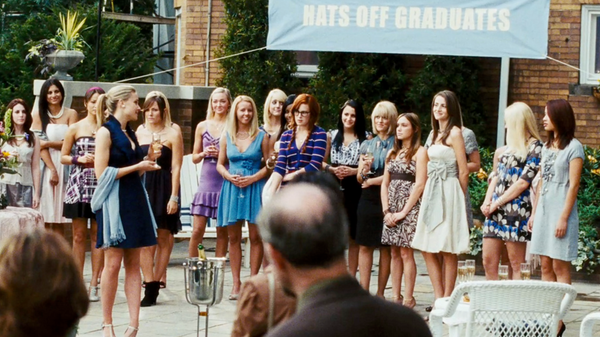

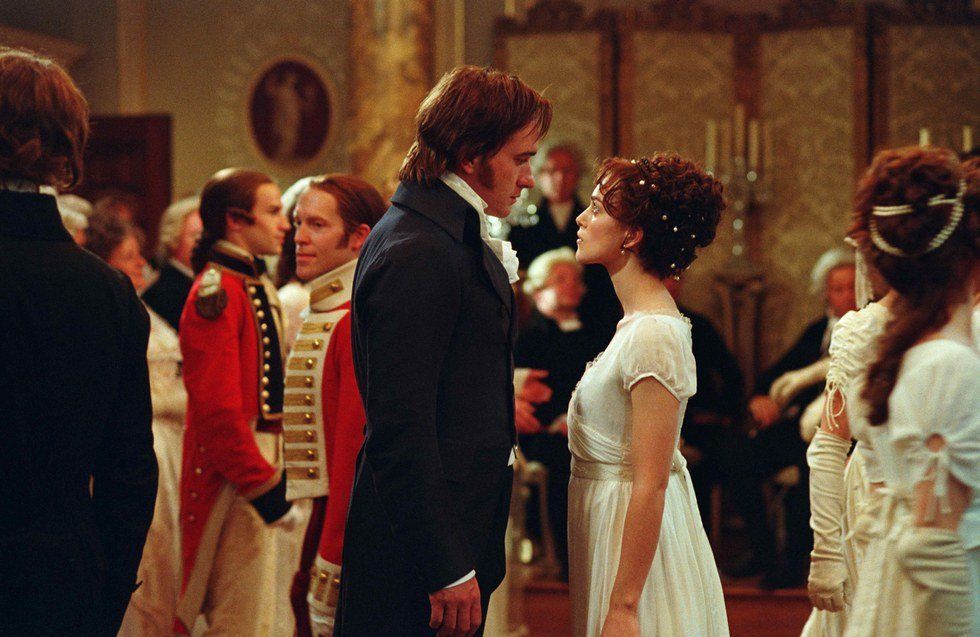
Almost every girl or woman has been told to be more ladylike at some point in her life. Most think of a "lady" as a girl who's polite and well spoken, someone who is respectable and kind. But the definition of what a "lady" is has changed immensely over the last 200 years.
She was a good hostess and knew how to run a household; however, nowadays a lady is something different entirely. We expect women today to be stylish and confident, but not so much as to intimidate others. The very idea of being “lady-like” is predicated on a certain set of morals and standards that women are expected to meet, and, if you fall anything short of that, it can damage your social life and your career. The book Classy by Derek Blasberg lays out a set of guidelines for the modern young woman to follow in hopes of avoid being labeled a tramp. The problem though is that women can not be so easily categorized as a lady or a tramp. While there are of course standards we all hold ourselves to, we should get to decide on those individually. So why should each person with different backgrounds and priorities be forced into the same mold?
Frequently parents are the ones who drive these ideas of courtesy and etiquette, which is how it should be especially when you're young. More and more groups tell us how to act as we get older though whether it's through movies and television, books, magazines, or the people we interact with. I attended Catholic school for middle and high school, and was often in trouble for not behaving as a lady would. Sitting with my legs open instead of crossed, swearing like a sailor, and refusing to keep my controversial opinions to myself kept me from seeming ladylike. And I'm proud of that. The way I see it, many of the rules women are meant to follow teach us that our bodies are shameful and expressing our opinions is less important than the way people view us. Dress codes in schools specifically target women forcing them to cover their body more than their male counterparts at risk of being distracting. These codes sexualize girls of all ages by telling them their body is vulgar. They enforce the idea that a woman’s character should be judged based on her clothes which can lead to victim blaming in rape and abuse cases. We, as a society, need to be aware of the message we send to girls about themselves.
I am extremely active, and I rock climb and swim whenever I have a free moment. I mention this because both require strong shoulders. I remember as I was getting more involved with rock climbing, someone told me, “Be careful, you don’t want to get too big or guys will find you intimidating.” Standing tall at 5’2” being intimidating is not something I am normally associated with, but, if rock climbing can do that, then I look forward to it. But, more to the point, why should I change my hobbies and interests to make myself more appealing to men? I honestly do not care if men find me attractive because the way I look is such a small fraction of who I am. So frequently women are told that their looks are more important than their mind or their personality, which is devastating. Little girls are given makeup sets and Barbie dolls while little boys get Legos and trains and then we wonder why so few women go into STEM careers. Our words have a profound effect on people, especially in formative years which is why we should encourage girls to pursue their interests rather than limiting them with an arbitrary title.
As women, we perpetuate these ideas by judging each other based on what we see. I know I’ve done it. When I read "Classy" I was an impressionable high school freshman who wanted to follow every rule in this guide to being a lady, but, as I matured, I realized that by changing myself to appeal to others I lost my own personality and uniqueness. Laurel Thatcher Ulrich once said “Well behaved women seldom make history,” and as a Pulitzer Prize winning historian she would know. History doesn’t remember those who follow all the rules and please everybody, which is why women should be encouraged to portray who they truly are rather than what people want to see.