Textbooks admit it, psychologists prove it, but teenagers already know it themselves: adolescence is a nightmare. Adults may disregard such claims as exaggerated, but let my schedule serve as proof. Three-quarters of every year is consumed by school (and the joys that accompany it.). My eight classes a day, many at college level, are accompanied by at least five hours of homework a night, tests, and projects. My weekends, though they may give the illusion of freedom, are consumed by even more assignments, and very basic obligations to remain attached to humanity, like visiting with my family. Beyond school are a “few more things” to ensure my schooling in the future, resume-building, volunteering, and college searching and applications. By the time the things I actually enjoy are factored in-- Student Council, dance class, and even writing this article-- there is barely time left for basic survival, like eating and sleeping, which have transformed from biological necessity to privilege. So what’s left to thrive on? How do I make it out (1) alive, and (2) sane?
Well, Selena Gomez, of course.
Please, allow me to explain. The most simplistic way of visualizing teenage havoc is to picture a multi-road intersection. As more roads are added, lanes are widened, and speed limits increase, it is no wonder why adolescence is one of the most deadly locations on the map of life. A junction of such pressure and fear of not living up to standards (in the eyes of friends, family, colleges, and, most significantly, the ones staring back in the mirror) turns into relentless self-criticism and the pressing question of “Am I ____ enough?” Fill in the blank with whatever-- pretty, smart, athletic, talented -- and what you get is failing self-esteem, rising anxiety levels, growing eating disorders, and jumping suicide numbers.
Selena Gomez has become America’s solution.
With a current standing of 2.1 million copies sold, the ultimate feel-good jam of “Who Says” by Selena Gomez and The Scene was released in 2011, peaking at #21 on Billboard’s Hot 100 Chart only days later. According to Wikipedia, the song won “Choice Music: Single” at the 2011 Teen Choice Awards, which serves as evidence of its popularity amidst the adolescent realm. However, what makes “Who Says” unique is that it does not fit the mold of a perfect chart-topper. When flipping on the radio on the way to school, I expect to hear about Bieber’s latest relationship, Drake’s latest heartbreak, or Miley’s latest party. “Who Says,” on the other hand, has it’s primary focus on the listener. The lyrics are structured as a series of questions Selena is asking of her fans, in an effort to discredit “the haters” and boost self-confidence. Selena demands to know, “Who says you're not perfect? Who says you're not worth it? Who says you're not beautiful?”, giving the ultimate effect of Selena Gomez, a conqueror of the harsh criticism that accompanies her celebrity life, defending me and my worth. Now, when I walk into physics class wearing sweatpants, and am met a critical glare and a “what are you wearing?”, I am armed with my own confidence.
We know that Selena has dealt with her share of judgement, recently recalling to MTV News that “with all the negativity that is in high school, you're already trying to figure out who you are; it doesn't help when people are constantly trying to tear you down”. What Selena describes is the often-forgotten component of adolescence, the extra road of the intersection, that is the unspoken high school social order. So not only am I stressing about my first Calculus quiz, I’m also stressing about what that one girl thinks of me, or how on Earth I’m going to get a homecoming date. This extra struggle is recognized by Selena in “Who Says” as she sings to listeners about dealing with judgement, saying “I'm sure you got some things you'd like to change about yourself/But when it comes to me, I wouldn't want to be anybody else.” The message is defined, clear, and extremely repetitive. You are pretty enough. You are smart enough. You are athletic enough. You are talented enough.
Selena is hardly alone in pushing the message of self-acceptance and confidence. Other chart-toppers of 2011 included “Firework” by Katy Perry, “Just The Way You Are” by Bruno Mars, “We R Who We R” by Kesha, all of which speak to the same idea of loving yourself, both the good and the bad (Hot Top 100). The “selfie” song revolution isn’t going away soon either. Within the past year or so, we’ve jammed out to all sorts of self-empowerment tunes, like “On My Own” by Miley Cyrus, “Love Myself” by Hailee Steinfeld, “Try” by Colbie Caillat, and the list continues. The difference now? They aren’t falling short to soppy serenades and party anthems. “Fight Song” by Rachel Platten fought its way to #6 on Billboard Top 100, and “Born This Way” by Lady Gaga reached #1.
By examining this set of powerhouse tunes, it is easy to recognize that the success of a song never really depends on its lyricality or brilliance (it doesn’t take an Einstein to write “I’m no beauty queen/I’m just beautiful me”). My personal taste tends to steer my ears toward music with more depth and meaning, but there is a reason certain songs top the charts, and it’s their brilliant appeal to the innate desires of the public. If a song can consistently fulfill our many fantasies, including my own -- the desire to be rich and famous, to fall in love, to have a good time, and most recently significant, to love ourselves-- then you can guarantee we’ll be listening.
And, singing along, of course. The best parts of my day are those intense, top-of-the-lungs jam sessions in the car, with or without my Dad on backup vocals. And yes, I’m that lunatic you roll up next to at the stoplight, using a water bottle as a microphone and dancing like I’m having a seizure, but I am not alone. We sing, we dance, we listen and we watch, especially the “Who Says” music video, which became VEVO certified in 2011 with over one-hundred million views.
But then what? What happens when the song ends?
Well, we take our earbuds out, shut off the radio, and we move forward. My microphone turns back into just a water bottle. Within my high school career, I’ve stressed over finding a homecoming dress that makes me look pretty enough, cried over bad test grades, fumed over getting stuck in the back of a dance, deflated at the sight of a rejection letter from National Honors Society, and our culture moves the same old motions. Self-esteem fails, anxiety levels rise, eating disorders grow, and suicide numbers jump.
So did Selena lie? Not exactly. We all have strengths that give us the potential to be someone extraordinary. But unfortunately, two issues arise from how Selena, amidst many other artists who preach self confidence, paints the picture.
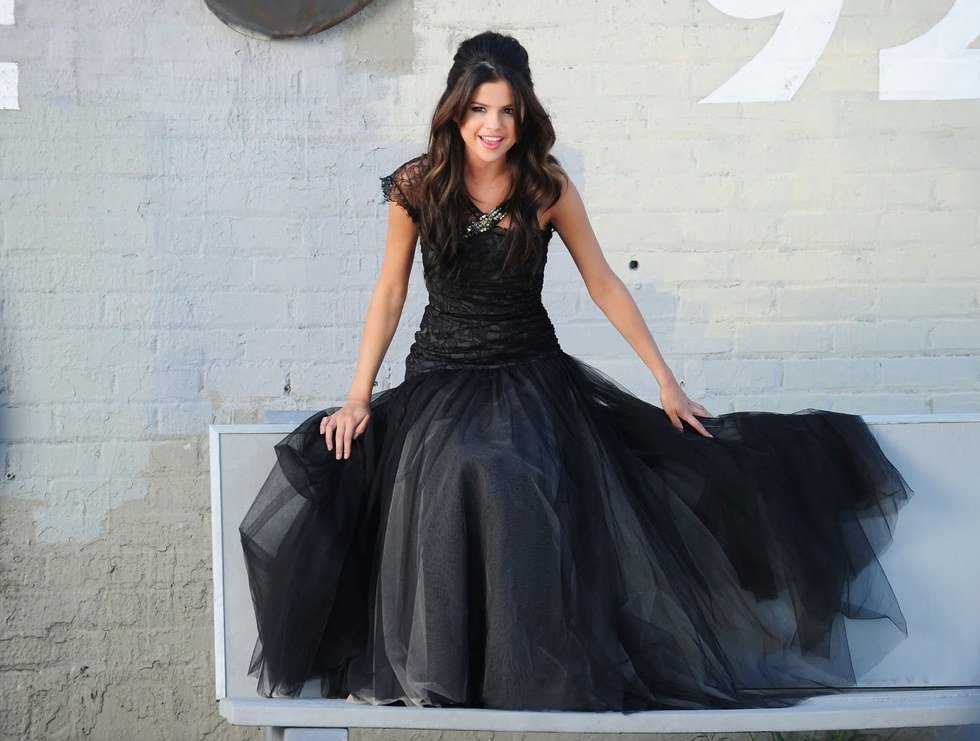
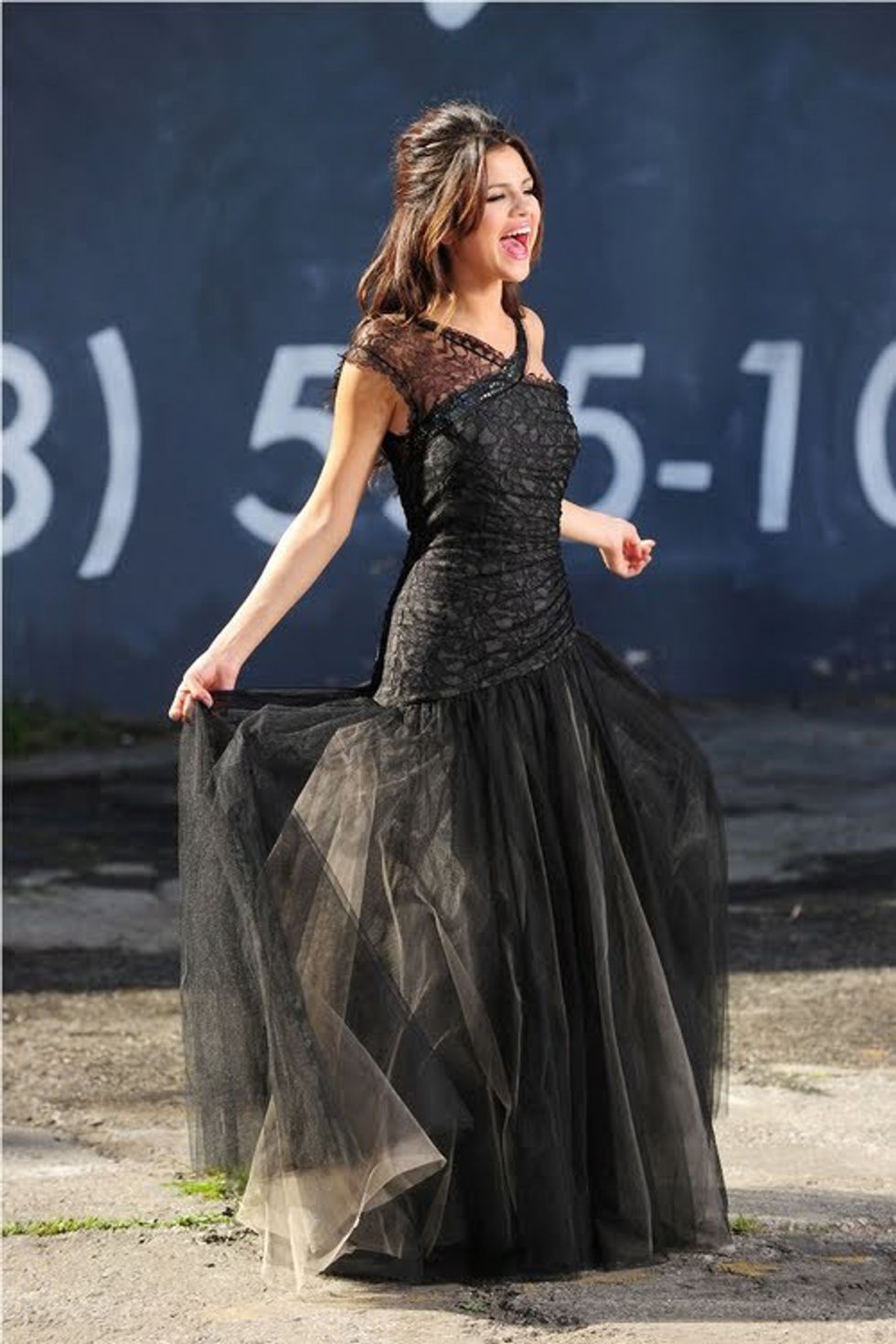
1) There is a certain level of hypocrisy that comes from celebrities teaching us to love ourselves, when we know that celebrities themselves often struggle to find self-acceptance. Looking directly at the “Who Says” official VEVO music video, Selena spends a majority of her song prancing around the city in a gorgeous black dress, carrying her rhinestoned heels, with flawless makeup and hair flowing in the wind. When the screen goes black, I close out feeling worse about myself than when I opened it. Luckily, I can always buy Selena’s music, go to her concerts, and dress from her Kmart clothing line to help me learn to love myself. Such marketing is brilliant, but a pretty low-blow. Selena’s praised message of self-esteem is mostly just an advertising scheme on America’s confidence, which has become just as transparent and shallow as the message is itself, but it sure makes her millions.
2) The second fault in Selena’s message is that it presents the principle that “you are good enough” as an absolute truth, when unfortunately, it’s just not. In my household, my brother and I grew up with blunt reality, as my Dad used to lovingly remind us that “there will always be someone better than you.” And although I would love to disprove such a harsh statement, I have yet to actually do so. I have yet to find myself a situation in which I am the most physically desirable, the smartest, the most athletic, or the most talented. And if you think you have, then I encourage you to remember the real world extends beyond the walls of your house, your school, and your town.
Is that a crushing reality, that you can never be the best? Possibly. Should it lessen the confidence you have in yourself and what you’re capable of? Absolutely not. My confidence is in no way offended or damaged by such circumstances, because authentic confidence comes from the ability to overcome challenges and persevere. Doing poorly on a test, or in a game, or at an audition, shouldn’t damage the belief you have in your capabilities. In order to be completely honest, however, I’ll have to admit this message comes from a hypocrite as well. I may be one of the worst victims of the fear to fail, with an overachiever mentality. I stay up studying and stressing over my grades on a regular basis, as if a 95% isn’t good enough. I’m drawn to ballet and its focus on perfectionism. My closet is color-coordinate, for God's sake. But in a recent promise I have made to myself, for my own sanity and happiness, I will work to remember that failure is not curse, but a blessing, as it provides the opportunity for growth, improvement, and most importantly, learning. Embracing it allows it to work for your benefit.
So who says you’re not perfect?
I do. It would be a shame if you were.
Works Cited
"Hot 100 Songs: 2011 Year-End Charts | Billboard." Billboard. Billboard, n.d. Web. 11 Nov.
2015.
Selena Gomez and the Scene- Who Says. Perf. Selena Gomez. YouTube. Youtube, n.d. Web.
11 Nov. 2015.
Vena, Jocelyn. "Selena Gomez 'Inspired' By Latest Single, 'Who Says'" MTV News. Music
Television, 17 Mar. 2011. Web. 11 Nov. 2015.
"Who Says (Selena Gomez and the Scene Song)." Wikipedia. Wikimedia Foundation, 23 Oct.
2015. Web. 11 Nov. 2015.