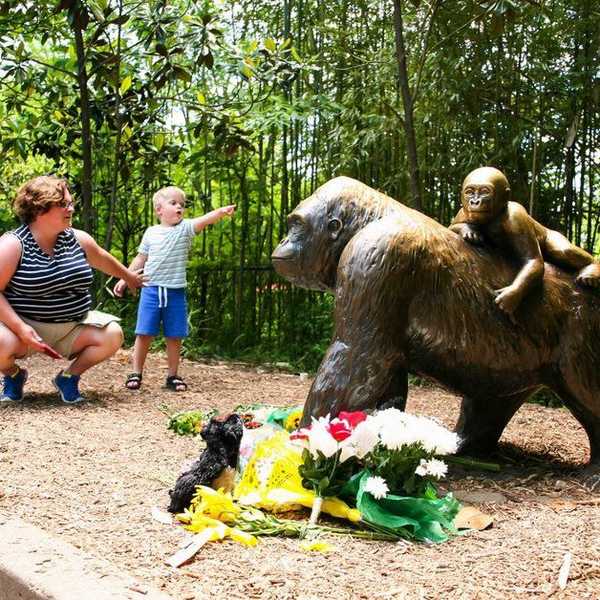

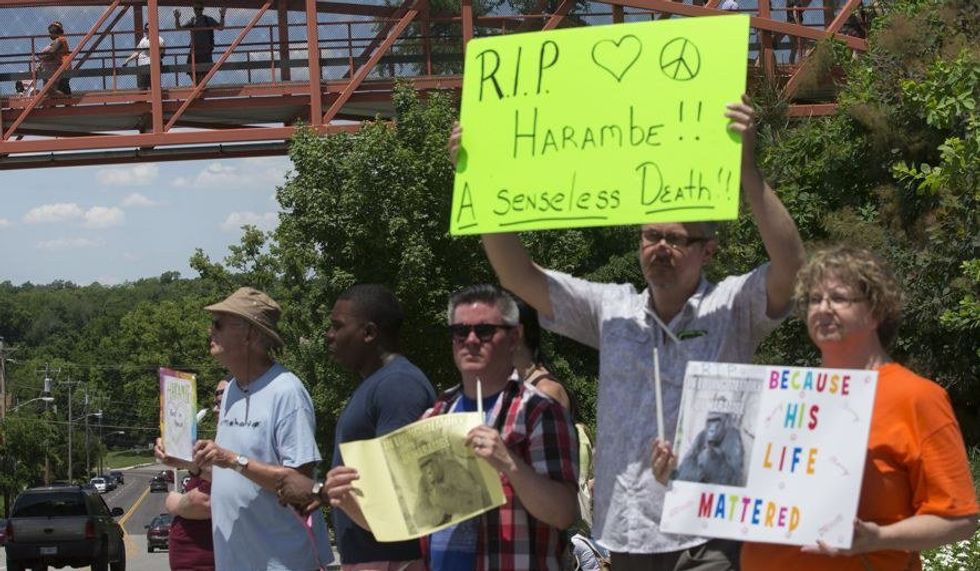
By now, most people around the country, and especially in the Cincinnati area, are familiar with the story of Harambe. A 17-year-old western lowland gorilla who was shot and killed at the Cincinnati Zoo after a 3-year-old boy climbed into the gorillas’ enclosure. If you have heard Harambe’s story, you have likely also been exposed to the immense controversy surrounding the endangered gorilla’s death.
I want to start by saying that I understand the Cincinnati Zoo’s course of action and ultimate decision to place the safety of the guest over that of the gorilla. If this situation had played out differently and the boy had been fatally wounded at the hands of the Harambe the public would be equally, if not more, enraged at the zoo's inability too keep its guests safe.
I would also like to say that it is amazing how quick the public is to make a scapegoat of a mother spending time with her children. This incident occurred during Memorial Day weekend, undoubtedly a time when the Cincinnati Zoo is at its most crowded and hectic. It would be irrational to assume that there was only one mother at the zoo that day that lost track of her young child for a split second. Any number of parents with curious young children could have just as easily found themselves in this situation.
Harambe’s death was not the fault of the Cincinnati Zoo’s Dangerous Animal Response Team who made the call they was felt necessary to maintain the safety of a child. Harambe’s death was certainly not the fault of an “irresponsible” mother. In fact, Harambe’s blood is on the hands of a much larger aggregation.
Despite the fact that in zoos around the world there have been numerous tragedies similar to Harambe’s, often ending in the death of the animals or humans involved, we continue to view commercial zoos as a perfectly acceptable form of entertainment. We continue to pay pricey admission fees without concern of the portion of these sales allocated towards conservation of endangered species. We continue to objectify the animals we claim to respect (you can buy a $25 stuffed animal created in the image of your child’s new favorite exotic friend at any zoo in the country) without questioning how this affects young children’s understanding of dangerous animals. We continue to tell ourselves that zoos are amusing and educational, yet children and adults alike are clearly not being adequately educated on the physical-power, territorial instincts, and potential for aggression of the animals they so desire to see up-close.
I am not suggesting that zoos are evil corporations. I am not suggesting that animals in captivity are intentionally abused or mistreated. I am not suggesting that zoos do not play a valuable role in the conservation of endangered species, or that they do not have educational value to the public. However, if zoos continue to operate as highly profitable commercialized theme parks, with a lack of accountability surrounding their efforts for conservation, they will inevitably meet their demise, but not before more tragedies such as the death of Harambe occur.
It is easy to point fingers when misfortune strikes. People want liability and they want retribution. However, people are also generally unwilling to accept the part they may have played in tragedy. Harambe’s death was not a tragic accident or the result of a lapse in judgment. Harambe’s death was the result of the corrupt existence of commercialized zoos, and a general disregard by the public for the validity of non-human suffering.
Rest in peace, Harambe. I hope that your death may not have been in vain.