
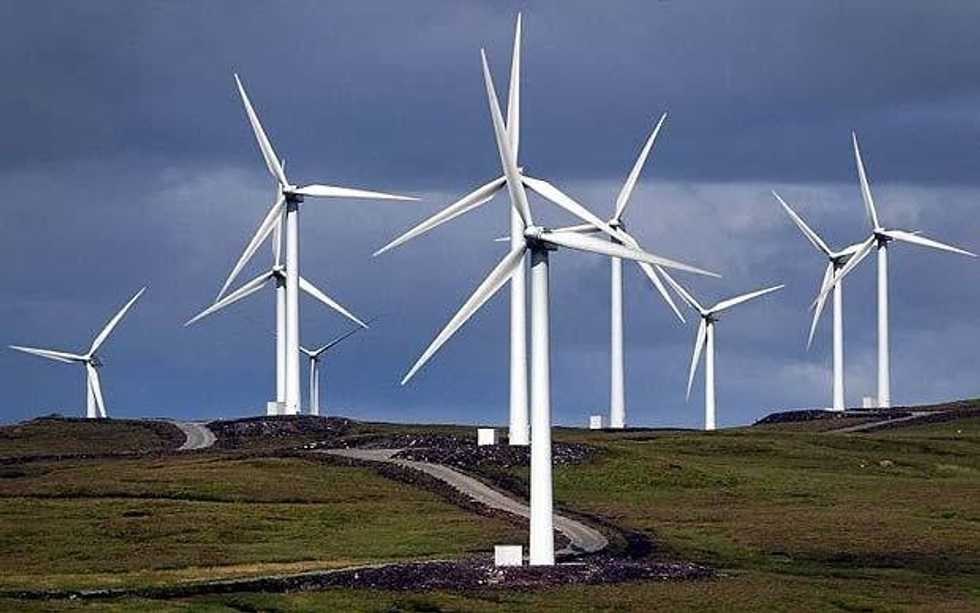
Obama announced the Clean Power Plan on Aug. 3, and it has been greeted with both praise and opposition. Arguably one of his greatest accomplishments as his second term as President comes to a close, the policy will impose the nation’s first limit on carbon dioxide emissions from power plants, which, according to the New York Times, accounts for 31 percent of America’s total greenhouse gas emissions. Hundreds of coal-fired power plants will be shut down, paving the way towards a dependence on other renewable sources of carbon-free energy such as wind, solar and nuclear power.
The United States is ranked No. 33 on the Environmental Performance Index while the U.K. stands at number nine. Although the U.K. harbors their own issues with energy management and growing electrical usage, they have been able to limit it with the introduction of new energy reduction developments such as compact fluorescent and LED lighting and the generation of renewable energy. Under the direction of the EU, their target is to generate 15 percent of their overall energy supply from renewable sources by 2020 and have been tracking toward this goal.
It was in the UK that I witnessed my first wind and solar farms, passing by them on train rides across country. Living there for almost two months, I was stunned by what seemed like a cautious consciousness for the care of the environment, embedded in the everyday daily activities of the U.K. native. One day, I wanted to throw out the remains of my ice cream cone when I came to the realization that many of the streets in London didn’t have trash cans, unlike in my hometown of New York City, where there are trash cans at every street corner. And yet trash still finds itself littered on the sidewalks, in the gutter, on every street in New York City. Both cities being two of the busiest and most congested cities in the world, it was surprising that London’s streets were squeaky clean in comparison to New York. The bins that I did see on the streets enforced recycling, with separation slots for aluminum cans, paper and plastic bottles.
And there were other examples of environmental consciousness. In the U.K., the average car was small; there are more Volkswagens and Mini Coopers than SUVs and other large gas-guzzlers that are all-too-common in the states. When checking out at a grocery store, plastic bags were often 5 pence or more, and the plastic bags themselves were made out of recycled materials. On and off switches were positioned adjacent to electrical outlets to make it easier for power to be switched off when not in use. It was summertime in the U.K. when I visited, and none of the stores or buildings that I entered had air conditioning installed. These little, but effective changes to everyday activities illustrate the U.K.’s accomplishment in what seems like the hardest part of creating environmental change: making the general public believe that this really is a problem and encouraging them to do something about it.
And that is an accomplishment that the U.S. has yet to achieve, as the destruction of the environment impedes human health and causes more problems in the welfare state. Whether the Clean Power Act will in actuality be effective or not is an argument that remains to be debated, but nonetheless many believe that it is a step in the right direction.