


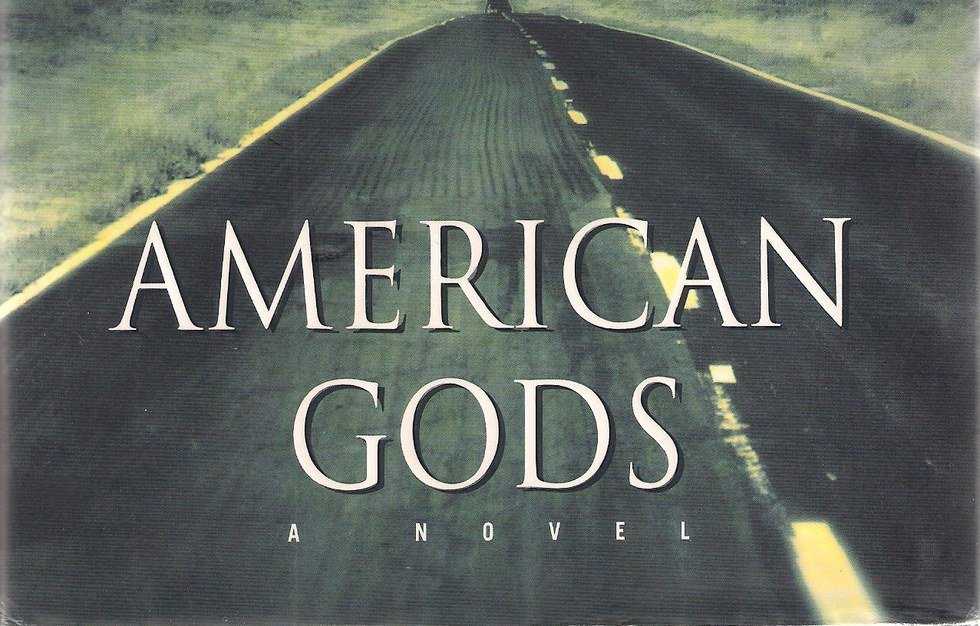
As with all works by Neil Gaiman, American Gods is written as witty, insightful, and beautifully detailed, while being slightly vague at the same time. But more about that last part later. American Gods follows the story of Shadow, a recently released ex-con whose wife has just died in a car accident. He meets a mysterious man named Mr. Wednesday, or, rather, Mr. Wednesday shows up at just the right time to offer Shadow a job working with him. Shadow becomes Mr. Wednesday’s bodyguard in his quest to recruit Wednesday’s old acquaintances for the war to come. The name, American Gods, is anything but metaphorical. The gods of the world are alive and kicking in this book. Wednesday plans war on the new gods: media, technology, Internet, all of whom are personified.
Now that background is out of the way, I can get to the fun stuff, strengths and criticism. If you love plot twists, this is just the book for you. Frequently throughout the book, I had to question and rethink who I thought the different characters were. Gaiman throws foreshadowing so subtly into tiny lines of dialogue that you will miss it. Then the realization occurs and you want to beat your head against the wall because it was so obvious! The plot twists begin early in the book as well. I don't want to give much away, but Laura’s funeral scene shocked me so much, I needed to regroup myself and come back to it. The narrative is also interludes with short anecdotes of how the old gods were brought to America by their worshippers and were forgotten over the centuries. In various modern fiction about gods, we generally see the gods as omnipotent, powerful, and remembered, if only by a small minority. However, Gaiman does the exact opposite and shows the gods and unneeded, unwanted, sad, and weak. Their godliness is replaced with a humanness. They can die, be poor, and be unhappy. We see how the gods go from their height of worship and power to now, their weakness disturbingly human.
Speaking of weaknesses, the book contains some, but not many. The characters are extremely well written, if they are a man. Don't get me wrong, the women in this are fairly well written, but in a one-dimensional way. They are generally sexy, beautiful, willing-to-have-sex-with-all-the-guys women. We see Bilquis enter the scene as a prostitute and Bast is first seen in her human form as having sex with Shadow. Some are solely love interests, such as Samantha Black Crow and Marguerite Olsen. Another weakness is the vagueness and confusingness of certain scenes. I can understand this is about gods and their “otherworldliness,” but there are some times where it's hard to keep track of what's happening. It's not the lack of detail that causes the incomprehension, it's the abundance of it. Gaiman describes a scene in such a metaphorical fashion, it is hard to grasp what is really going on or why something is happening. Or perhaps that's exactly what Gaiman wants us to feel, but that could be me looking too deep into things.
Who are the American Gods? Through Neil Gaiman’s eyes, we see that they are Odin, the Queen of Sheba, Johnny Appleseed, technology, and media. They are the gods of the old worlds, of immigrants who came from foreign lands to America, and the gods of the modern era, of young people with cellphones and televisions. They can live in a harmonious peace, but some gods live for a little chaos. Don't quite understand that? You will by the end of the book.

















