

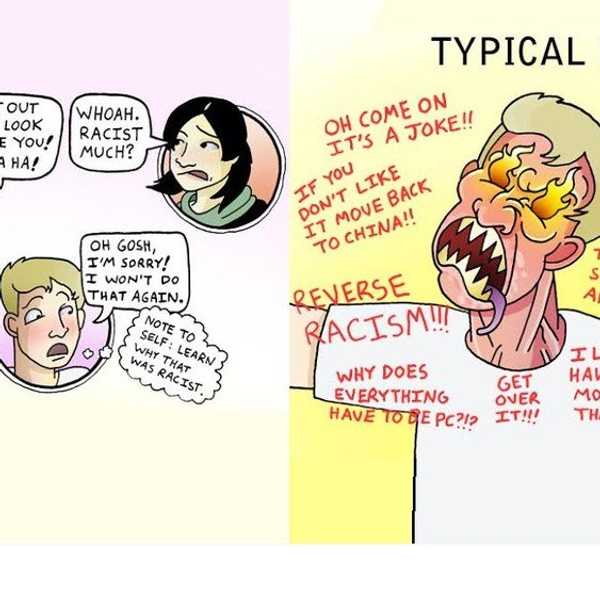
Hollywood has a long and complicated history with whitewashing racially/ethnically minority characters in movies and tv shows. PBS released a study that found that in 2014, the race/ethnicity of characters in the top-grossing films were 73 percent white, 13 percent black, 5 percent Asian, five percent Hispanic, and four percent 'Other.' The study also found that diversity in the film industry has remained relatively unchanged since 2007, with the vast majority of characters portrayed as caucasian.
Another study released in 2015 by the Ralph J. Bunche Center for African American Studies found that despite minorities accounting for 40 percent of the total U.S. population in 2013, these groups are still significantly underrepresented in the film industry. According to the study, minorities are underrepresented in every film category analyzed; lead characters, film directors and writers, broadcast scripted leads, cable scripted leads, etc.
Relatedly, I find it unsurprising that racially minority women and female characters are still greatly underrepresented in Hollywood. A recent Rolling Stones article discussed the findings of a 2016 study on minorities (racial/ethic identities, women, and LGBTQ+ voices) in the film industry conducted by the Institute for Diversity and Empowerment at USC Annenberg. According to the article, 414 films and shows were analyzed by the study. Only one-third of speaking characters in these films were women, and of that one-third only 28 percent were minorities. In addition, the study found that 87% of movie directors and 90 percent of tv directors were white. Only 15 percent were women, and only three percent of films had racially minority female directors.

The list of examples of whitewashing in Hollywood is seemingly endless. Recent examples of whitewashing are just as prevalent as examples from the mid- to late- 20th century, such as Burt Lancaster in "Apache" (1954), Mickey Rooney in "Breakfast at Tiffany's" (1961), Natalie Wood in "West Side Story" (1961), and Elizabeth Taylor in "Cleopatra" (1963).
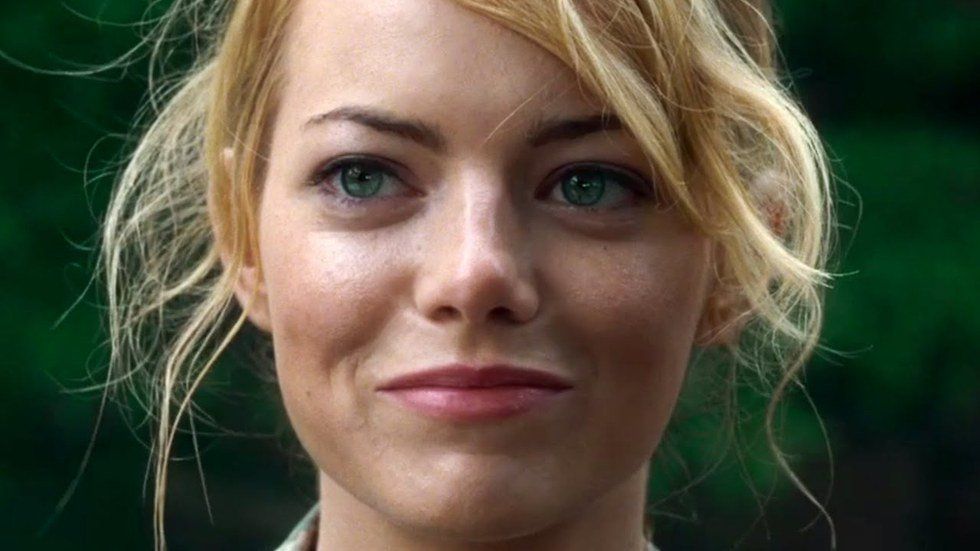
Cameron Crowe, the director of "Aloha" (2015), issued an apology last summer after receiving widespread criticism for his decision to cast Emma Stone (pictured above) as the role of Allison Ng. Ng identifies herself in the movie as part Chinese-Hawaiian, while Stone is blatantly neither of these identities. In a July 2015 Vanity Fair interview, Stone commented, "The character was not supposed to look like her background, which was a quarter Hawaiian and a quarter Chinese," but has acknowledged the growing prevalence of whitewashing in Hollywood. While I applaud Stone for her admission, I still disapprove of her portrayal of Allison Ng, even if the character was not supposed to resemble her racial identity.
Rooney Mara (pictured below) received similar criticisms for her role as Tiger Lily, a Native American character in "Pan" (2015). Director Joe Wright defended the casting choice as following his vision to show the tribe as "multi-ethnic," although The Washington Post noted that Mara was the only character from the tribe with a significant (and speaking) role. Wright may not have intended to disrespect Native Americans with Mara's portrayal of Tiger Lily in "Pan," but I still think he should have acted more culturally sensitive toward the character.

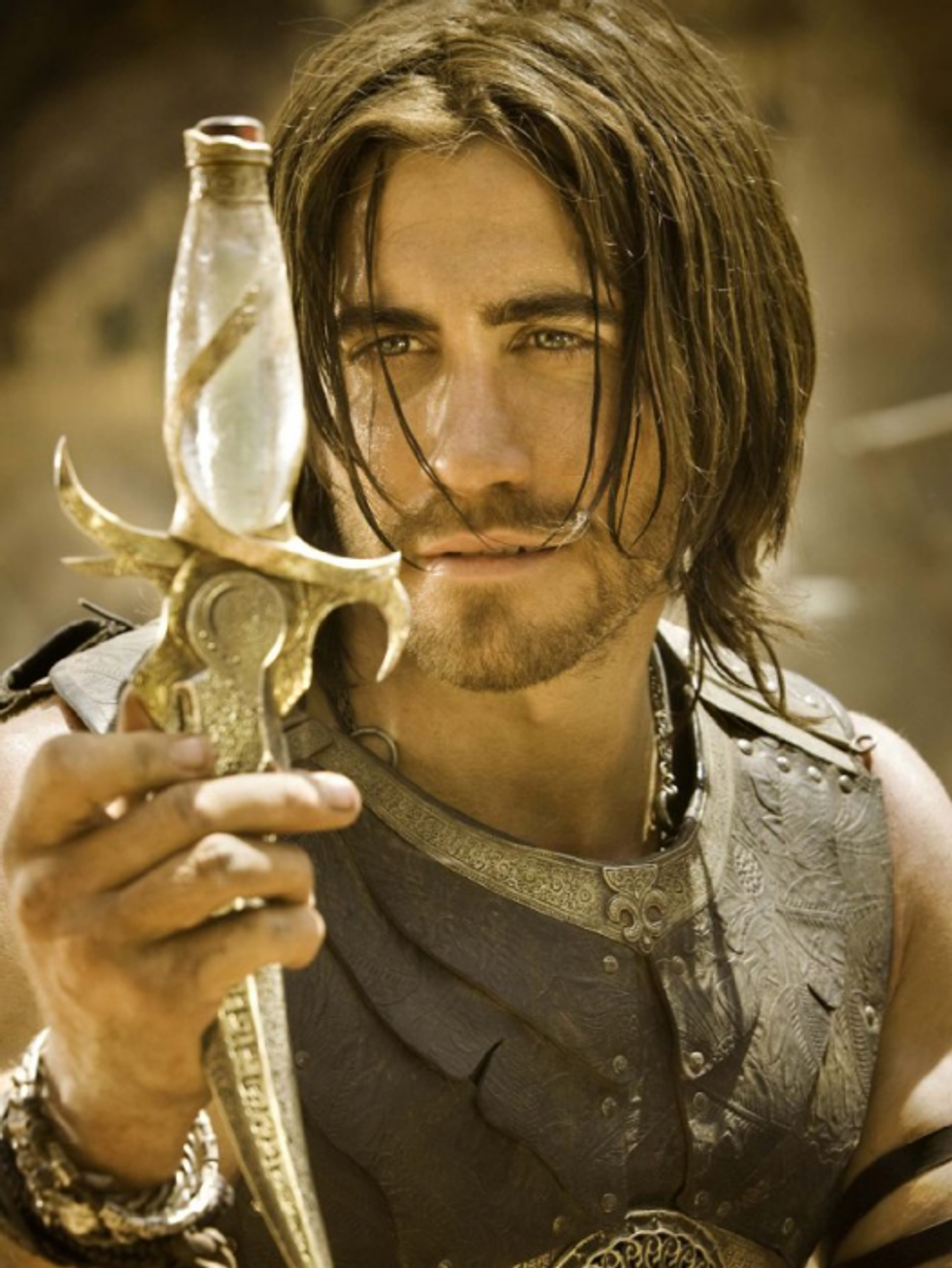
While Jake Gyllenhaal (pictured below) is a talented actor, many questioned why he was cast to play the lead in "Prince of Persia: The Sands of Time" (2010). In the movie, Gyllenhaal's character, Dastan, is supposed to be of Middle Eastern descent, although Gyllenhaal himself is white. Jehanzeb Dar, an independent filmmaker and blogger, told The Huffington Post that Gyllenhaal's portrayal of the beloved video game star is "not only insulting to Persians, it's also insulting to white people. It's saying white people can't enjoy movies unless the protagonist is white."
Stone, Mara, and Gyllenhaal are not alone in their roles as minority characters. Other recent offenders include Carey Mulligan as a Latina woman in "Drive" (2011), Jim Sturgess as a Korean man in "Cloud Atlas" (2012), Jennifer Lawrence as the multiracial lead in the movie version of "The Hunger Games" trilogy, Ben Affleck as the Hispanic lead in "Argo" (2012), Analeigh Tipton as a half-Ethiopian woman in "Warm Bodies" (2013), Johnny Depp as a Native American in "The Lone Ranger" (2013), and the list goes on.
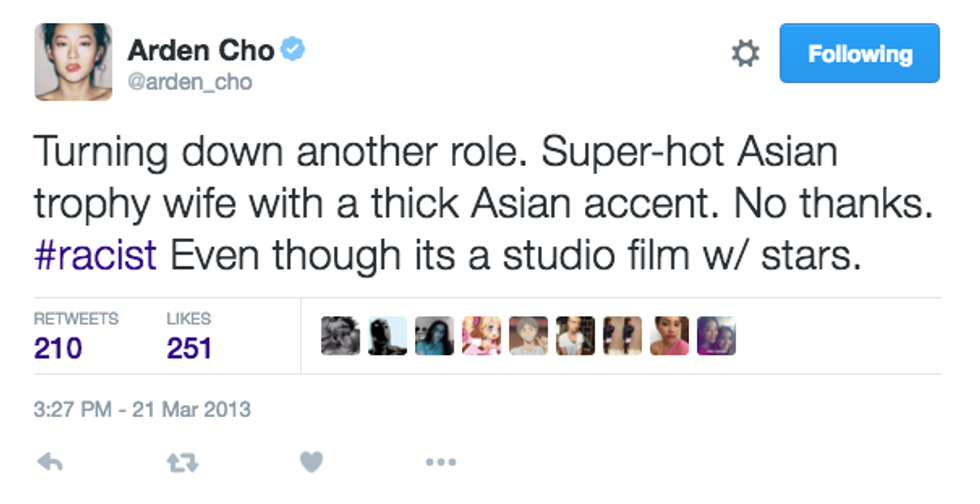
Fortunately, more celebrities are speaking out against racial discrimination in movies and tv shows. Arden Cho, an American-Korean actress best known for her portrayal of Kira Yukimura in MTV's "Teen Wolf", has been an outspoken advocate for Asians and Asian women in Hollywood. In a 2014 interview with Complex, Cho remained confident that Hollywood will make a change for the better; "With more people writing in more roles for Asian Americans, it's going to be better when we're not all just driving fast cars, doing Kung Fu, and playing the sexy nerd or dorky nerd." Other celebrities speaking out against whitewashing and a lack of diversity include Shakira, Spike Lee, Lupita Nyong'o, Viola Davis, Ming-Na Wen, etc.
The United States has a troubling history with minority representation in movies and tv shows. This problem is only getting worse as the population of minorities grows, but their representation in film stays the same. Representation in the media is important for voice, visibility, and validation of all minorities; racial identities and ethnicities, women, individuals with disabilities, members of the LGBTQ+ community, etc. I believe that without this representation, minority voices will continue to suffer until they are allowed the same platform to speak and create as white Americans. Representation in the film industry is important.
















