
It was a Sunday morning and I was on my way to a Sheep Shearing Fair in a small city near Boston. The Fair was 40 minutes away from where I was staying and I had to take three buses to get there, which wasn’t a big deal for someone used to much longer distances. I don’t really recall the beginning of the journey, but that’s because it wasn’t important, the last bus I took, however, was the scenario of an event I never thought I’d witness.
And there was I, a 17-year-old Brazilian exchange student witnessing a kind of prejudice I didn’t think it was real.
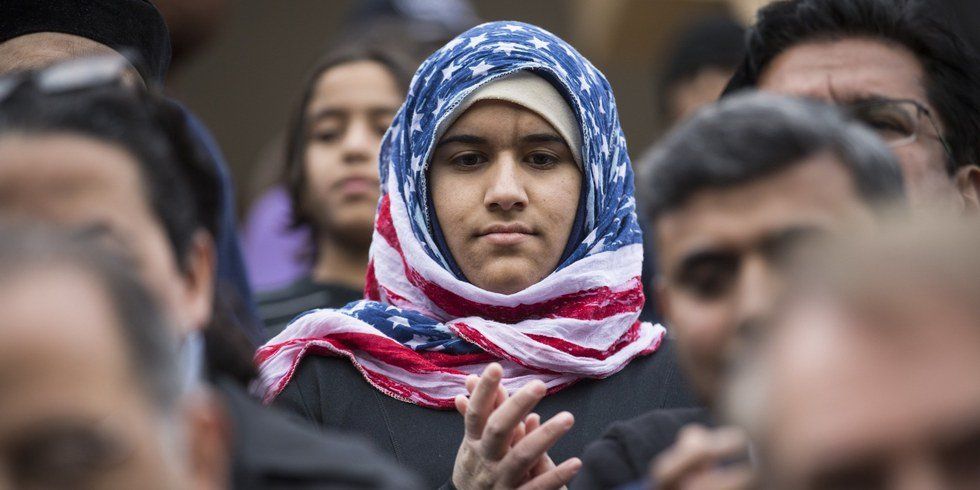
I slid my Charlie Card and took the first seat I could find on the bus. Next to me, sat a middle-aged white man, no different than thousands I have seen in this country. When the bus stopped to let passengers in, I noticed a lady wearing a hijab sitting about two roles in front of us - but although her looks were indeed different from all others on that bus, this wasn’t why I noticed her. I I only looked up from my phone because as she sat down, the man next to me said: “One of them again.”
Unsure of what he meant - or perhaps just perplexed at the realization of the true nature of the occurred - I watched him directly say to her sentences like “Get out of here”, “This is not your country” and finally, “You killed my brother.” At this point I looked at him and before I could ask what was going on, he told me that she was an enemy of the nation, that “her people” say they hate America but still come here to “steal our education”. He pointed at that poor lady and accused her of being a terrorist - while the rest of the bus silently watched.
“Sir, as far as you know, she can be just American as you are,” I told him, attempting to inform him of the fact that there are around 3.3 million Muslims who live in the US and many of them aren’t immigrants. He told me that she had blown up his brother in Iraq, he told me about how they used to go fishing every Saturday, about the nights they got in trouble for drinking too much, about the adventures they had lived. He told me about the hero his brother was, and about how his own world collapsed when he heard the news.
I used the little courage I have and I asked him “Have you ever imagined how many of her brothers yours could have blown up?”. How could he look at a Muslim lady on a bus in Boston and just openly condemn her for something he had absolutely no idea if she had done it? Something that she most like did not do? While I understand personal tragedies, having dealt with some myself, I had mistakenly assumed that within every human being there came a decent share of empathy - even if it wasn’t obvious.
And there was I, a seventeen-year-old Brazilian exchange student witnessing a kind of prejudice I didn’t think it was real. There isn’t standardized terrorism where I come from and I never really saw 911 or ISIS as things that could be even remotely related to me. But then I met this man, this American man openly saying that all Muslims are terrorists, that their lives don’t matter, that only American (non-Muslim) lives matter.
Of course, the little conversation we had, which mainly consisted of asking him to stop, didn’t change much. Even after almost 180 years since James K. Polk started this brainwashing campaign (also known as the Manifest Destiny) in order to make Americans believe they’re better than other people, there are still people who firmly believe in it.
Most Americans I met don’t believe in it, the large majority would have defended the lady on the bus and condemned the white American. The Americans I know would have done different had they lost a family member to war. What happened on that bus, however, will always stay in my mind as a reminder that empathy is not innate and neither is racism.