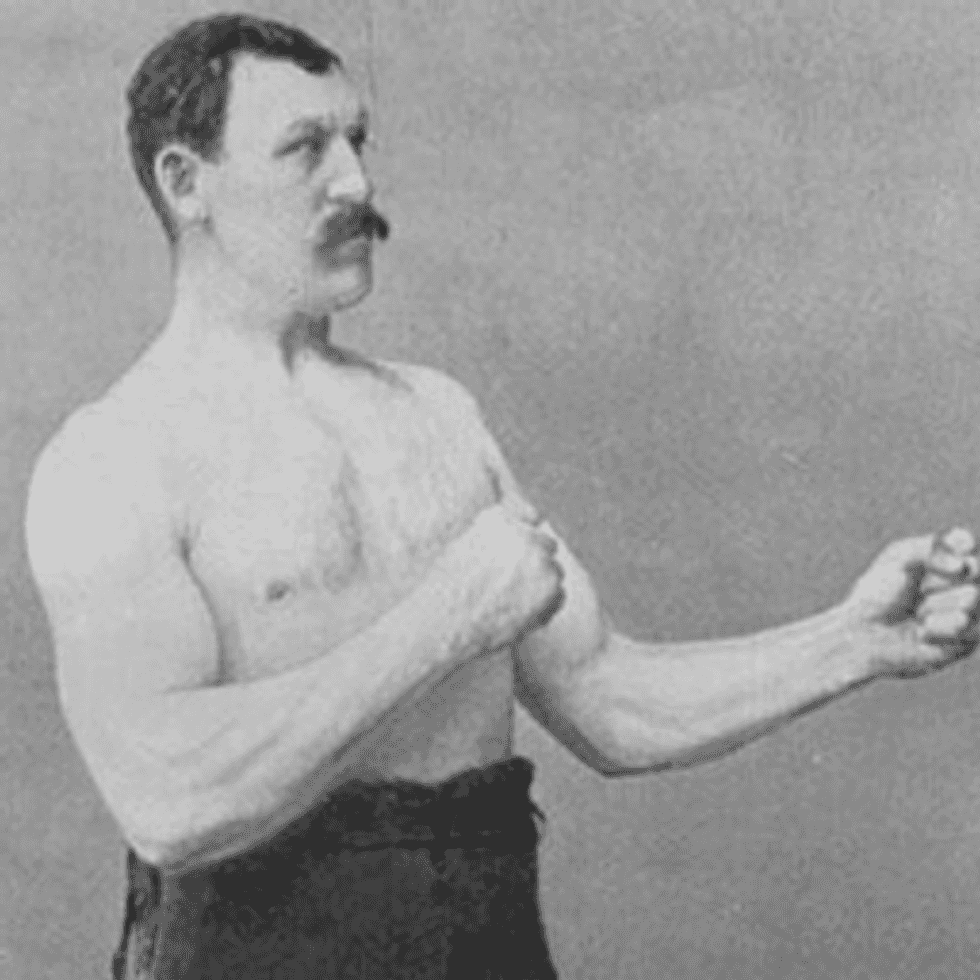
Despite the strides we’ve made in breaking down gender stereotypes, I still feel slightly uncomfortable with and ashamed of my lack of "manliness."
Even in the gay community, where we should be past traditional ideals of masculinity, there is still a definite pressure to be “manly.” And I am categorically, empirically not. But that’s OK.
I googled “manly man” and came up with a bunch of articles. Thought Catalog has an article called “30 Manly Men On Exactly What Makes Them Feel So Manly.” It includes gems like “fixing cars in front of ladies” and “hanging a towel off your erection.” Apparently, this is the golden standard that all men should strive to attain.
The notion of “manliness” seems to involve how much pain you can tolerate without whimpering—I can tolerate no amount of pain and actually say “ouch” to completely painless things—or how much steak you can eat or how good your beard is. And these aren’t necessarily bad things. Many lumberjacks and their ilk have survived with these skills in the early settling days of America.
And the concept of “manliness” is especially unique from the perspective of a gay person. Straight people are trying to tell me that I should be feminine, othered, “one of the girls.” And from within the community, there is often the pressure to be hyper-masculine to negate our gayness, often as a result of internalized homophobia.
I’ve always veered closer to femininity, but as I’ve gotten older it’s become more of a middle ground, “bookish librarian” vibe, which flies in the face of "Masc 4 Masc" mentality. “Masc 4 Masc” has become sort of a joke in the Grindr-using community, but it essentially describes a certain genre of gay man who carries the torch of misogyny. It means, “I don’t want feminine guys approaching me,” or “I want someone so straight-acting that we both end up marrying women.” It’s "Brokeback Mountain" without the steamy tent scenes.
But being manly extends beyond the pressures of the gay community. It affects every man—whether hetero or queer, cisgender or transgender. We all struggle with the societal pressure to be manly in a world that bashes femininity. Ideals of masculinity contain misogyny because the idea of “manliness” is often to the detriment of femininity, and implies that being feminine is somehow wrong.
Really, there’s nothing wrong with being a manly man. If you’re cutting wood in the woods shirtless because you like it (call me), or if you grow a sick beard through blessed genes, or if you can grill the hell out of a steak — congratulations. But if you can’t, that doesn’t make you less of a man. If you love "RuPaul's Drag Race" or reading in libraries, or if you can’t change a tire for your life, that doesn’t make you less of a man.
Part of the problem is the word: “manly.” The essence of being a man. It would be different if it were advertised as being a “lumberjack man” or a “cowboy.” But when we’re told that being a “manly man”—i.e., the essence of being a man—is growing facial hair and chopping wood and balancing books on our erections, then that’s a problem. It ignores the other facets of being a man.
So let’s get real. What does it actually mean to be a man? Or rather, what should it mean?
I think a man should be someone who stands up for his beliefs, who is strong, who is smart and takes accountability. But that’s also how I think women should be. And every other gender on the spectrum. Because really, when you really think about it, “manliness” and “femininity” just perpetuate this idea of what we should be but aren’t. All that actually matters is that we are good people who make smart decisions and take care and responsibility when needed.