

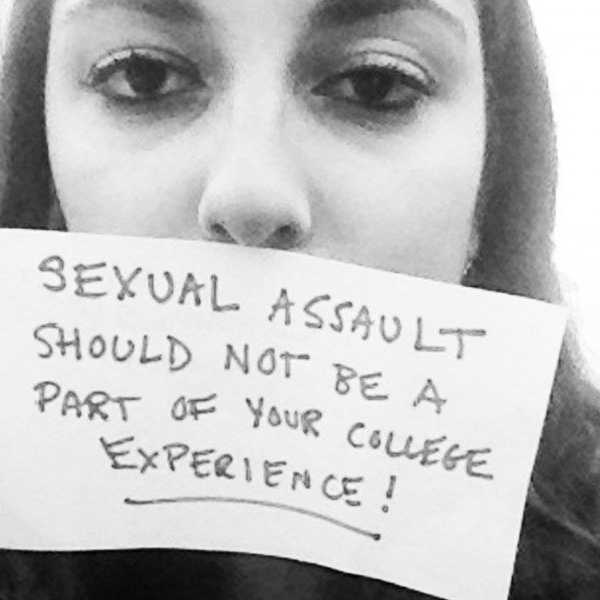

Your teary eyes blur the approaching red and blue blinking lights. The sterile hospital room feels small and continues to shrink. You can’t feel anyone touching you because you’re numb, but you shy away from it anyway. Voices roar in your ears, but no one is speaking at more than a whisper.
For some college students, the worst part of the night is a party getting busted early. For others, the worst part of the night is a sexual assault.
This is an unfortunate reality on many college campuses. Most of the time, sexual assault involves force or incapacitation. For many college students, incapacitation is alcohol-related. This makes students less likely to report a sexual assault because they make excuses for the unwanted behavior. They tell themselves, “I don’t exactly remember what happened, but I mean, I probably said yes, right?”
Fear from reporting sexual assault comes from many things. One fear is that if a student decides to report the incident and charges are pressed, they think other students will look at them differently. The fact that the judgment of other people stops students from reporting sexual assault is a sad reality in our society.
Another fear is that no one will take the assault seriously if alcohol was involved. Whether alcohol was involved or not, sexual assault should always be taken seriously. If it’s not, find another source to tell.
The threat of retaliation is another fear that students have for reporting sexual assault. Many students believe that either their attacker or the attacker's friends will resort to violence to pressure them into silence.
Last week, Penn released results from a sexual assault climate survey. According to The Daily Pennsylvanian, almost a third of Penn’s female undergraduates say they’ve been sexually assaulted. 5.5 percent of males were victims of sexual assault, but the rate for females was still about five times higher.
Reports say that officials of the university were deeply troubled by the results of the survey and that they are taking efforts to try and decrease the number of people affected by sexual assault.
I applaud the university for owning up to these results. Too often, colleges sweep sexual assault under the rug, terrified of being notorious for a scandal. Look at the way in which the University of Virginia mishandled the rape of one of its freshmen, Jackie, last year.
It seems like nowadays the words “sexual assault” fall under the category of words like “moist” – no one likes to say them in every day conversation. It is, however, a growing reality on college campuses, and the first step in solving this problem is talking about it.
Lady Gaga’s new music video for her song “Til it Happens to U” was recorded for a documentary about rape on college campuses. According to Rolling Stone, last year Lady Gaga revealed that she was raped as a teenager. More people should be talking about sexual assault the way that she is.
By expressing her frustration with the incident through music and visuals, she makes it easier for students to talk about. Just watching the music video could easily spark a conversation about sexual assault and maybe encourage some students to speak up.
Don’t wait until the memory haunts you so much that you leave in the middle of a class to cry in the bathroom. Don’t wait until you’re too scared to go out and have fun with your friends. Don’t wait until it becomes a numb memory in the back of your mind.
Sexual assault happens. When it does, speak up. There will always be someone to listen.

















