

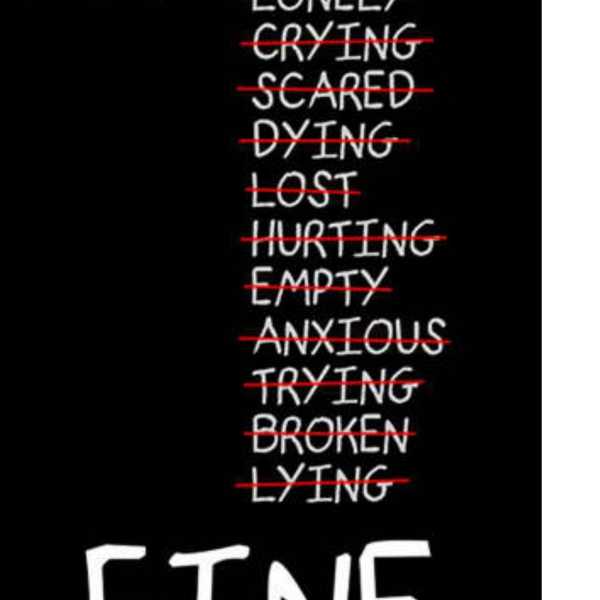

Some people play sports in their spare time. Some people make art. Others, even, are crazy enough to run. But me, I do something else. In essence, I lie. I get up in front of tens, twenties, sometimes up to hundreds of people I don’t know, and pretend to be someone I’m not and tell them things that aren’t true. I do theatre. And there’s something strange I’ve learned since it’s become my pastime; I find that I feel most like myself when I’m being someone else.
It’s not that I enjoy deceiving people or that I simply can’t stand being myself, there’s just a freedom when you no longer have to worry about the things of reality. I can walk into a rehearsal or a show and be preoccupied by school, friends, romance, family, money and just about anything else you can think of. But as soon as I step on stage, the cliché transformation begins. Everything melts away and I take on the life of whomever I’m pretending to be. Their desires, their worries, their knowledge, their everything. It’s not always relaxing, but it’s always a strange kind of relief. And often there's extra pain.
A perfect example comes from just about a year ago. I was in a production of "Oliver!" with a local theatre in my hometown. I was reprising a role I had done once before, the character of Bet -- the minor part of a young lady of the night. She was mostly defined by her best friend, Nancy, the queen of her kind. The first time I was Bet, it was fun. A new part, a new life to discover. The second time, I was worried I was going to lose my sense of wonder and the transformative property. But once again, walking onstage took everything away except what was Bet. My Nancy was what made it even better than the first time I played the part. Together we created a story of the two girls, intertwined their lives until they were inseparable, and in turn we were as well. While it is wonderful to gain a friend and the offstage work certainly made the onstage interaction stronger, it made everything much worse as well.
As I said before, when in character it is customary to try to feel all the emotions of the character to make the portrayal as real as possible. So when I had let myself go on a night that for me was terribly hard; it was my closing, I was leaving for my first year of college the next day, leaving my friends and family, and overall just terrified for the future, Bet’s pain took my own and twisted it to serve her. After disobeying her abusive boyfriend, Bill Sykes, Nancy is caught trying to help Oliver get back to his grandfather and is murdered by Bill. In our version, she was strangled; something brutal yet up close and intimate. I had thrown out the idea to have Bet be the first person to find the body of Nancy, and it was accepted.
I stood offstage waiting to run out and “discover” the body. I was completely numb. I heard my cue, took a breath, and ran out. I looked down to see my newfound friend, the kind you know will be around forever, lying there “dead.” I opened my mouth to say her name, my next line. There was no sound. I started choking on my tears a second later. I was Bet. Bet was me. I cried over my friend, my sister, my mother. I cried over the woman who practically raised me and took care of me, kept me safe from harm. I wept for the life I was losing, and in fear of the new one beginning. Everything around me was fading away and the pain of Bet was taking over. I am even beginning to cry now remembering it. I couldn’t breathe and wasn’t sure if I was going to be able to get my last line out.
“Nancy” must have felt the difference because she subtly squeezed my arm, reassuring me she was alive and well. Everything was fine. It wasn’t real. But to me, to Bet, in that moment, it was so painfully real. I’ve never lost a loved one, but in that moment I got a glimpse into the agony that it will be. It was my life and I was losing my whole world.
I could tell story after story about moments like that in my theatrical career. Name any show I’ve been in and I could probably tell you someone I’ve met or something I learned in that show that has made me more of myself that I was before. Actors pick up parts of their characters all the time, be them physical or verbal ticks or just knowledge and vocabulary. Personally I take lessons learned along with these other things. The therapy of no longer being myself and being someone else has just as many takeaways as actual therapy. There is so much learning, about them and about myself. There is nothing like it.
For the sake of readability I should wrap this up, but the same idea remains. I am most myself when I’m being someone else. Or perhaps that’s not exactly the right phrasing. How can I be myself most when I’m not myself at all? Perhaps it’s better to say it like this: I am most myself when I’m not. Because it’s teaching me who I really am.

















