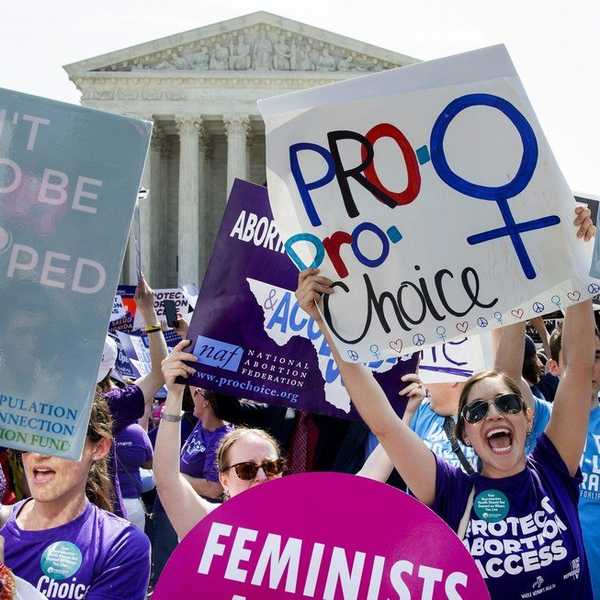


While women’s issues are still at the forefront of every political debate, this past week provided a much-appreciated win for supporters of women’s health. This Monday, the Supreme Court struck down two parts of a Texas law that would dramatically increase the cost to run abortion centers, effectively shutting down many that could not keep up with the financial burdens. This decision will have plenty of impact down the line that I will talk about, but the first thing that comes to my mind is thank god for SCOTUS.
In all seriousness, this decision has huge implications for the future of women’s health in America. Since before the days of Margaret Sanger’s first human birth control pill, to the Roe v. Wade decision and today, reproductive rights have been long debated, with sides ranging from women should have complete access to all forms of birth control including abortions, to having the pill completely outlawed. It has become a divisive argument amongst political parties, and a major part of many people’s day-to-day struggle, with thousands of women finding themselves in situations where they may need an abortion or a form of birth control, but are unable to acquire one safely.
So, what does this decision mean?
While this is a great step in the right direction, the ruling is only that: a step. According to an article published by NPR, this decision does not mean that the fight is over. In fact, this decision will most likely increase resistance from the opposing side. An article published on CNN states that since the beginning of 2016, over 400 measures were initiated into Texas legislature to restrict abortions, meaning that this ruling is fantastic but not a be-all-end-all.
What else? It will unsurprisingly become even more of a major contender in the presidential race than it already was, as well. Hillary Clinton has never swayed from her stance as pro-choice, and has long been an advocate for access to birth control and other aspects of women’s health. Donald Trump, on the other hand, has, in his words, “evolved” his position to pro-life, although agrees in exceptions for “rape, incest or life of the mother” (On The Issues). This case will most likely add fuel to both of their campaigns, and to their support bases.
Personally, even with all the implications that this decision brings, I can’t help but be excited. For the first time in a long time, women’s health has received a win. Not just any win, either; a win in a state that has long looked to diminish a woman’s ability to fully take care of their own bodies, to take care of problems that are unique to their gender regardless of how hard men try to make them seem like a universal issue. The decision was defended by Justice Stephen Breyer, saying that these provisions would cause “undue burdens” on women, and I don’t think something has ever rang so true. The fact of the matter is that while you may not agree with abortion, outlawing these clinics will not stop it, but rather only stop the safe practice of it, not to mention cutting off other essential services they provide that I have previously mentioned in a different article.
Let’s all hope that this step leads to many more.